6 Thomas Mann Books for Free! [PDF]
by InfoBooks
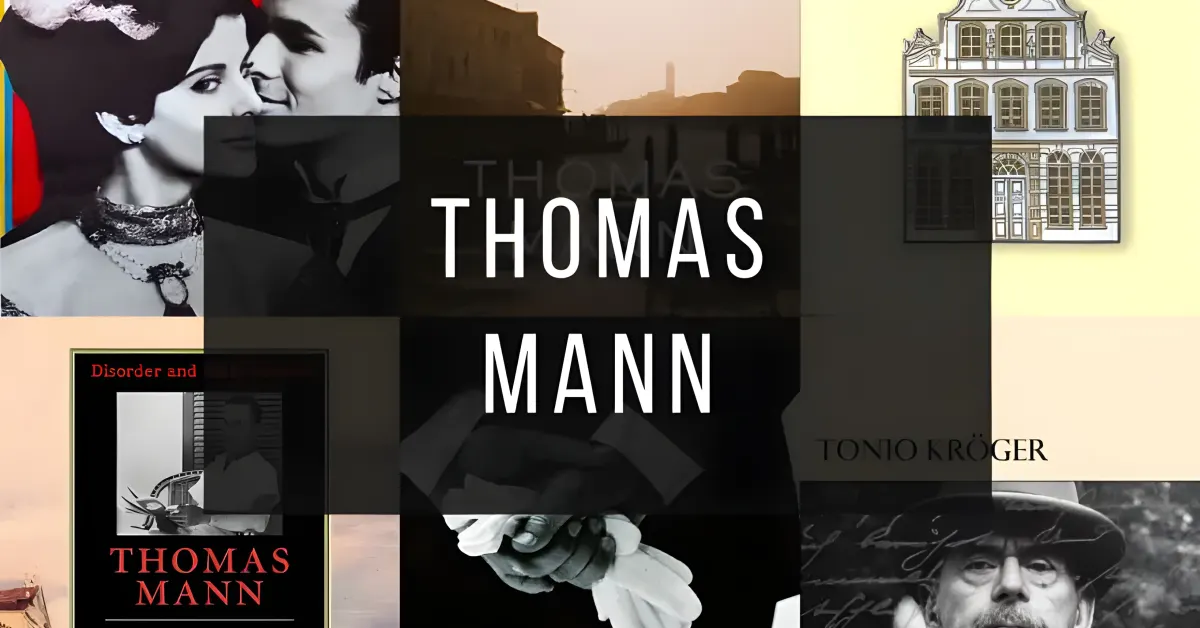
Immerse yourself in the profound and captivating works of Thomas Mann with our free collection of Thomas Mann books in PDF format.
Thomas Mann, a Nobel Prize-winning author, is celebrated for his exploration of human nature, society, and art through richly detailed narratives and philosophical depth. His works are masterpieces of modern literature.
From the monumental The Magic Mountain to the poignant Death in Venice and other compelling stories, Thomas Mann’s writing delves into themes of identity, morality, and the pursuit of meaning.
Perfect for readers of classic literature and philosophical fiction, this collection offers a glimpse into the genius of a writer whose influence continues to resonate worldwide.
Download these Thomas Mann books in PDF now and experience the timeless brilliance of one of the 20th century’s greatest literary minds.
Discover other classic authors

Agatha Christie
Queen of crime fiction, Agatha Christie created Hercule Poirot and Miss Marple. Over two billion copies sold, and plots that still surprise you on every reread.
10 books
Aldous Huxley
British novelist and thinker, Aldous Huxley wrote Brave New World, a vision of the future that feels more relevant every year. His work explores the tension between freedom, pleasure, and control.
6 books
Alexandre Dumas
French master of historical adventure, Alexandre Dumas gave us The Three Musketeers and The Count of Monte Cristo. Stories of revenge, loyalty, and swashbuckling that have never gone out of print.
23 books
Anton Chekhov
Russian playwright and short story master, Chekhov captured ordinary life with extraordinary precision. The Cherry Orchard, The Seagull, and dozens of stories that say more in a few pages than most novels.
2 books
Aristotle
Student of Plato, teacher of Alexander the Great. Aristotle wrote on everything: logic, politics, ethics, physics, poetics. His texts remain the starting point for dozens of disciplines.
23 books
Arthur Conan Doyle
The creator of Sherlock Holmes. Arthur Conan Doyle invented the modern literary detective and a method of reasoning that has fascinated readers for over a century.
56 books
Arthur Schopenhauer
German philosopher who put pessimism on the intellectual map. Schopenhauer argued that desire is the root of suffering, influencing Nietzsche, Freud, and generations of thinkers who followed.
9 books
Brothers Grimm
Jacob and Wilhelm Grimm collected the fairy tales that shaped childhood across the world. Cinderella, Snow White, Hansel and Gretel: stories passed down for centuries, preserved by two brothers from Germany.
29 books
Charles Darwin
British naturalist who changed how we understand life on Earth. On the Origin of Species introduced natural selection, an idea so powerful it reshaped biology, philosophy, and the way we see ourselves.
11 books
Charles Dickens
The great storyteller of Victorian England. Dickens created Oliver Twist, David Copperfield, and A Christmas Carol, blending humor, social criticism, and unforgettable characters that still feel alive today.
23 books
Charles Perrault
French writer who gave literary form to some of the most famous fairy tales in history. Little Red Riding Hood, Sleeping Beauty, Cinderella: Perrault turned oral tradition into stories that endure across generations.

D.H. Lawrence
English novelist who explored desire, instinct, and the conflict between modern society and human nature. Sons and Lovers, Lady Chatterley's Lover: bold, controversial books that pushed the boundaries of what fiction could say.
15 books
Dante Alighieri
Florentine poet of the 13th century, Dante wrote The Divine Comedy, a journey through Hell, Purgatory, and Paradise. A text that shaped the Italian language and European literature.
5 books
Edgar Allan Poe
Master of mystery and horror, Edgar Allan Poe invented the modern detective story. His tales explore fear, madness, and the darkest corners of the human mind.
47 books
F. Scott Fitzgerald
American novelist who captured the glamour and emptiness of the Jazz Age. The Great Gatsby is a portrait of ambition, love, and the illusion of the American Dream that still resonates.
8 books
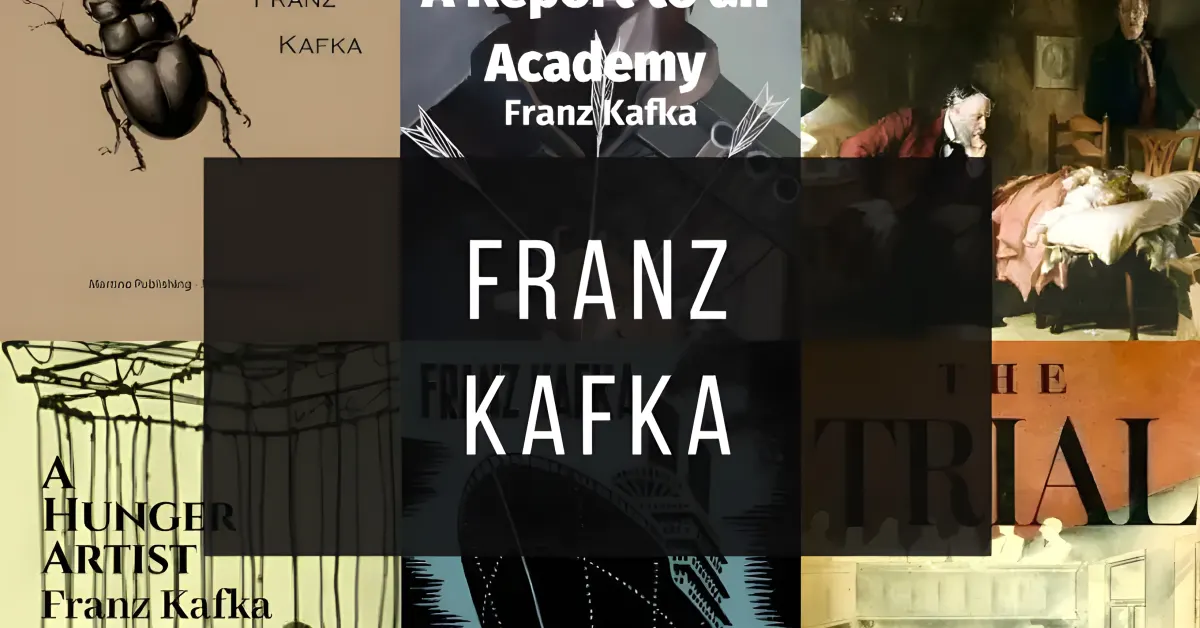
Franz Kafka
Czech-born writer who turned anxiety into literature. The Metamorphosis, The Trial, The Castle: Kafka's stories feel like dreams you can't wake up from. His name became an adjective for a reason.
12 books
Friedrich Engels
German philosopher, historian, and close collaborator of Karl Marx. Engels co-wrote The Communist Manifesto and shaped the foundations of socialist thought that transformed political history.

Friedrich Nietzsche
German philosopher who questioned everything: morality, religion, truth, the meaning of existence. Thus Spoke Zarathustra and Beyond Good and Evil are books that challenge you to think for yourself.

Fyodor Dostoevsky
Russian novelist who explored the human soul like no one else. Dostoevsky asks moral questions without giving easy answers. Crime and Punishment, The Brothers Karamazov: books that change the way you think.
20 books
G. K. Chesterton
English writer, philosopher, and master of paradox. Chesterton created Father Brown, the priest-detective who solves crimes through understanding human nature. His essays and novels blend wit, faith, and sharp logic.
1 book
Gustave Flaubert
French novelist obsessed with finding the perfect word. Madame Bovary dissects romantic illusion with surgical precision. Flaubert set the standard for the modern realistic novel.
10 books
Guy de Maupassant
French master of the short story, Guy de Maupassant captured human nature in compact, precise tales. Over 300 stories that reveal greed, vanity, and tenderness in equal measure.
1 book
H. G. Wells
Pioneer of science fiction, H. G. Wells imagined time travel, alien invasion, and invisible men before anyone else. The Time Machine, The War of the Worlds: stories that shaped an entire genre.
19 books
H. P. Lovecraft
Creator of cosmic horror, Lovecraft imagined a universe where humanity is insignificant before ancient forces. Cthulhu, Arkham, the Necronomicon: his mythology keeps inspiring popular culture to this day.
3 books
Hans Christian Andersen
Danish storyteller who wrote fairy tales that became part of the world's imagination. The Ugly Duckling, The Little Mermaid, The Snow Queen: simple stories that carry deep truths about being human.
1 book
Henry James
American-British novelist and master of psychological fiction. Henry James explored the clash between American innocence and European sophistication in works like The Portrait of a Lady and The Turn of the Screw.
1 book
Herman Melville
American novelist, Herman Melville is the author of Moby Dick. A whale-hunting story on the surface, a reflection on obsession and the human condition underneath.
1 book
Hermann Hesse
German-Swiss writer and Nobel Prize laureate. Hermann Hesse explores the search for self in novels like Siddhartha and Steppenwolf. Books that speak directly to those looking for their own path.
5 books
Homer
Father of Greek epic poetry, Homer gave us the Iliad and the Odyssey. Two foundational texts that laid the groundwork for all Western literature.
2 books
Honoré de Balzac
French novelist and father of literary realism. Balzac created The Human Comedy, a vast portrait of 19th-century French society. Dozens of interconnected novels that map ambition, money, and desire.
2 books
Immanuel Kant
German philosopher who reshaped how we think about knowledge, morality, and reason. The Critique of Pure Reason asked what the human mind can actually know. The answer changed philosophy forever.
13 books
James Joyce
Irish writer who reinvented the novel. Ulysses follows a single day in Dublin and captures the full range of human thought. Dubliners, A Portrait of the Artist: Joyce pushed language further than anyone before him.
1 book
Jane Austen
English novelist of the 19th century, Jane Austen observes society with precise irony. Pride and Prejudice, Sense and Sensibility: love stories that are also sharp social critiques.
9 books
Johann Wolfgang von Goethe
Germany's greatest literary figure. Goethe wrote Faust, The Sorrows of Young Werther, and poetry that defined Romanticism. A mind that moved between literature, science, and philosophy with equal brilliance.
3 books
Jules Verne
Pioneer of science fiction, Jules Verne imagined submarines, space travel, and round-the-world journeys before they existed. His novels blend adventure, science, and a contagious curiosity about the world.
39 books
Karl Marx
German philosopher and economist who wrote The Communist Manifesto and Das Kapital. Whether you agree with him or not, Marx's ideas about class, labor, and power shaped the modern world.

Leo Tolstoy
Russian novelist of epic scope. Tolstoy wrote War and Peace and Anna Karenina, two of the greatest novels ever written. His stories capture love, war, faith, and the full weight of being alive.
3 books
Lewis Carroll
English writer and mathematician who created Alice's Adventures in Wonderland. A story that looks like a children's tale but plays with logic, language, and reality in ways that still puzzle and delight.
1 book
Lord Dunsany
Irish writer and one of the founders of modern fantasy literature. Lord Dunsany created imaginary worlds decades before Tolkien. His short stories and plays blend myth, wonder, and a style entirely his own.

Ludwig von Mises
Austrian economist and one of the most influential thinkers of the free-market tradition. Human Action and other works laid the groundwork for modern libertarian economics and the Austrian School.

Mark Twain
Called "the father of American literature" by Faulkner. Mark Twain wrote The Adventures of Tom Sawyer and Huckleberry Finn, blending humor, social commentary, and a voice that defined American storytelling.
2 books
Marquis de Sade
French writer and philosopher whose name gave birth to a word: sadism. Controversial, banned, imprisoned for his writings. The Marquis de Sade pushed the limits of literature, morality, and freedom of thought.

Nikolai Gogol
Ukrainian-born Russian writer who blended satire with the surreal. Dead Souls and The Overcoat expose the absurdity of bureaucracy and social pretension with dark humor that still hits home.
1 book
Oscar Wilde
Irish playwright, poet, and master of wit. Oscar Wilde wrote The Picture of Dorian Gray and The Importance of Being Earnest. Sharp, elegant, and provocative, his words cut through pretension with a smile.
2 books
Plato
Athenian philosopher and founder of the Academy. Plato wrote dialogues where Socrates questions everything: justice, beauty, truth. Twenty-five centuries later, his questions are still ours.
29 books
Rene Descartes
French philosopher and mathematician who revolutionized Western thought with a simple idea: doubt everything to find what is certain. "I think, therefore I am" remains the most famous philosophical sentence in the world.

Robert Louis Stevenson
Scottish storyteller who wrote Treasure Island and The Strange Case of Dr Jekyll and Mr Hyde. Adventure on one hand, the duality of human nature on the other. Stevenson knew how to keep you reading.
3 books
Sigmund Freud
Austrian neurologist and the creator of psychoanalysis. Freud explored the unconscious mind, dreams, and desire. His ideas transformed psychology, art, and the way we understand ourselves.

Victor Hugo
French literary giant who wrote Les Misérables and The Hunchback of Notre-Dame. Victor Hugo gave voice to the poor, the outcast, and the forgotten. His stories are both grand in scale and deeply human.
2 books
Virginia Woolf
English novelist who transformed how stories are told. Mrs Dalloway, To the Lighthouse, Orlando: Woolf captured the flow of thought, memory, and time in ways no one had attempted before.
2 books
Vladimir Nabokov
Russian-American novelist and master prose stylist. Nabokov wrote Lolita, Pale Fire, and dozens of other works in both Russian and English. Every sentence crafted with the precision of a chess problem.

Voltaire
French Enlightenment writer who fought intolerance with wit. Voltaire wrote Candide, a satirical masterpiece, and spent his life defending reason, free speech, and the right to question authority.
1 book
Walter Scott
Scottish novelist who invented the historical novel. Walter Scott wrote Ivanhoe, Rob Roy, and Waverley, bringing the past to life with adventure, romance, and a deep love for history.

William Shakespeare
English playwright who wrote Hamlet, Romeo and Juliet, Macbeth, and dozens of other plays. His characters explore jealousy, ambition, love, and betrayal with an accuracy that never ages.
4 books
Émile Zola
French novelist and the greatest voice of literary naturalism. Zola wrote the Rougon-Macquart cycle, twenty novels that dissect French society with raw honesty. Germinal alone is a landmark of world literature.