
A Room With A View by E. M. Forster [PDF]
by InfoBooks
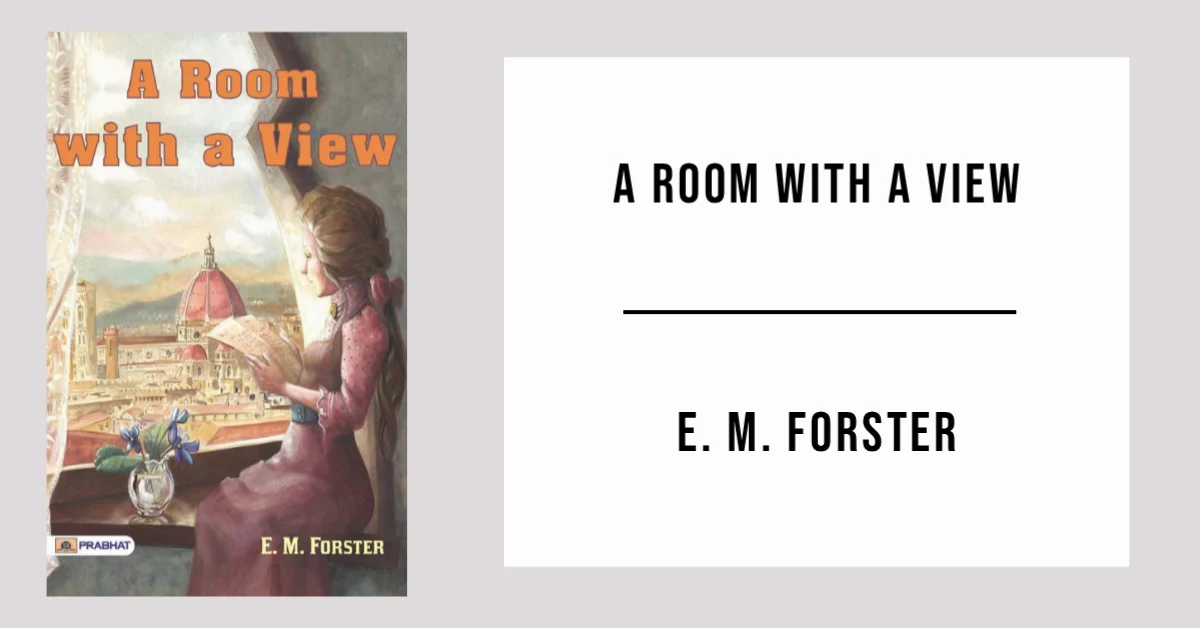
A Room With A View by E. M. Forster is one of the most clear-eyed novels about the tension between social duty and personal desire in Edwardian England. Written in 1908, it remains surprisingly accessible and modern in how it tackles the question of living honestly. Set between the sunlit piazzas of Florence and the drawing rooms of Surrey, it follows Lucy Honeychurch as she navigates love, propriety, and the courage to choose for herself.
We have this novel available for you to download in free PDF format. Read it on any device, no registration needed. Just click the link below and start one of Forster's finest works.
Few people know this book beyond its Merchant Ivory film adaptation, but Forster's original novel has a directness and humor the screen version only hints at. Ideal for readers who enjoy social comedies with real emotional depth.
A Room With A View by E. M. Forster
*Please wait a few seconds for the document to load, the time may vary depending on your internet connection. If you prefer, you can download the file by clicking the link below.
Loading PDF...
Information: A Room With A View
- Author: E. M. Forster
- Publication Date: 1908
- Main Characters:
- Lucy Honeychurch: A young, musically gifted Englishwoman torn between following social expectations and embracing her genuine feelings for George Emerson.
- George Emerson: An earnest, unconventional young man who questions Victorian norms and whose sincerity deeply affects Lucy.
- Charlotte Bartlett: Lucy's older cousin and chaperone, anxious about propriety, whose interference both complicates and ultimately shapes Lucy's choices.
- Cecil Vyse: Lucy's fiancé in England, cultured and intellectual but emotionally cold, who treats Lucy more as an aesthetic ideal than a real person.
- Mr. Emerson: George's father, a plainspoken older man whose directness and kindness play a pivotal role in Lucy's final decision.
- Brief Summary: A Room With A View follows Lucy Honeychurch, a young Englishwoman who visits Florence and meets the unconventional George Emerson. Their brief encounters in Italy awaken feelings Lucy tries to suppress once she returns to England. She becomes engaged to the refined but emotionally distant Cecil Vyse, only to find George reappearing in her life. The novel traces Lucy's gradual decision to reject pretense and follow her true feelings. It is a comedy of manners with a serious question at its center: what happens when you stop performing the life others expect?
- Thematic Analysis: The novel explores the conflict between social convention and authentic selfhood. Forster uses the contrast between Italy (passion, spontaneity, nature) and England (propriety, repression, drawing rooms) to dramatize Lucy's inner struggle. Class, honesty, the role of women, and the difference between truly seeing the world and merely looking at it are all woven into the story with a light but deliberate touch.
- Historical Context: Published in 1908, the novel captures Edwardian England at a moment when rigid Victorian values were beginning to crack. Forster was writing about a society where appearances still mattered more than feelings, and where women like Lucy had very limited room to define their own lives. The book's Italian setting reflects the era's fascination with the Grand Tour as both cultural education and, for Forster, a catalyst for personal awakening.