
How to Live on 24 Hours a Day by Arnold Bennett [PDF]
by InfoBooks
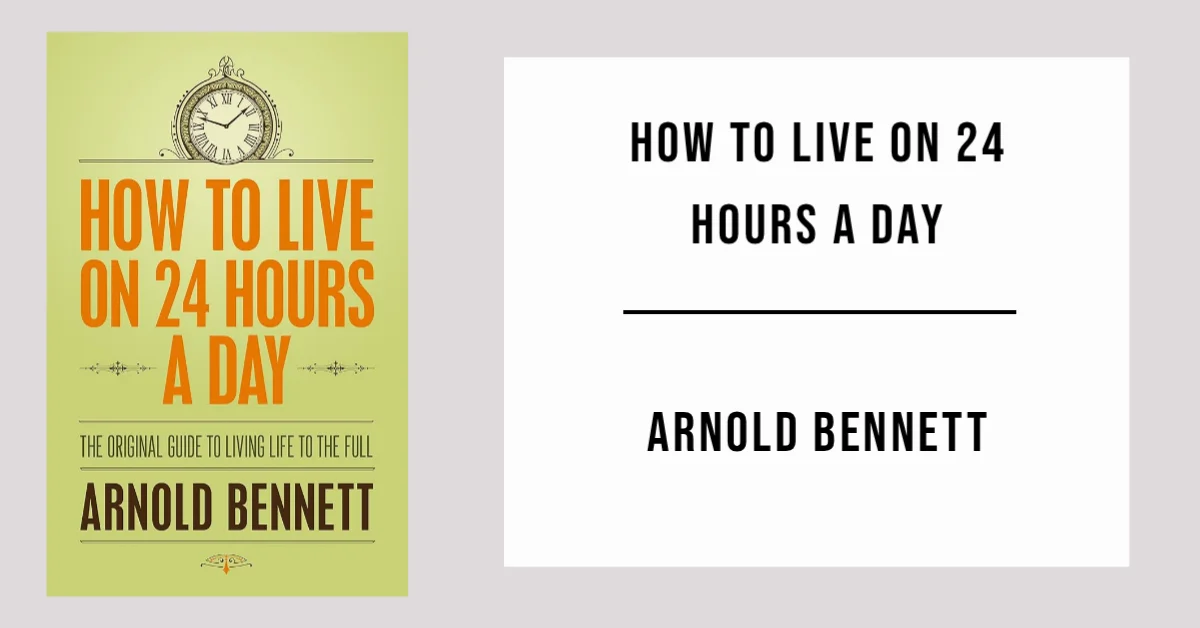
Arnold Bennett wrote How to Live on 24 Hours a Day in 1908, and its practical advice on using your time with intention feels even more urgent now than it did then.
You can download the complete PDF for free right here. Bennett's approach is surprisingly accessible, cutting through the noise with clear, actionable steps for structuring your day.
Whether you feel stretched thin or simply want a fresh perspective on your daily routine, this short read delivers more value per page than most modern productivity books.
How to Live on 24 Hours a Day by Arnold Bennett
*Please wait a few seconds for the document to load, the time may vary depending on your internet connection. If you prefer, you can download the file by clicking the link below.
Loading PDF...
Download PDF
Verified PDF · Secure download
Information: How to Live on 24 Hours a Day
- Author: Arnold Bennett
- Publication Date: 1908
- Main Characters:
- The 24-Hour Day: The central framework of the book: Bennett treats time as a fixed, democratic resource that everyone receives equally, challenging readers to audit how they actually spend it.
- The Evening Routine: Bennett's proposed solution: a structured use of evening hours for reading, thinking, and self-improvement rather than passive leisure.
- Mental Discipline: The practice of training one's concentration and focus, which Bennett considers essential before any productive use of free time can take hold.
- The Danger of Excess: Bennett's repeated warning against over-scheduling or becoming a time-management zealot, advocating gradual, sustainable change instead.
- Reflective Thinking: The habit of dedicating time to genuine thought and self-examination, which Bennett positions as the foundation of personal growth.
- Brief Summary: How to Live on 24 Hours a Day is a short, practical essay in which Arnold Bennett addresses the universal challenge of making the most of one's time. He begins by pointing out that time is the one truly democratic resource: everyone gets exactly 24 hours. Bennett then diagnoses the common habit of treating the workday as the only "real" part of life, while squandering the remaining hours. He proposes a structured approach to evenings, including dedicated periods for reading, reflection, and self-education. The book closes with warnings against rigidity and over-ambition, encouraging readers to start small and build gradually.
- Thematic Analysis: The central theme is the intentional use of time, particularly the hours outside of work, which Bennett sees as the true margin where personal growth happens. He also explores mental discipline, the cultivation of concentration, and the importance of reflective thinking as tools for a richer inner life.
- Historical Context: Published in 1908 in London, the book emerged during the Edwardian era, a period of rapid industrialization when the concept of structured "leisure time" was relatively new for the working and middle classes. Bennett, already a successful novelist and journalist, wrote it as a series of practical essays aimed at ordinary office workers feeling trapped by routine. It became one of the earliest bestsellers in what would later be called the self-help genre.