
Memnon or Human Wisdom by Voltaire [PDF]
by InfoBooks
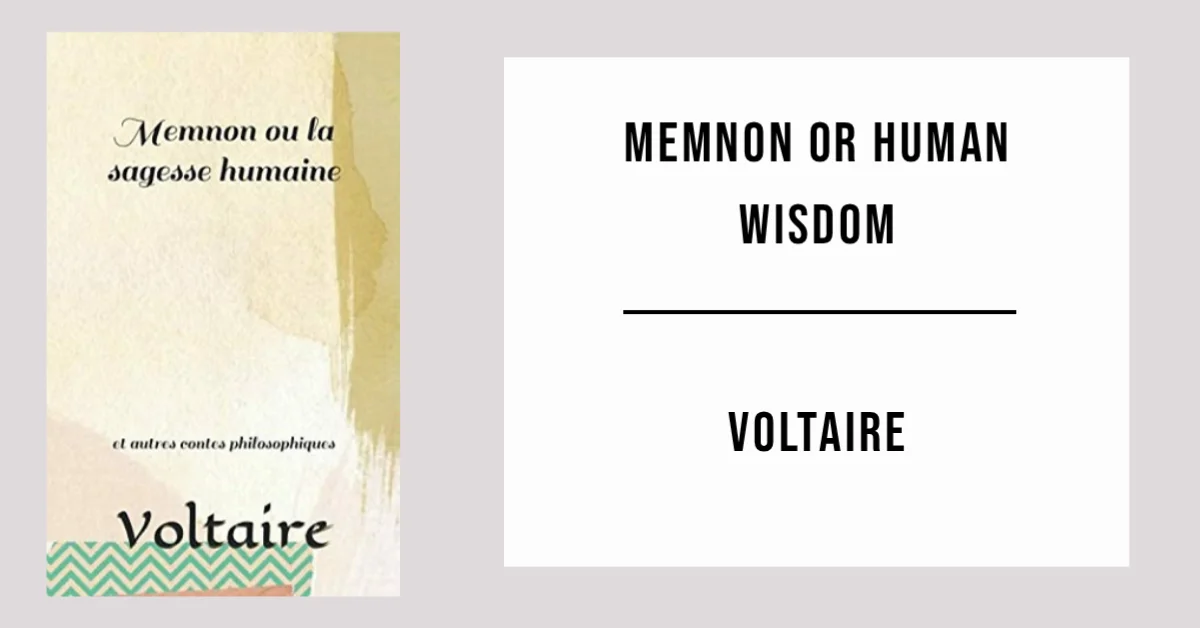
Voltaire wrote Memnon or Human Wisdom as a short, cutting satire on the illusion of perfect rationality. In just a few pages, he dismantles the idea that anyone can plan their way out of being human.
Here you can download your free copy in PDF format and discover why this philosophical tale still resonates with readers centuries later. It is a surprisingly accessible entry point into Voltaire's thought.
Published around 1750, this story sits alongside Candide and Zadig as one of Voltaire's essential philosophical fictions. Its brevity makes it perfect for a single sitting, but its ideas will stay with you much longer.
Memnon or Human Wisdom by Voltaire
*Please wait a few seconds for the document to load, the time may vary depending on your internet connection. If you prefer, you can download the file by clicking the link below.
Loading PDF...
Information: Memnon or Human Wisdom
- Author: Voltaire
- Publication Date: 1750
- Main Characters:
- Memnon: A young man from Nineveh who creates an ambitious plan to live by pure reason, only to see it fall apart within a single day.
- The Young Woman: A seemingly distressed woman whose tears lure Memnon into his first lapse of judgment, setting off a chain of disasters.
- The Celestial Spirit: A being from a higher world who visits Memnon to explain that perfect wisdom does not exist on any planet, only degrees of folly.
- Memnon's Uncle: A relative whose financial troubles drag Memnon into a disastrous gambling situation that costs him his fortune.
- Brief Summary: Memnon is a young man from Nineveh who decides one morning to become perfectly wise by renouncing all passions and desires. He creates a detailed plan to avoid women, food, drink, money troubles, and court intrigue. That very same day, he encounters a beautiful woman in distress, gambles away his fortune, gets into a fight, loses an eye, and ends up mocked by everyone he knows. A celestial spirit visits him and explains that absolute wisdom is impossible in any world, offering cold comfort that his planet is, in fact, one of the more foolish ones.
- Thematic Analysis: The central theme is the gap between theoretical wisdom and lived experience. Voltaire satirizes the Stoic and Rationalist belief that reason alone can protect a person from suffering. The tale also explores vanity, self-deception, and the comic irony of a man whose plan for perfection collapses in a single day.
- Historical Context: Written during the height of the French Enlightenment, Memnon reflects Voltaire's ongoing debate with philosophical optimism and rigid rationalism. The story appeared around 1750, a period when Voltaire was actively questioning the ideas of Leibniz and the notion that this is the best of all possible worlds. It anticipates many of the themes he would develop more fully in Candide nearly a decade later.