
Memoirs of the Twentieth Century & Prevision Should the future help the past? by Sammuel Madden & Liam Gillick [PDF]
by InfoBooks
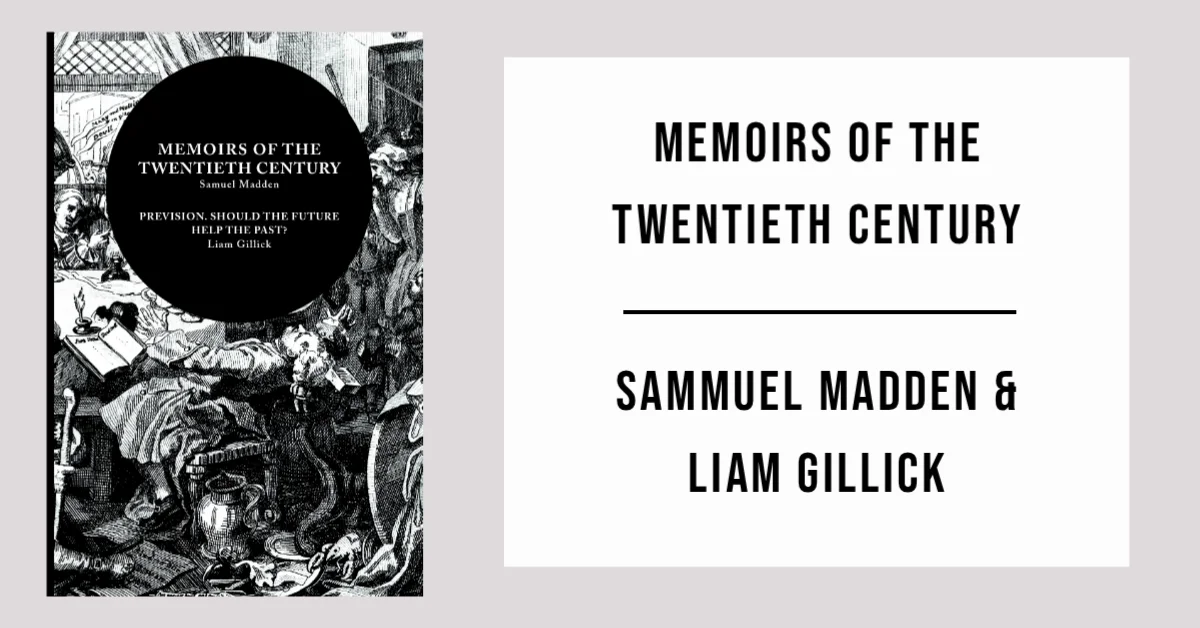
"Memoirs of the Twentieth Century" by Samuel Madden, paired with Liam Gillick's "Prevision," brings together two writers separated by over 260 years, both asking the same question: what happens when you try to see the future? Madden wrote the first English novel to feature time travel, back in 1733, and most copies were destroyed before anyone could read it.
This free PDF edition rescues Madden's text from near-oblivion and places it alongside Gillick's sharp analysis of how modern culture handles prediction and planning. Two centuries apart, both writers arrive at the same uncomfortable truth: knowing the future does not mean controlling it.
Diplomatic letters from a fictional 1990s. A critical essay from the real 1990s. Between them, a gap of 265 years that feels smaller than you expect. Start reading and see which version of the future holds up better.
Memoirs of the Twentieth Century & Prevision Should the future help the past? by Sammuel Madden & Liam Gillick
*Please wait a few seconds for the document to load, the time may vary depending on your internet connection. If you prefer, you can download the file by clicking the link below.
Loading PDF...
Information: Memoirs of the Twentieth Century & Prevision Should the future help the past?
- Author: Sammuel Madden & Liam Gillick
- Publication Date: 1733
- Main Characters:
- The Lord High Treasurer: The primary recipient of the diplomatic letters, serving under King George VI in Madden's imagined 1990s Britain
- The British Ambassador to Constantinople: One of the key letter writers, reporting on Ottoman affairs and European Catholic influence from the East
- The British Ambassador to Rome: A correspondent who describes Jesuit political maneuvering at the heart of Catholic power
- King George VI: The fictional future British monarch under whom the diplomatic correspondence takes place
- Brief Summary: Madden's portion takes the form of letters exchanged between British diplomats stationed across Europe in the 1990s, addressed to officials serving King George VI. The letters describe a world where Catholic and Jesuit influence dominates continental politics, reflecting Madden's own anxieties as a Protestant clergyman. Gillick's companion essay, "Prevision," examines how contemporary society uses scenario planning and speculative thinking, drawing connections between science fiction time-travel narratives and corporate strategic forecasting. Together, the two texts create an unexpected dialogue about whether imagining the future serves as warning, weapon, or wishful thinking.
- Thematic Analysis: The combined work explores the tension between prophecy and satire, showing how visions of the future often reveal more about present fears than actual predictions. Madden uses his fictional future to critique religious politics of the 1730s, while Gillick interrogates how late-capitalist institutions weaponize forward-thinking. Both texts raise questions about power, knowledge, and whether foresight carries moral responsibility.
- Historical Context: Madden published "Memoirs of the Twentieth Century" anonymously in 1733, during a period of intense anti-Catholic sentiment in Britain and Ireland. He destroyed most copies shortly after publication, leaving the book almost unknown for centuries. Gillick wrote "Prevision" in 1998, the year before the fictional letters in Madden's novel end, creating an accidental symmetry between the imagined future and the real one.