Paradise by Dante Alighieri [PDF]
by InfoBooks
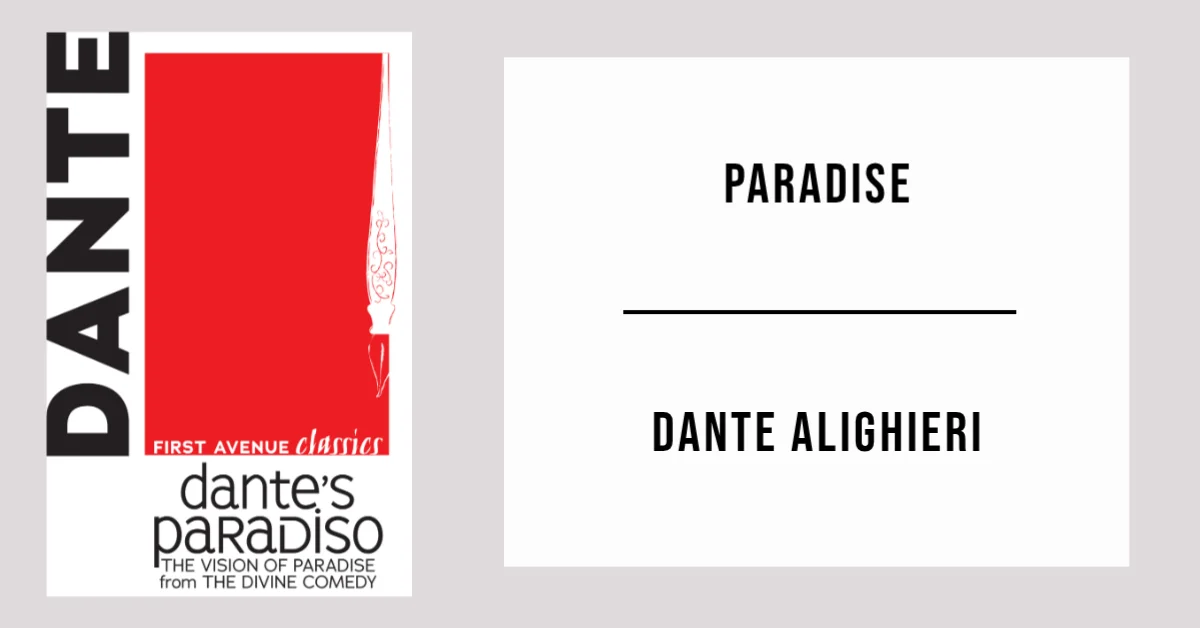
Dante Alighieri's Paradise is the breathtaking finale of the Divine Comedy, where poetry reaches for the divine and nearly touches it. Completed around 1320, this third cantica takes readers on an ascent through the celestial spheres toward a vision of God himself.
You can now download this classic for free in PDF format and experience Dante's most luminous and philosophical work. It is a text that rewards every careful reading.
If you have read Inferno and Purgatorio, this is where the whole architecture comes together. Let Dante take you the rest of the way.
Paradise by Dante Alighieri
*Please wait a few seconds for the document to load, the time may vary depending on your internet connection. If you prefer, you can download the file by clicking the link below.
Loading PDF...
Information: Paradise
- Author: Dante Alighieri
- Publication Date: 1320
- Main Characters:
- Dante (the Pilgrim): The narrator and protagonist who ascends through the heavens, representing the human soul's capacity to reach the divine through love and understanding.
- Beatrice: Dante's guide through Paradise, symbolizing divine wisdom, theology, and the transformative power of sacred love.
- St. Bernard of Clairvaux: A mystic who replaces Beatrice as Dante's guide in the final cantos, leading him to the direct vision of God.
- Justinian: The Byzantine Emperor encountered in the sphere of Mercury, who narrates the history of the Roman Empire and its providential role.
- Cacciaguida: Dante's great-great-grandfather, encountered in the sphere of Mars, who prophesies Dante's exile and encourages him to speak the truth without fear.
- Brief Summary: Paradise follows Dante as he ascends through the nine celestial spheres of Heaven, guided by his beloved Beatrice. Each sphere is associated with a planet and a particular virtue, and the blessed souls Dante meets there reflect those qualities. Along the way, Dante is tested on faith, hope, and love by the apostles Peter, James, and John. The poem culminates in the Empyrean, where Dante beholds the celestial rose of the blessed and, with the help of St. Bernard, gazes upon the divine light of God. The final lines attempt to describe the indescribable: the mystery of the Trinity and the union of the human and divine.
- Thematic Analysis: The central themes of Paradise are divine love, the nature of free will, and the relationship between human reason and faith. Dante explores justice through the souls he meets, questioning why some are saved and others are not, and concluding that God's justice surpasses human understanding. The work also meditates on the corruption of the Church and earthly power, contrasting them with the purity of heavenly order.
- Historical Context: Dante composed Paradise during his years of exile from Florence, completing it shortly before his death in 1321. The work was written against the backdrop of intense political conflict between the Guelphs and Ghibellines, and Dante's own bitter experience of political betrayal deeply informed his vision of divine justice. The medieval cosmology that structures the poem, with its concentric celestial spheres, reflects the Ptolemaic model of the universe that dominated European thought until Copernicus.