The Bride of Corinth and Other Poems by Johann Wolfgang von Goethe [PDF]
by InfoBooks
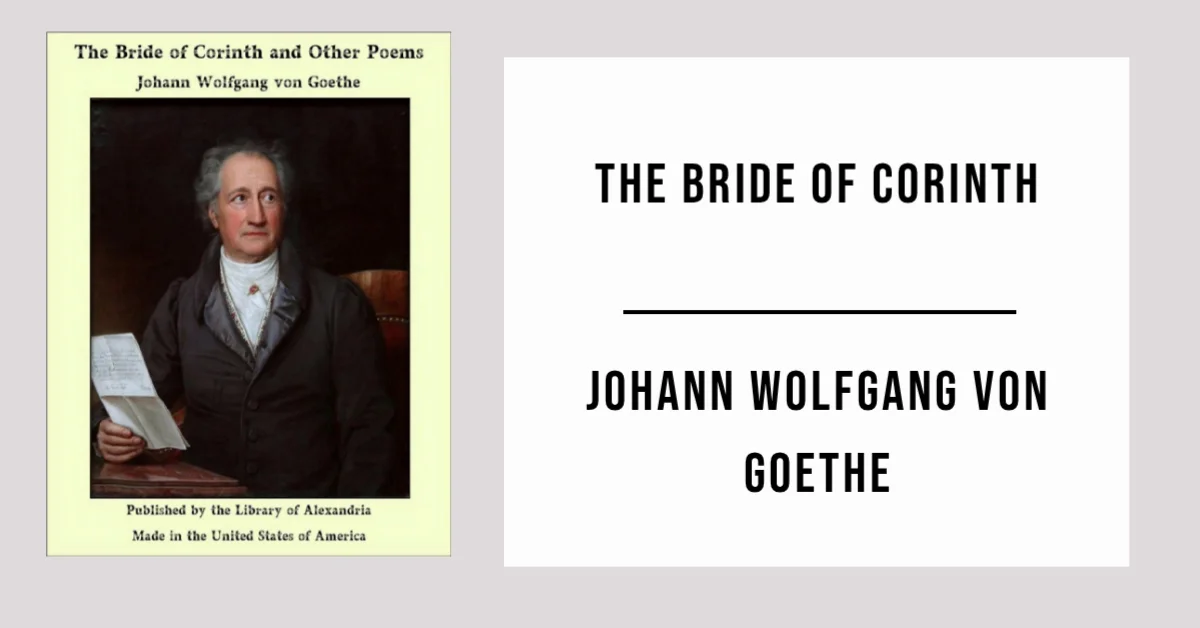
The Bride of Corinth and Other Poems is a poetry collection by Johann Wolfgang von Goethe, one of the most influential writers in the Western literary tradition. The title poem, written in 1797, is widely considered one of the first vampire poems in European literature. The collection brings together ballads and lyric poems that span themes of love, death, nature, and the clash between pagan and Christian worlds.
You can download this free PDF and explore the full range of Goethe's poetic voice, from supernatural ballads to meditative verses on fate and beauty. Each poem reveals a different facet of a writer who could move between the eerie and the tender with equal skill. The translations preserve the energy and imagery that made these poems famous across Europe.
Goethe wrote these poems during the same period that produced some of his greatest works, and the intensity shows on every page. If you liked Romantic poetry by Keats or Shelley, try this collection for a Continental perspective that shaped the movement before it even had a name.
The Bride of Corinth and Other Poems by Johann Wolfgang von Goethe
*Please wait a few seconds for the document to load, the time may vary depending on your internet connection. If you prefer, you can download the file by clicking the link below.
Loading PDF...
Information: The Bride of Corinth and Other Poems
- Author: Johann Wolfgang von Goethe
- Publication Date: 1797
- Main Characters:
- The Bride: A young woman from Corinth who dies of grief after her family converts to Christianity and forces her into a convent, breaking off her betrothal. She returns from death as a vampire to claim her lover.
- The Young Athenian: The groom who travels from Athens to Corinth expecting to meet his promised bride. He encounters her undead form at night and is drawn into a tragic reunion.
- The Mother: The bride's mother, who converted the family to Christianity and dedicated her daughter to religious life, setting the tragedy in motion. She discovers the supernatural encounter between the lovers.
- Brief Summary: This collection gathers some of Goethe's most compelling poems, with "The Bride of Corinth" as its centerpiece. The title poem is a narrative ballad set during the Christianization of Greece, where a young woman returns from death to find the lover her family denied her. Alongside it, the collection includes lyric poems and ballads that explore nature, longing, fate, and the boundaries between life and death. The poems date primarily from the late 1790s, a period of intense creative output for Goethe. The translations into English aim to preserve both the narrative force and the musicality of the originals.
- Thematic Analysis: The central themes running through this collection are the conflict between old beliefs and new religions, the power of love to transcend even death, and the tension between individual desire and social or spiritual authority. Goethe uses supernatural elements not as decoration but as a way to examine real human dilemmas. Nature appears throughout as both a source of beauty and an indifferent force that frames human struggles.
- Historical Context: Goethe wrote "The Bride of Corinth" in 1797, during a period of friendly poetic competition with Friedrich Schiller, and it was first published in Schiller's literary journal Die Horen. The poem draws on an ancient Greek story recorded by Phlegon of Tralles and is considered a foundational text in vampire literature, predating Polidori's "The Vampyre" by over two decades. The broader collection reflects the intellectual currents of German Classicism and early Romanticism.