
The City of the Sun by Tommaso Campanella [PDF]
by InfoBooks
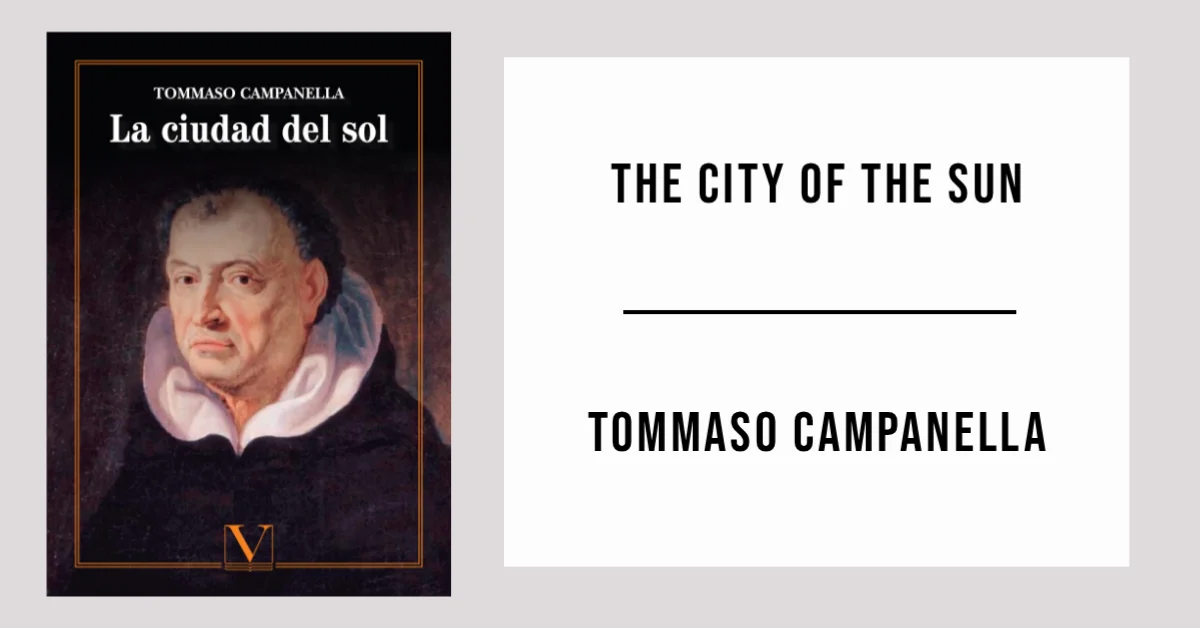
"The City of the Sun" by Tommaso Campanella is one of the boldest utopian texts of the Renaissance. Campanella wrote it in prison in 1602, imagining an entire civilization governed by reason, communal ownership, and the relentless pursuit of knowledge. Few people know this book, but it shaped political philosophy for centuries after.
Download your free PDF of "The City of the Sun" and explore a utopian vision that still provokes debate four centuries later. In under 50 pages, Campanella lays out a complete society where education replaces punishment and wisdom determines leadership. It is surprisingly accessible for a work of early modern philosophy.
A Genoese sea captain returns from a voyage and describes Solaria, a city where the walls themselves teach science and morality. If you are curious about how thinkers of the past imagined the future, start here.
The City of the Sun by Tommaso Campanella
*Please wait a few seconds for the document to load, the time may vary depending on your internet connection. If you prefer, you can download the file by clicking the link below.
Loading PDF...
Information: The City of the Sun
- Author: Tommaso Campanella
- Publication Date: 1602
- Main Characters:
- The Genoese Sea Captain: The narrator who recounts his visit to the City of the Sun, describing its customs, laws, and social organization to the Knight Hospitaller
- The Knight Hospitaller (Grand Master): The listener in the dialogue who asks questions about Solarian society, representing the European perspective and its assumptions
- Sol (The Metaphysician): The supreme ruler of the City of the Sun, a philosopher-priest who governs through wisdom and is assisted by three subordinate rulers: Pon, Sin, and Mor
- Pon (Power): One of the three co-rulers under Sol, responsible for military affairs and defense of the city
- Sin (Wisdom): One of the three co-rulers under Sol, responsible for the sciences, liberal arts, and all branches of learning
- Brief Summary: A Genoese sea captain tells a Knight Hospitaller about the City of the Sun, a utopian society he encountered during his travels. The city, called Solaria, is organized in concentric circles on a hilltop, ruled by a philosopher-priest known as the Metaphysician (or "Sol"). Property does not exist; everything is shared among citizens. Education begins at birth and covers all sciences, arts, and trades. The dialogue explores how this society handles governance, reproduction, religion, warfare, and labor, presenting a radical alternative to the European systems of Campanella's time.
- Thematic Analysis: The central themes are communal ownership, the role of knowledge in governance, and the tension between individual freedom and collective good. Campanella explores how a society might function when reason replaces tradition, and when education is treated as the foundation of justice. The work also wrestles with questions of eugenics and social control that remain uncomfortable and relevant.
- Historical Context: Campanella wrote "The City of the Sun" in 1602 while imprisoned in Naples for leading a failed revolt against Spanish rule in Calabria. He spent 27 years in prison, during which he produced many of his most significant works. The text was first published in Latin in 1623 as part of his "Realis Philosophiae" and reflects Renaissance humanist ideals alongside the political realities of Counter-Reformation Italy.