
The Enchiridion by Epictetus [PDF]
by InfoBooks
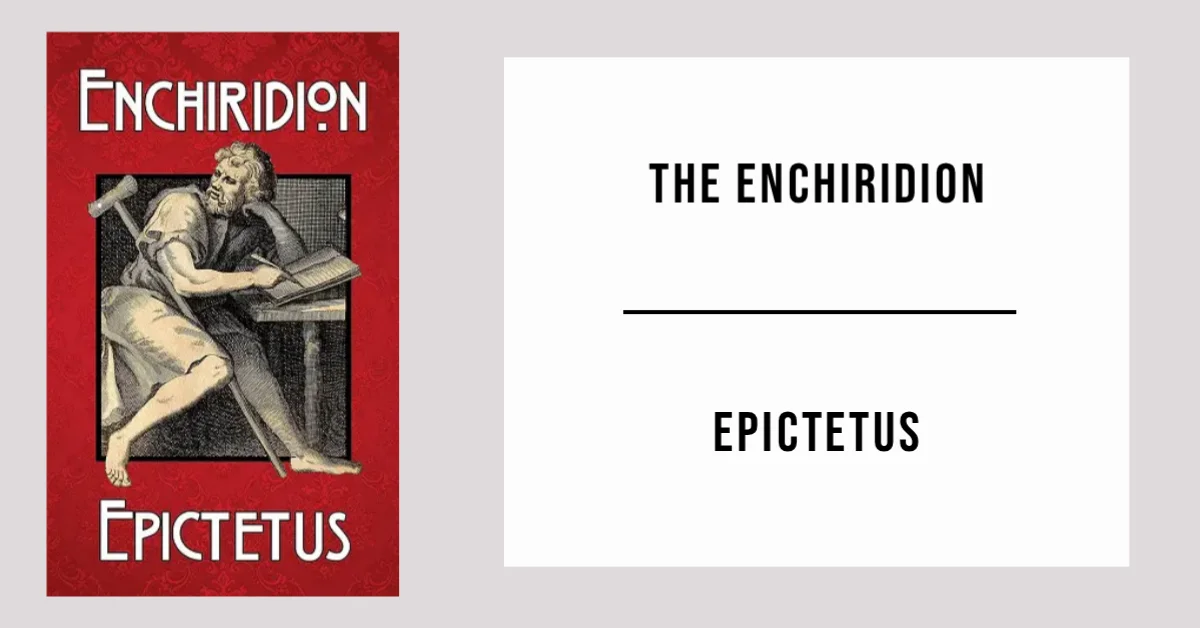
Epictetus was born a slave in the Roman Empire, and yet his philosophy on freedom of the mind became one of the most influential in Western history. The Enchiridion captures his core teachings in a format you can read in a single sitting.
Here you can download The Enchiridion in PDF format, completely free. This concise manual of Stoic wisdom is ideal for anyone looking to build resilience and clarity of thought.
The interesting thing about this author is that he never wrote a single word himself. Everything we have from Epictetus was recorded by his devoted student Arrian, who wanted to preserve his teacher's voice as faithfully as possible.
The Enchiridion by Epictetus
*Please wait a few seconds for the document to load, the time may vary depending on your internet connection. If you prefer, you can download the file by clicking the link below.
Loading PDF...
Information: The Enchiridion
- Author: Epictetus
- Publication Date: 125
- Main Characters:
- Epictetus: Former slave turned Stoic philosopher whose oral teachings form the basis of the entire text
- Arrian: Student of Epictetus who recorded and compiled his teacher's lectures into the Enchiridion and the longer Discourses
- Socrates: Greek philosopher frequently cited by Epictetus as a model of wisdom and moral courage
- Diogenes: Cynic philosopher referenced as an example of radical self-sufficiency and indifference to external circumstances
- Brief Summary: The Enchiridion, meaning "handbook" in Greek, is a short manual of Stoic ethical advice compiled by Arrian of Nicomedia around 125 AD. It summarizes the core teachings of Epictetus, focusing on what we can and cannot control. The text covers topics like dealing with desire, handling insults, maintaining composure, and living according to nature. Surprisingly accessible for an ancient philosophical text, it reads more like practical life advice than abstract theory. At roughly 50 short chapters, it was designed to be carried and consulted daily.
- Thematic Analysis: The central theme is the dichotomy of control: some things depend on us (our opinions, impulses, desires) and some do not (our bodies, possessions, reputations). Epictetus builds an entire ethical framework on this single distinction, showing how accepting it leads to tranquility. The text also explores duty, social roles, and the discipline of desire, consistently returning to the idea that our inner life is the only true domain of freedom.
- Historical Context: Epictetus taught in Nicopolis, Greece, after being exiled from Rome by Emperor Domitian around 93 AD. His teachings emerged during a period when Stoicism served as a practical philosophy for navigating political instability and personal hardship in the Roman Empire. The Enchiridion later influenced Marcus Aurelius, early Christian monasticism, and the founding of cognitive behavioral therapy in the 20th century.