
The Straw, the Coal, and the Bean by Brothers Grimm [PDF]
by InfoBooks
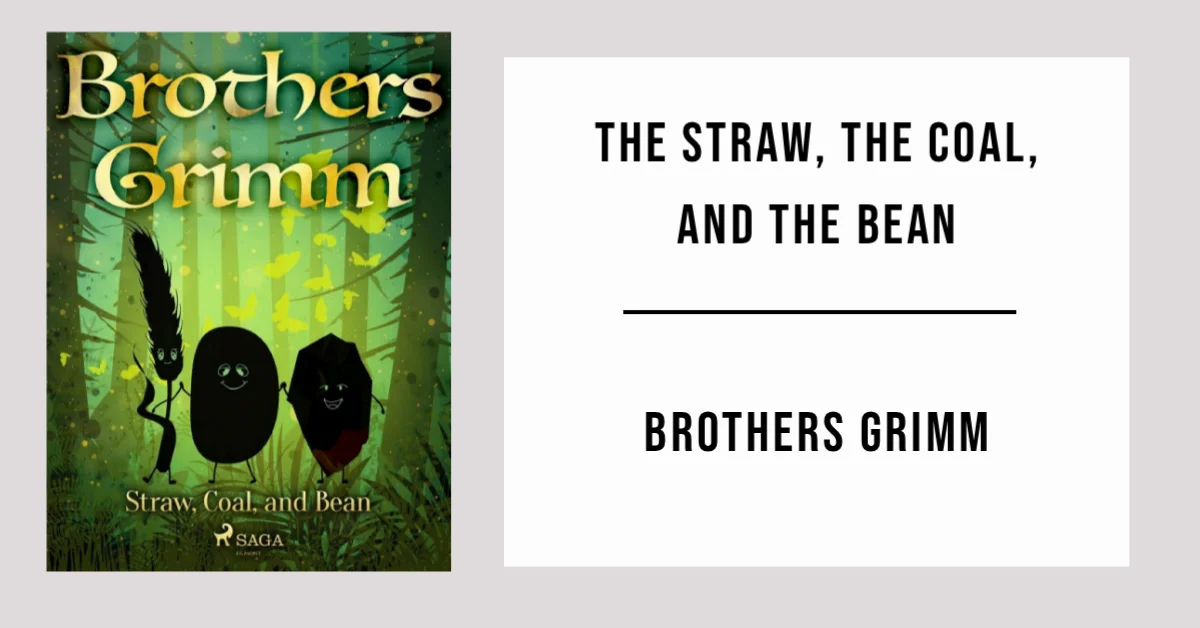
A straw, a coal, and a bean walk away from a kitchen fire, and things go sideways fast. This tiny fairy tale from the Brothers Grimm is one of the most inventive origin stories in folk literature. First published in 1812, it explains, with a wink, why beans have a black seam.
The story runs about 500 words, making it a perfect read for kids and adults who enjoy folklore with a sense of humor. You can grab the free PDF and read it in just a few minutes. Despite its brevity, it carries a clear message about empathy and the consequences of laughing at others.
The Brothers Grimm collected this tale from Dorothea Wild, and it has appeared in every major edition of their fairy tales since 1812. It is classified as ATU type 295 in the Aarne-Thompson-Uther index, a category dedicated to stories explaining why beans are black.
The Straw, the Coal, and the Bean by Brothers Grimm
*Please wait a few seconds for the document to load, the time may vary depending on your internet connection. If you prefer, you can download the file by clicking the link below.
Loading PDF...
Information: The Straw, the Coal, and the Bean
- Author: Brothers Grimm
- Publication Date: 1812
- Main Characters:
- The Straw: An escaped piece of straw that volunteers to serve as a bridge across a brook. Overconfident in its own strength, it catches fire and breaks apart.
- The Coal: A burning coal that escaped the kitchen fire. Impulsive and fearful, it panics on the straw bridge and causes the disaster.
- The Bean: A bean that avoided being cooked. She laughs at her companions' misfortune until she bursts, but is saved by a tailor's kindness.
- The Tailor: A compassionate traveler who finds the burst bean and sews her back together with black thread, giving beans their characteristic seam.
- The Old Woman: The woman who lights the kitchen fire to cook her beans, setting the entire chain of events in motion.
- Brief Summary: An old woman lights a fire with straw to cook her beans. A straw, a coal, and a bean all escape the kitchen and decide to travel together. They reach a brook with no bridge. The straw stretches across as a crossing, but the coal panics midway, the straw catches fire, and both fall into the water. The bean laughs so hard at their misfortune that she bursts open. A kind tailor passing by sews her up with black thread, and ever since, beans have had a black seam.
- Thematic Analysis: At its core, this tale warns against laughing at the misfortune of others. The bean survives the dangerous crossing only to nearly destroy herself through mockery. The story also explores how impulsiveness leads to disaster: the coal acts without thinking, the straw overestimates its own strength, and the bean lacks compassion. Yet the ending is forgiving. A stranger shows kindness, and the bean gets a second chance. The Grimms use humor and a simple etiological structure (explaining why something in nature looks the way it does) to deliver a moral about empathy, caution, and the value of helping others.
- Historical Context: This story was part of the first edition of "Kinder- und Hausmarchen" (Children's and Household Tales) published by Jacob and Wilhelm Grimm in 1812. The original title was "Strohhalm, Kohle und Bohne auf der Reise." The source was Dorothea Catharina Wild, the mother of Wilhelm Grimm's future wife. By the 1837 edition, the Grimms revised and expanded the tale into the version most readers know today. As an etiological tale (one that explains natural phenomena through fiction), it belongs to a long tradition found across European and Asian folklore. The ATU 295 classification links it to similar bean-seam stories from other cultures.
Books by Brothers Grimm
Cat and Mouse in Partnership by Brothers Grimm
Cinderella by Brothers Grimm
Hans in Luck by Brothers Grimm
Hansel and Gretel by Brothers Grimm
Jorinde and Joringel by Brothers Grimm
Little Red Riding Hood by Brothers Grimm
Mother Hulda by Brothers Grimm
Old Sultan by Brothers Grimm
Rapunzel by Brothers Grimm
Rumpelstiltskin by Brothers Grimm
Sweetheart Roland by Brothers Grimm
The Dog and the Sparrow by Brothers Grimm
The Elves by Brothers Grimm
The Fisherman and His Wife by Brothers Grimm
The Frog Prince by Brothers Grimm
The Gallant Tailor by Brothers Grimm
The Golden Bird by Brothers Grimm
The Goose Girl by Brothers Grimm
The Mouse, the Bird, and the Sausage by Brothers Grimm
The Peasants Wise Daughter by Brothers Grimm
The Pink by Brothers Grimm
The Queen Bee by Brothers Grimm
The Robber Bridegroom by Brothers Grimm
The Shoes That Were Danced to Pieces by Brothers Grimm
The Sleeping Beauty by Brothers Grimm
The Turnip by Brothers Grimm
Tom Thumb by Brothers Grimm
White Snake by Brothers Grimm