Textile engineering turns raw fibers into the yarns, fabrics, and finished materials that industry depends on. It covers spinning, weaving, knitting, dyeing, finishing, and the quality control that ties it all together.
Our free collection brings these disciplines together in one place, from fiber science to technical and smart textiles. Every book is a real textbook or industry manual, built for students, technicians, and professionals in textile production.
Download any title in PDF for free, with no registration and no paywall. You can also grab the whole collection in a single ZIP and start building your library today.
📚
Download every Textile Engineering book on this page
All the books on this page in one ZIP file, instead of downloading them one by one.
We will redirect you to accounts.google.com to complete sign-in.
Email and name only · We never send spam
Access unlocked
Download every Textile Engineering book on this page
All the books on this page in one ZIP file, instead of downloading them one by one.
Direct download · One ZIP file
Download started. Check your downloads folder for the ZIP.
Fundamentals
Textile Engineering Fundamentals
Start here to understand how textile manufacturing works from end to end. These books cover core processes, materials, and the math behind textile production.
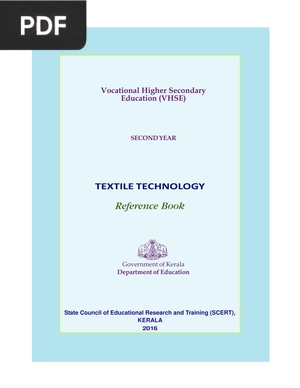
A complete reference on textile technology, covering fibers, yarn formation, fabric construction, and finishing. Written as a vocational course book, it gives a clear, structured overview of the whole production chain.
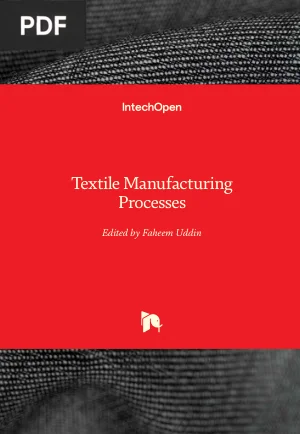
A peer-reviewed overview of the main textile manufacturing stages, from yarn and fabric production to garment making and technical textiles. A modern, research-based summary of the field for students and industry workers.
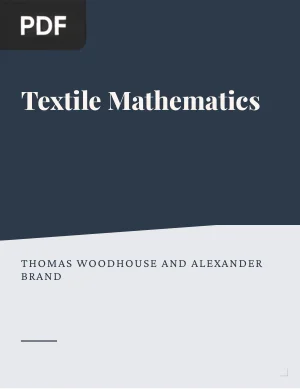
A practical guide to the calculations used across textile work, from counts and gearing to areas, volumes, and densities. Each topic is tied directly to real problems on the mill floor.
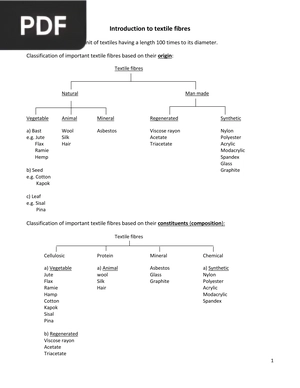
A clear introduction to natural and man-made textile fibers, organized by origin and chemical composition. It explains where each fiber comes from and how its structure shapes its behavior in yarn and fabric.
A broad survey of the natural raw materials used in textiles, including cotton, flax, hemp, wool, and silk. It traces each material from source to fabric, with notes on history and applications.
An illustrated guide to spun yarns and the systems that produce them, comparing ring, open-end, and air-jet spinning. It shows how each method shapes yarn structure, strength, and end use.
A focused technical bulletin on open-end (rotor) spinning, from yarn formation to the factors that control quality. It sets open-end spinning against ring spinning so the trade-offs of each are clear.
A practical look at how spun cotton yarns are engineered for knitting and weaving, and why the two end uses call for different yarn properties. A useful primer for sourcing or specifying yarn.
A step-by-step guide to weaving, from warp preparation and slashing to shedding, filling insertion, and beat-up. It covers the main loom types and insertion systems used in modern mills.
A peer-reviewed collection on fabrics engineered for technical performance, including woven structures, coatings, and high-value applications. It shows how changes at the fiber and fabric level are tuned for specific end uses.
A clear introduction to textile dyeing, covering color theory, dye classes, and how dyes bond to different fibers. It explains why a dye that works on cotton may fail on polyester or wool.
A technical guide to textile printing methods, from screen and roller printing to transfer and digital techniques. It covers the pastes, processes, and finishing steps that fix a printed design.
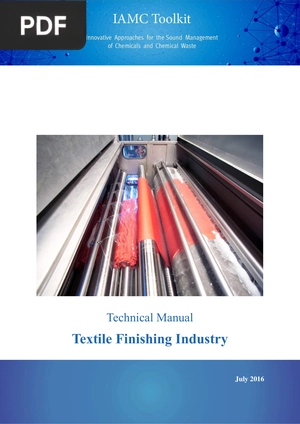
A detailed manual on wet processing and finishing, with a strong focus on cleaner production. It reviews pre-treatment, dyeing, printing, and finishing alongside practical ways to cut water, energy, and chemical use.
Quality control keeps textile production consistent and defect-free. These guides cover fabric testing, shrinkage, and common defects like holes and barre.
A diagnostic guide to holes in knitted fabric, tracing each defect back to yarn, knitting, or wet-processing causes. It pairs inspection methods with practical steps to prevent the problem.
A guide to controlling dimensional stability in cotton, explaining why fabrics shrink and how finishing and testing keep it in check. It connects lab measurement to real production settings.
A focused study of barré, the repetitive streaks that appear across knit and woven fabric. It explains how to spot the defect, trace its yarn or dyeing cause, and prevent it.
Technical and smart textiles push the field beyond apparel into medical, protective, and nonwoven materials. These books explore functional and advanced applications for high-performance industry.
A peer-reviewed volume on high-performance and smart textiles, spanning medical, protective, and functional uses. Chapters cover the fibers, structures, and treatments behind fabrics that do more than clothe.
A research-based collection on functional and intelligent textiles, from responsive coatings to wearable technology. It details the principles, equipment, and testing behind multifunctional fabrics.
These textile engineering books give you a full path, from raw fiber to finished fabric. Pick a section, download what you need, and keep learning at your own pace.
Send this page to someone who’d love to read it. Everything is free, no sign-up needed.
Esc
Start typing to search...
Searching...
No results found
Try different search terms
Your book is downloading!
If InfoBooks helped you, you can support us in one click: add us as a preferred source on Google. You'll see more of our books when you search, and you'll help us keep sharing free reading with everyone.
Done! Your book is downloading
Know someone who’d enjoy reading it? Send them this page. It’s free, no sign-up needed, and you help us spread the love of reading.