
Angel Pitou by Alexandre Dumas [PDF]
by InfoBooks
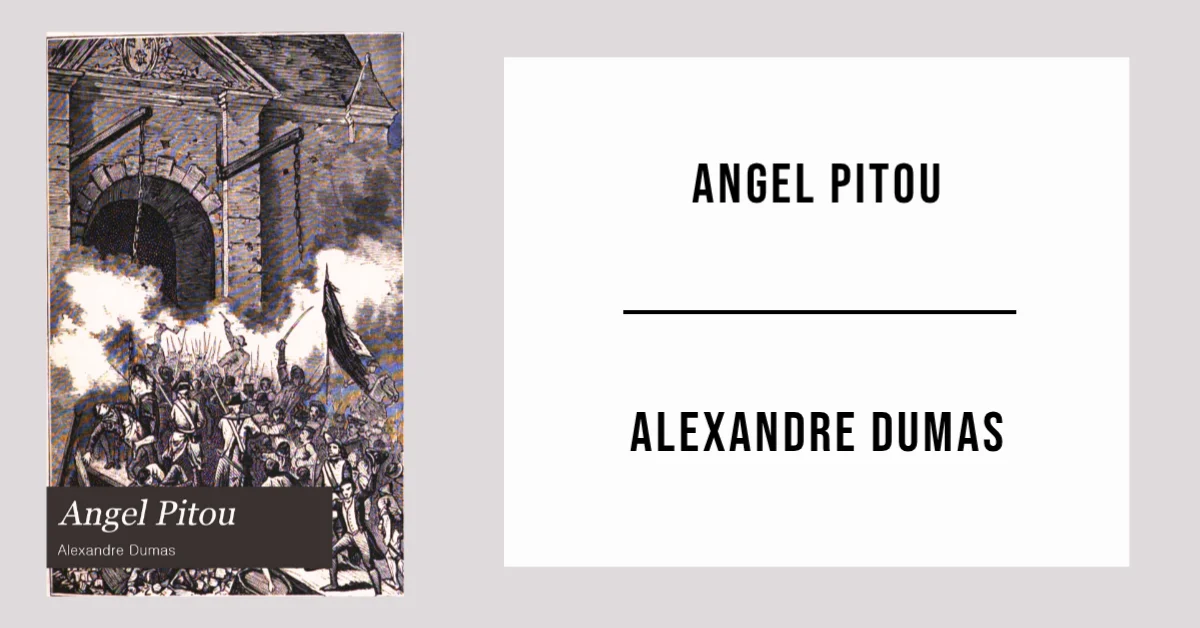
Angel Pitou by Alexandre Dumas plunges readers into the heart of the French Revolution through the unlikely adventures of a young peasant orphan. This novel transforms one of history's most dramatic turning points into a gripping personal story of courage and awakening.
Here at InfoBooks we bring you Angel Pitou in PDF format so you can read it on any device, anytime. Download your copy now and experience the fall of the Bastille through the eyes of an unforgettable character.
Dumas had a rare gift for making history feel urgent and personal. In Angel Pitou, the political becomes deeply human, and the result is a novel that still resonates with anyone who cares about freedom and what it costs.
Angel Pitou by Alexandre Dumas
*Please wait a few seconds for the document to load, the time may vary depending on your internet connection. If you prefer, you can download the file by clicking the link below.
Loading PDF...
Information: Angel Pitou
- Author: Alexandre Dumas
- Publication Date: 1851
- Main Characters:
- Ange Pitou: A young, good-hearted orphan from Villers-Cotterets who travels to Paris and becomes an unlikely participant in the storming of the Bastille.
- Billot: A sturdy farmer and Pitou's companion who is driven to Paris after government agents seize papers he was keeping for Dr. Gilbert.
- Dr. Gilbert: An intellectual and political idealist imprisoned in the Bastille whose ideas about freedom deeply influence Pitou.
- Marie Antoinette: The Queen of France, portrayed with complexity as she faces the growing threat of revolution and the collapse of royal authority.
- Catherine Billot: Billot's daughter, a young woman whose personal story adds an emotional counterpoint to the political upheaval surrounding her.
- Brief Summary: Angel Pitou follows a young orphan from the village of Villers-Cotterets who becomes entangled in the events of the French Revolution. After the farmer Billot discovers that government agents have seized papers belonging to the imprisoned Dr. Gilbert, Pitou and Billot travel to Paris seeking answers. There, Pitou witnesses the rising fury of the people and joins the storming of the Bastille on July 14, 1789. The novel interweaves fictional characters with real historical figures, including Marie Antoinette and the Marquis de Lafayette. It is the third installment in Dumas' four-part "Marie Antoinette" series.
- Thematic Analysis: The novel explores the tension between individual freedom and collective revolution, asking what ordinary people owe to the cause of liberty. Dumas examines class divisions through Pitou's peasant perspective, contrasting the luxury of Versailles with the hunger of Paris. Loyalty, betrayal, and the corrupting nature of power run through the personal relationships that drive the plot forward.
- Historical Context: Ange Pitou is set in the weeks immediately before and after the fall of the Bastille in July 1789, one of the defining moments of the French Revolution. Dumas published the novel as a serial in 1851, drawing on decades of historical research and his own family's connection to revolutionary France. The book reflects the political tensions of Dumas' own era, when France was once again grappling with questions of democracy and monarchy.
Books by Alexandre Dumas

Ali Pacha by Alexandre Dumas

Chicot the Jester by Alexandre Dumas

Louise De La Valliere by Alexandre Dumas

Murat by Alexandre Dumas

Nisida by Alexandre Dumas
Queen Margot by Alexandre Dumas

Ten Years Later by Alexandre Dumas

The Black Tulip by Alexandre Dumas

The Borgias by Alexandre Dumas

The Cenci by Alexandre Dumas

The Companions of Jehu by Alexandre Dumas
The Count of Monte Cristo by Alexandre Dumas

The Countess of Charny by Alexandre Dumas

The Forty-five by Alexandre Dumas

The Lady of the Camellias by Alexandre Dumas

The Man in the Iron Mask by Alexandre Dumas

The Queen’s Necklace by Alexandre Dumas

The Three Musketeers by Alexandre Dumas

The Vicomte De Bragelonne by Alexandre Dumas

The Women's War by Alexandre Dumas

Twenty Years After by Alexandre Dumas

Vaninka by Alexandre Dumas