Animal Farm by George Orwell [PDF]
by InfoBooks
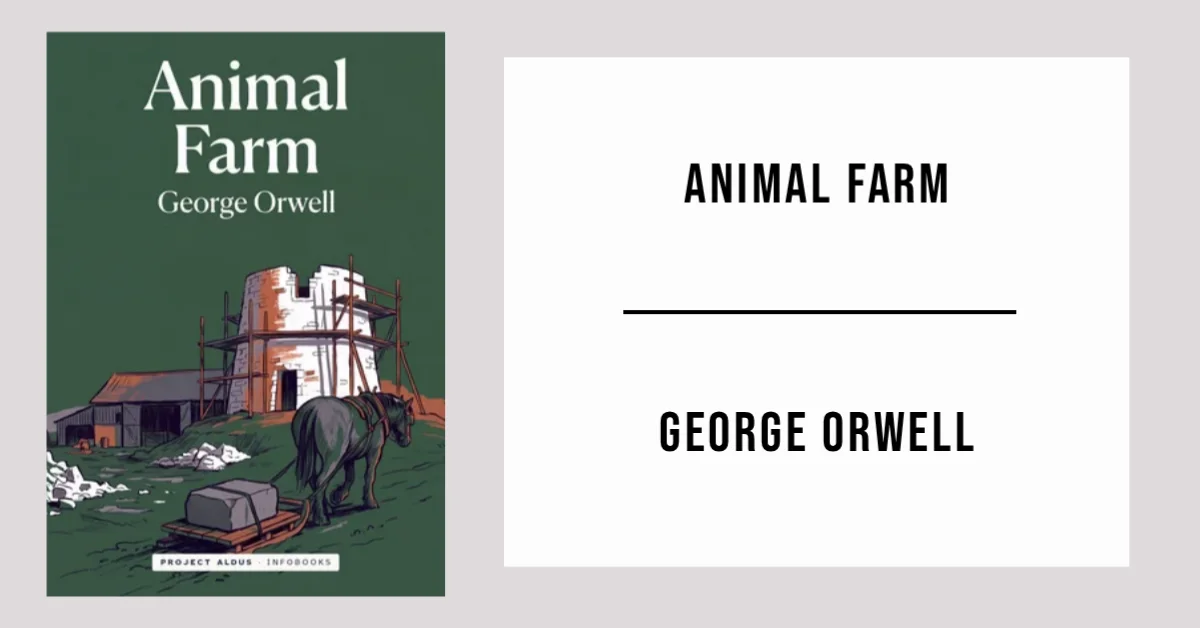
The final words of Animal Farm are not part of the story: they are a date, November 1943 to February 1944. George Orwell wrote this fable about a revolution gone wrong while Britain and Stalin's Soviet Union were fighting on the same side.
This version of Animal Farm in PDF is our own edition from Project Aldus: the complete text, set so you can read it in one sitting without tiring your eyes.
The download is free and needs no sign-up. One click and you have all ten chapters, from old Major's dream to the last look through the farmhouse window.
Animal Farm by George Orwell
*Please wait a few seconds for the document to load, the time may vary depending on your internet connection. If you prefer, you can download the file by clicking the link below.
Loading PDF...
Information: Animal Farm
- Author: George Orwell
- Publication Date: 1945
- Main Characters:
- Napoleon: A pig who becomes the dictatorial leader of the farm, symbolizing the corruption of power.
- Snowball: A pig who initially champions revolutionary ideals before being ousted by Napoleon.
- Squealer: The propagandist pig who manipulates language to control the other animals.
- Boxer: A hardworking cart-horse whose unwavering loyalty and strength are exploited by the ruling pigs.
- Clover: A gentle, perceptive mare who witnesses the betrayal of the farm’s ideals.
- Benjamin: A cynical donkey who remains skeptical of the changing political landscape.
- Thematic Analysis: “Animal Farm” explores themes of power corruption, the manipulation of language as a means of control, and the betrayal of revolutionary ideals. Orwell critiques how revolutionary movements can be subverted by those in power, leading to a society where freedom is replaced by oppression and inequality.
- Historical Context: Written during World War II, between November 1943 and February 1944, and published in 1945, the novella is a satirical reflection on the rise of totalitarian regimes, particularly critiquing Soviet communism under Stalin. It uses the farm as a microcosm to illustrate how noble ideals can be perverted by power-hungry leaders, resonating with historical events of political betrayal and authoritarianism.