The Little Match Girl by Hans Christian Andersen [PDF]
by InfoBooks
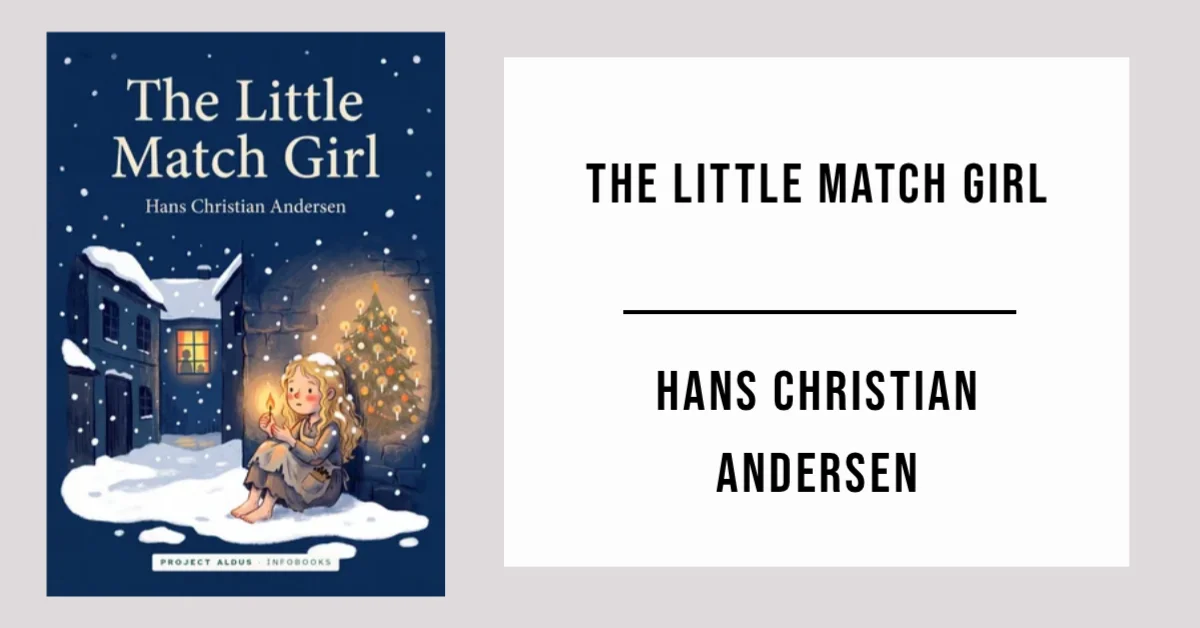
Most people remember The Little Match Girl as a Christmas story, but it takes place on New Year's Eve. The Christmas tree she sees in the third match is even bigger than the one she saw last Christmas through a rich merchant's glass door.
This version of The Little Match Girl in PDF is our own edition from Project Aldus: the complete tale, illustrated and set in large, clear type so you can read it aloud in one sitting.
The download is free and needs no sign-up. One click and the whole tale is yours, from the lost slippers to New Year's morning.
The Little Match Girl by Hans Christian Andersen
*Please wait a few seconds for the document to load, the time may vary depending on your internet connection. If you prefer, you can download the file by clicking the link below.
Loading PDF...
Information: The Little Match Girl
- Author: Hans Christian Andersen
- Publication Date: 1845
- Main Characters:
- The Little Match Girl: A poor, barefoot child selling matches on New Year's Eve who is too afraid of her father to go home without any money
- The Grandmother: The only person who ever loved the girl, who appears in the light of the fourth match and takes her where there is neither cold nor hunger
- The Father: Never seen on the page, but his threat of a beating is what keeps the girl out in the snow
- The Passers-by: The crowds hurrying home to their New Year's feasts, who walk past the girl without buying a single match
- Brief Summary: On the last evening of the year, a poor little girl wanders through the snowy streets with bare feet, trying to sell matches. Nobody buys a single one, and she is afraid to go home because her father will beat her. To warm her frozen fingers she strikes the matches one by one, and in each flame she sees a vision: a warm iron stove, a table with a roast goose, a glowing Christmas tree. In the fourth flame her dead grandmother appears, and the girl strikes the whole bundle so she will not vanish.
- Thematic Analysis: The tale contrasts the warmth and plenty of the holiday with the indifference of a city that does not see a child dying on its doorstep. Andersen mixes harsh social realism with Christian hope, so the ending reads as both a tragedy and a release.
- Historical Context: Andersen wrote the story in late 1845 for the Danish almanac Dansk Folkekalender, after the editor asked him to write a tale for a woodcut by Johan Thomas Lundbye showing a poor girl with matches. He drew on memories of his mother, who had been sent out to beg as a child, at a time when child poverty was common on the streets of Copenhagen.
Collection
Books by Hans Christian Andersen
Here is our complete collection of free books by Hans Christian Andersen