Here you will find our collection of free learn to read books in PDF, ready to download and print at home or in the classroom. Each title covers one stage of early literacy, from letter sounds to the first stories a child reads alone.
These are structured materials, not random storybooks. You will find phonics workbooks with short vowels, decodable stories for beginning readers, and guides written by the U.S. Department of Education and university literacy programs for parents and teachers.
Start with the phonics section if your child is still learning letter sounds. Jump straight to the beginning readers section if they already sound out simple words.
📚
Download every Learn to Read book on this page
All the books on this page in one ZIP file, instead of downloading them one by one.
We will redirect you to accounts.google.com to complete sign-in.
Email and name only · We never send spam
Access unlocked
Download every Learn to Read book on this page
All the books on this page in one ZIP file, instead of downloading them one by one.
Direct download · One ZIP file
Download started. Check your downloads folder for the ZIP.
Phonics
Books on Phonics and Short Vowels
These 9 workbooks teach letter sounds, short vowels and rhyming patterns in a fixed order. A child never meets a word they have not been prepared to decode.
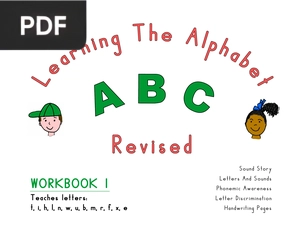
The first workbook in a sequential phonics program, covering the letters t, i, h, l, n, w, u, b, m, r, f, x and e. Each letter gets a sound story, phonemic awareness exercises, letter discrimination pages and handwriting practice.
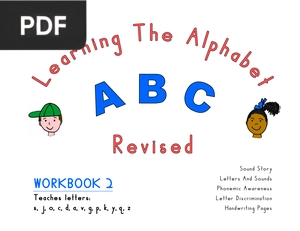
The second workbook of the alphabet sequence, teaching the letters s, j, o, c, d, a, v, g, p, k, y, q and z. It follows the same structure as the first book so a child can move straight from one to the other.
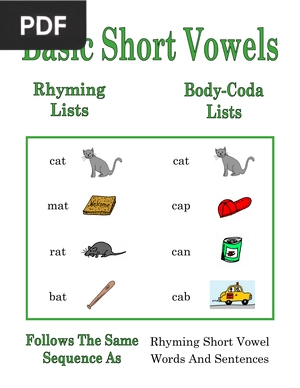
Rhyming lists, body-coda lists and short vowel sentences that build decoding one pattern at a time. Every word is illustrated so a child can check meaning without help.
The write-in companion to the short vowel books, with picture-word pages and practice sheets that match the same teaching sequence. Includes introduction pages for the sounds beyond the alphabet.
Sound blending practice for each short vowel, moving from single words to full sentences. Vowels are printed in color so a child can see the pattern that makes each word work.
The teaching manual behind the short vowel workbooks, with flow charts showing which book to use at each level and detailed lesson plans. Written for the adult running the lessons.
A complete six-phase phonics program, from listening games for the youngest children through to alternative spellings for the same sound. Each phase sets out what to teach, in what order, and how to check a child has got it.
Worksheets that pair with a kindergarten phonics unit, covering letter sounds, blending and simple spelling. Clean page design with plenty of room for a child to write.
The next step up from the kindergarten workbook, with longer words, consonant blends and spelling practice built around a set of fables. Includes assessment pages to check progress.
Once a child knows the basic letter sounds, these 6 books give them decodable stories to practice on. Several mark the sight words that cannot be sounded out, and the short sentences also suit readers with dyslexia.
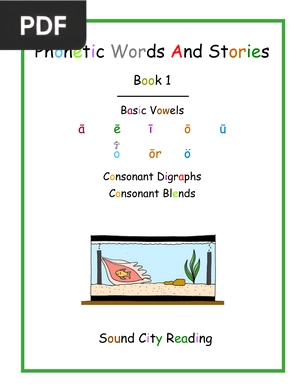
Word lists and short stories built on the basic vowels, consonant digraphs and consonant blends. Sight words are marked with a small symbol so a child knows which ones cannot be sounded out.
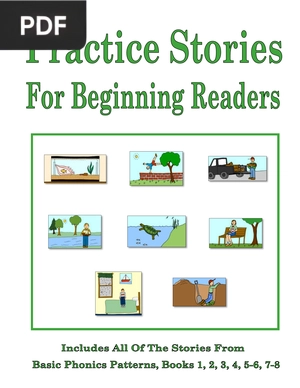
Every practice story from the Basic Phonics Patterns series gathered in one place, ordered by difficulty. A child reads only words made of patterns already taught, so there is nothing to guess.
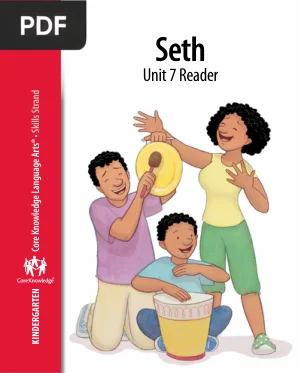
A set of fully illustrated decodable stories about a boy named Seth and his family. Every sentence uses only the letter sounds a kindergartener has already been taught.
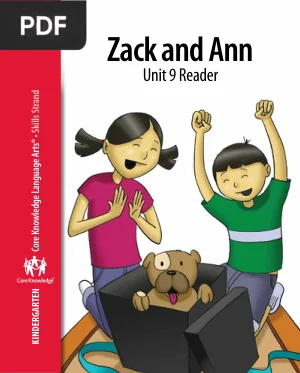
Longer decodable stories that follow two children and their dog, with more sounds in play than the earlier readers. A natural next step once a child reads short sentences with confidence.
Eighteen very short stories, each paired with a full-page photograph, written so a beginner can decode every word. The sentences stay short and predictable, which also suits readers with dyslexia.
These 6 guides are written for the adult, not the child. They explain what to do at each stage and how to turn everyday moments at home into reading practice.
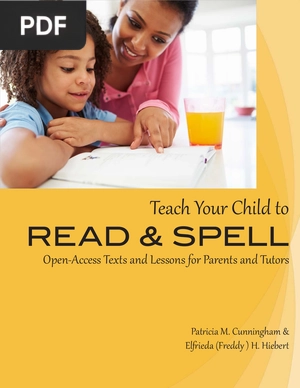
Open-access lessons for parents and tutors, each one built around a short text the child reads that same day. Two university literacy researchers explain what to say and what to do at every step.
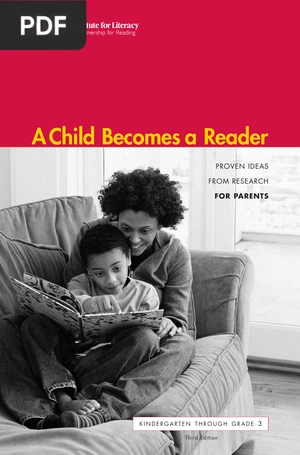
What reading research actually says parents can do at home, from kindergarten through third grade. Short, plain language, with checklists of what a child should be able to do at each stage.
One hundred take-home reading activities for kindergarten, each on its own page and each taking a few minutes. Written as a short note to the family, with a space for the child to sign.
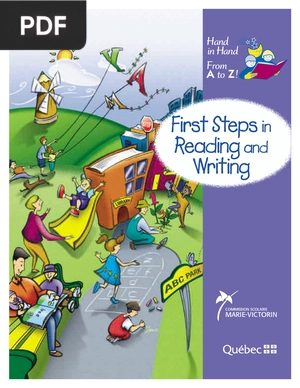
A family literacy program with illustrated activities parents and children do together, organised around everyday moments at home. Includes guidance for adults who are not confident readers themselves.
A short university essay that walks through the building blocks of reading: phonological awareness, the alphabet, vocabulary, fluency and comprehension. Useful if you want to understand why a method works, not just how to run it.
A close look at a phonics program that worked, taking it apart lesson by lesson to show what made it effective. Includes the full word and sentence sequence, so it doubles as a teaching resource.
Learning to read is a skill children build one pattern at a time. Every book on this page is free, and teachers can use the same workbooks with a class of students that a parent uses with one child.
Looking for more material for young learners? Browse our full Children's Books category.
Send this page to someone who’d love to read it. Everything is free, no sign-up needed.
Esc
Start typing to search...
Searching...
No results found
Try different search terms
Your book is downloading!
If InfoBooks helped you, you can support us in one click: add us as a preferred source on Google. You'll see more of our books when you search, and you'll help us keep sharing free reading with everyone.
Done! Your book is downloading
Know someone who’d enjoy reading it? Send them this page. It’s free, no sign-up needed, and you help us spread the love of reading.