Alchemy books in PDF, free to read and download. Here are the treatises the alchemists wrote, and the modern studies that explain what they were doing.
Alchemy was never only about turning lead into gold. The art ran from Ptolemaic Egypt through Persia, India and the Islamic world into medieval Europe.
These books cover the symbolism of the great work, the hermetic treatises, laboratory alchemy after Paracelsus, and the inner path Al-Ghazali described. Every title opens in your browser or downloads in one click, with no account and no fees.
📚
Download every Alchemy book on this page
All the books on this page in one ZIP file, instead of downloading them one by one.
We will redirect you to accounts.google.com to complete sign-in.
Email and name only · We never send spam
Access unlocked
Download every Alchemy book on this page
All the books on this page in one ZIP file, instead of downloading them one by one.
Direct download · One ZIP file
Download started. Check your downloads folder for the ZIP.
History
Books on the History of Alchemy
Alchemy has a documented history of roughly two thousand years, from Alexandria to the laboratories of the seventeenth century. These books trace how the art worked, who practiced it, and how it turned into chemistry.
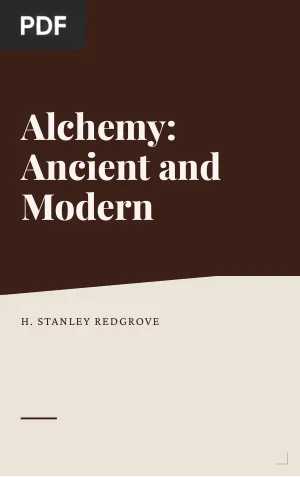
Redgrove traces alchemy from its Greek and Arabic roots through the seventeenth century, then argues that the alchemists' theory of transmutation anticipated the discovery of radioactivity. Includes chapters on Paracelsus, Van Helmont and the alchemical view of matter.
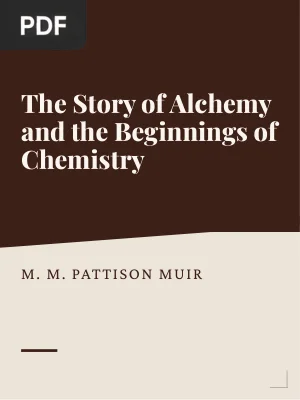
A Cambridge chemist tells how the search for the philosophers' stone turned into laboratory science. Muir follows the theory of the elements from Alexandria to Boyle and Lavoisier, with eighteen illustrations.
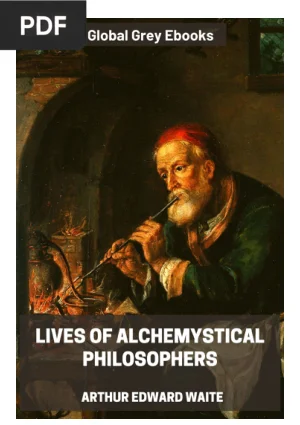
Biographical sketches of the alchemists from Geber and Avicenna to Roger Bacon, Raymond Lully and Paracelsus. Waite opens with a long essay on the physical theory and practice of the magnum opus.
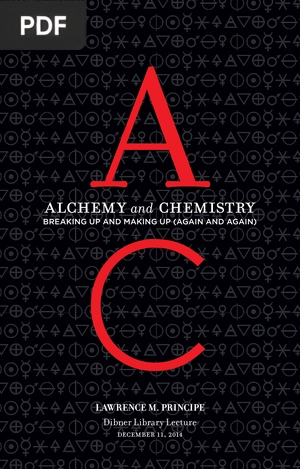
Principe shows how chemistry and alchemy separated and rejoined across four centuries, reconstructing historical recipes in the laboratory to reveal what the obscure language actually described. Richly illustrated with manuscripts and period engravings.
A short illustrated primer on medieval and early modern alchemical manuscripts. Principe explains how alchemical language was built to conceal and reveal at once, with a catalogue of manuscripts and suggestions for further reading.
Alchemists wrote in glyphs, colors and allegorical images, and rarely in plain language. These books decode the seven planetary metals, the stages of the great work, and the emblem books that carried the tradition.
Silberer reads a hermetic parable as if it were a dream and builds a psychoanalytic theory of alchemical symbolism from it. This is the book that shaped how Jung and later writers approached the great work.
One of the most beautiful alchemical manuscripts ever made, reproduced with 22 allegorical plates from the illuminated original of 1582. The accompanying treatises explain the stages of the work that the images encode.
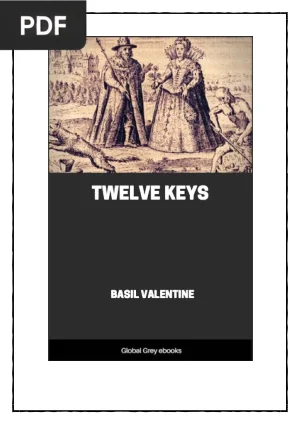
Twelve short allegorical keys describing the stages of the great work, each one a riddle wrapped around a chemical operation. A foundational emblem text of European alchemy, closing with a tract on sulphur, mercury and salt.
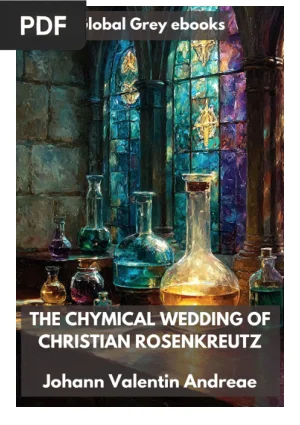
The seven day allegorical journey that launched the Rosicrucian movement and encoded the alchemical marriage in narrative form. Read as a story it is also a map of the stages of transformation.
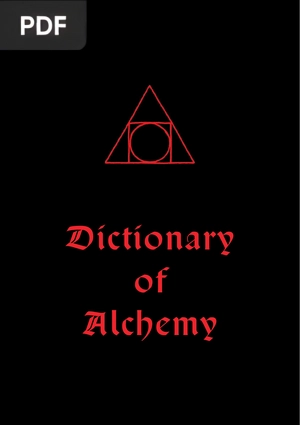
An illustrated A to Z of alchemical terms, from calcination and dissolution to the Tria Prima and the planetary metals. A quick reference for decoding the symbolism in older treatises.
Western alchemy grew alongside hermeticism, the tradition attributed to Hermes Trismegistus that also fed Rosicrucian thought. These are the hermetic treatises written for practitioners of the art.
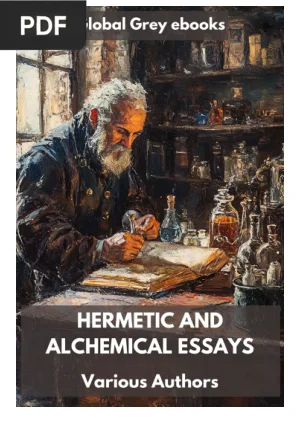
A large collection of primary hermetic and alchemical treatises in English translation, including the Golden Chain of Homer, the Six Keys of Eudoxus, the Glory of the World and the Turba Philosophorum. The best single starting point for reading the sources directly.
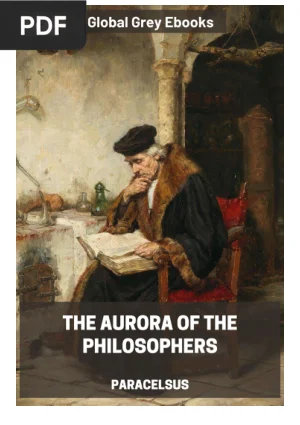
Paracelsus on the origin of the philosophers' stone and how the art passed from Egypt to Europe. Waite's translation of one of the clearest statements of Paracelsian alchemy.
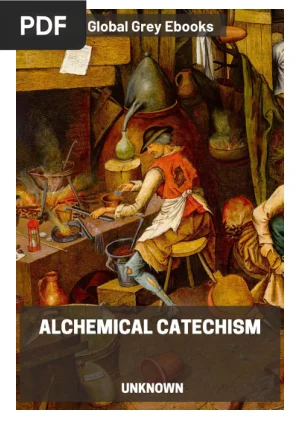
A short question and answer text that teaches the principles of the art the way a catechism teaches doctrine. Each answer defines one term or one operation in plain language, which makes it an unusually easy first hermetic text.
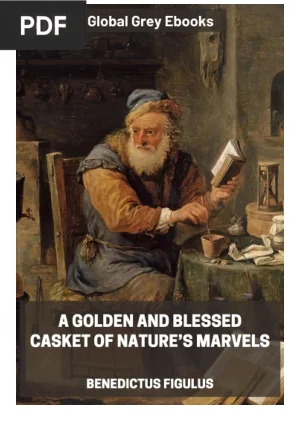
A Paracelsian anthology gathering the Book of the Revelation of Hermes and other treatises on the tincture and the universal medicine. Figulus assembled these to preserve the practical hermetic tradition he had learned.
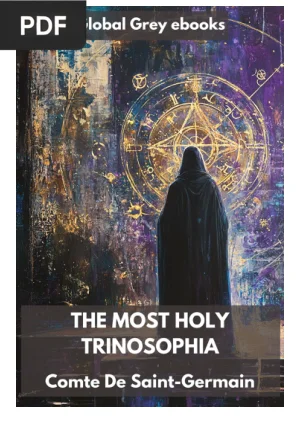
A symbolic account of initiation attributed to the Comte de Saint-Germain, laid out in twelve sections of alchemical allegory. Manly P. Hall's translation adds commentary on each section and on the figure behind the manuscript.
Laboratory alchemy produced real techniques, from distillation to the handling of antimony and mercury. Read these as historical documents, not as procedures to repeat.
A working seventeenth century laboratory manual covering stills and furnaces, compound waters and spirits, and the spagyric preparation of minerals and plants. It is a historical document and should be read as one, not as a set of procedures.
Seven hermetic tracts on the preparation of the stone, including the Bosom Book of Sir George Ripley and treatises on the alkahest, the oil of sulphur and the sophic mercury. Printed from a quarto manuscript in a well known private collection.
The most widely read practical alchemical treatise of the seventeenth century, written by an anonymous adept who claimed to have finished the work at twenty three. Isaac Newton studied and annotated it closely.
Glauber on sulphur, mercury and salt, the three principles that Paracelsian chemistry used to explain every metal. A working chemist writing about his own furnace, and the source of the salt that still carries his name.
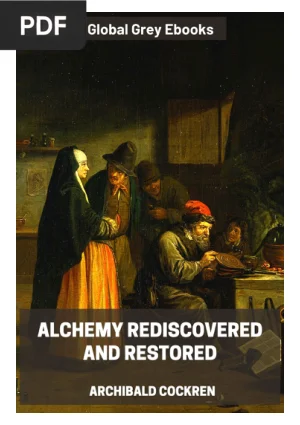
Cockren retells the history of alchemy through Nicholas Flamel, Basil Valentine and Paracelsus, then describes his own attempts to prepare metallic tinctures in a modern laboratory. Presented as a historical record rather than as instructions.
Al-Ghazali's Sufi classic on the transformation of the self, where the alchemy that matters is the refinement of the soul rather than of metal. Claud Field's translation covers knowledge of self, of God, of this world and of the next.
A treatise on spiritual alchemy that reads the great work as an operation performed on the practitioner rather than on matter. Garstin connects hermetic practice to mysticism and to the wider western esoteric tradition.
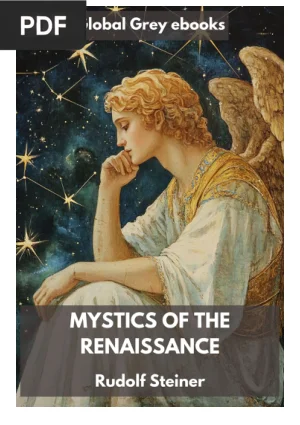
Steiner traces the inner path through Meister Eckhart, Nicholas of Cusa, Agrippa von Nettesheim, Paracelsus and Jacob Boehme. Useful for seeing how alchemical language carried a spiritual philosophy alongside the laboratory work.
That is the full run of alchemy books on this page, from Alexandria to the modern laboratory. If the emblems and glyphs pulled you in, our occultism books go further down that road, and our chemistry books show where the laboratory work ended up.
Send this page to someone who’d love to read it. Everything is free, no sign-up needed.
Esc
Start typing to search...
Searching...
No results found
Try different search terms
Your book is downloading!
If InfoBooks helped you, you can support us in one click: add us as a preferred source on Google. You'll see more of our books when you search, and you'll help us keep sharing free reading with everyone.
Done! Your book is downloading
Know someone who’d enjoy reading it? Send them this page. It’s free, no sign-up needed, and you help us spread the love of reading.