Egyptology is the science that unlocks the secrets of one of history's oldest civilizations. Here you will find 29 free books and articles in PDF on ancient Egypt, its art, religion, language, and archaeology.
These materials gather scholarship on hieroglyphs, the Book of the Dead, funerary rituals, and monumental architecture. They come from universities, museums, and open access archives, ready to read and download.
Pick a topic below and start exploring the world of the pharaohs today. Every title is free to download, with no registration required.
📚
Download every Egyptology book on this page
All the books on this page in one ZIP file, instead of downloading them one by one.
We will redirect you to accounts.google.com to complete sign-in.
Email and name only · We never send spam
Access unlocked
Download every Egyptology book on this page
All the books on this page in one ZIP file, instead of downloading them one by one.
Direct download · One ZIP file
Download started. Check your downloads folder for the ZIP.
Art & Architecture
Books on Art and Architecture of Ancient Egypt
Explore the monumental art and architecture that defined ancient Egypt. These books cover painting, sculpture, temple design, and the building methods behind the pyramids.
A Metropolitan Museum educator resource on Egyptian art, with background texts, object descriptions, and images spanning sculpture, painting, and architecture across three millennia. A rich visual introduction to how and why the Egyptians made art.
Nina Davies' classic plates of Egyptian tomb and temple paintings, selected, copied, and described with editorial help from Alan Gardiner. A landmark reference on color, scene, and style in pharaonic art.
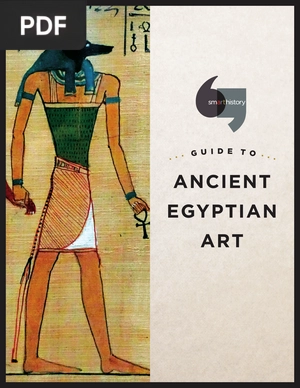
An accessible, image-led guide to Egyptian art from leading art historians, covering the Narmer Palette, the Giza pyramids, tomb painting, and more. Clear essays make complex works easy to understand.
Dr. Amy Calvert, Dr. Elizabeth Cummins, Dr. Beth Harris, and Dr. Steven Zucker
A focused study of the artistic upheaval under Akhenaten, when traditional canons gave way to the naturalistic Amarna style. Explains the worldview, materials, and conventions behind Egyptian art.
How the Egyptians quarried, moved, and raised the colossal stone of temples and pyramids without modern machinery. Drawn from the Karnak record, it details the engineering behind their architectural feats.
Traces the development of the tomb from predynastic pit graves through mastabas to the great pyramid complexes of the Old Kingdom. Uses the Abusir complex to explain the meaning behind each element.
A short, clear explanation of why Egyptian art looks the way it does: its formality, frontality, and purpose. Helps readers view these works on their own terms rather than by later standards.
Examines how the Ptolemaic kings used temple reliefs at Edfu, Philae, and Kom Ombo to present themselves as legitimate pharaohs. A study of art as political and ideological language.
Discover how the ancient Egyptians worshipped their gods and prepared for the afterlife. These titles include the Book of the Dead, magical practices, and funerary rituals.
The definitive companion to the Book of the Dead, with stunning object photography and essays on the spells Egyptians used to navigate the afterlife and become divine. The single best resource here on ancient Egyptian funerary belief.
Robert Ritner's authoritative study of how Egyptian magic actually worked: its rituals, techniques, and place in religion. A deep, scholarly reference on a subject usually treated superficially.
A peer-reviewed entry from the UCLA Encyclopedia of Egyptology on religion as lived at home: household shrines, protective deities, and daily ritual. Shows the personal side of Egyptian belief beyond the great temples.
A concise, authoritative overview of the rites that accompanied death and burial in pharaonic Egypt. Part of the UCLA Encyclopedia of Egyptology, written by a specialist in mortuary religion.
A university course guide mapping Egyptian religion through tombs, temples, and the mortuary cult across 3,000 years. A useful roadmap to the major texts and themes of the field.
Learn to read the symbols that recorded a whole civilization. These books teach hieroglyphs, hieratic script, grammar, and the structure of the ancient Egyptian language.
A large anthology of Egyptian tales, hymns, litanies, and the Book of the Dead in translation. A single-volume gateway to the literary voice of ancient Egypt.
A working hieroglyphic dictionary with the sign alphabet, Gardiner codes, transliteration, and translation. An essential desk reference for anyone learning to read the script.
Roeder's compact grammar of Middle Egyptian, a classic primer on the structure of the language. A rigorous starting point for serious students of hieroglyphic texts.
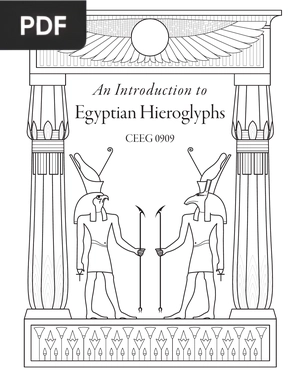
A hands-on Brown University workbook that teaches hieroglyphs through calligraphy practice, vocabulary, and graded exercises. One of the most practical ways to start actually reading the script.
A step-by-step introduction to abnormal hieratic, the most difficult of all Egyptian scripts, taught through worked examples. A rare teaching resource for an otherwise inaccessible subject.
Workshop proceedings exploring how philosophers across history have read meaning into Egyptian hieroglyphs. A thoughtful look at the script as both writing and symbol.
A short, clear overview of hieratic, the cursive everyday script of ancient Egypt, with sign forms from the Old Kingdom to the Ramesside era. A friendly first step into reading handwritten Egyptian.
A clear museum explainer on what hieroglyphs are, how they developed from pictures, and how scribes used them. An easy entry point for newcomers to Egyptian writing.
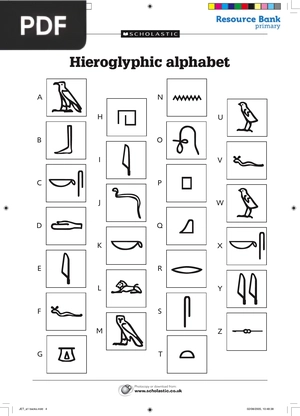
A printable hieroglyphic alphabet sheet with activities for writing your own name and words in Egyptian signs. A fun, hands-on introduction for beginners and classrooms.
Step into the field of Egyptian archaeology and the finds that shaped it. These books examine museum collections, excavation discoveries, and the science of mummification.
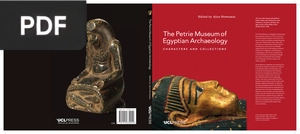
A richly illustrated tour of one of the world's great Egyptian collections, told through its characters and objects. Connects the archaeology of Egypt to the people who excavated and studied it.
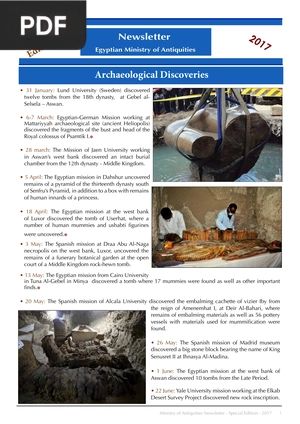
A field newsletter cataloguing recent excavation finds across Egypt, from tombs and statuary to intact burial chambers. A snapshot of Egyptology as an active, ongoing science.
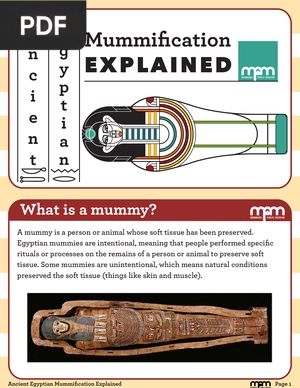
A clear, illustrated explainer on how and why the Egyptians mummified their dead, including animal mummies and the role of ushabti figures. An approachable introduction to a defining Egyptian practice.
See how ordinary people lived along the Nile thousands of years ago. These books describe social structure, work, family, and everyday routines in ancient Egypt.
A Petrie Museum learning pack on daily life in ancient Egypt, built around real objects and classroom activities. Pairs archaeology with accessible discussion of how Egyptians actually lived.
A friendly overview of Egyptian society, work, trade, and daily routines along the Nile. A gentle starting point for younger readers and newcomers to the subject.
A short, clear breakdown of the Egyptian social pyramid, from pharaohs and priests down to farmers and laborers. A quick reference on how power and status were organized.
Egyptology brings the world of ancient Egypt within reach of every curious reader. We hope these free books help you explore its history, art, language, and archaeology.
If InfoBooks helped you, you can support us in one click: add us as a preferred source on Google. You'll see more of our books when you search, and you'll help us keep sharing free reading with everyone.