These free linguistics books in PDF take you from your first steps in the study of human language to full university textbooks. You'll find open textbooks on phonetics, syntax, semantics, sociolinguistics and psycholinguistics.
Many are the open textbooks universities assign in linguistics courses, like Catherine Anderson's Essentials of Linguistics. Next to them sit the classics that founded the field, by Edward Sapir and Leonard Bloomfield.
Start with an introduction, then jump to the branch that interests you most. Every book is free to read online or download, no sign-up needed.
📚
Download every Linguistics book on this page
All the books on this page in one ZIP file, instead of downloading them one by one.
We will redirect you to accounts.google.com to complete sign-in.
Email and name only · We never send spam
Access unlocked
Download every Linguistics book on this page
All the books on this page in one ZIP file, instead of downloading them one by one.
Direct download · One ZIP file
Download started. Check your downloads folder for the ZIP.
Introductions
Introduction to Linguistics Books
New to linguistics? These introductory books explain how sounds, words and sentences work, and one even trains you for the Linguistics Olympiad.
A complete first course in linguistics written by seven university instructors, covering phonetics, phonology, morphology, syntax, semantics and language in society. This revised second edition adds chapters on language, power and identity, with practice exercises in every chapter.
Lecture notes from a university introduction to linguistics, moving step by step from phonetics and phonology to morphology, syntax and semantics. Clear and rigorous, with a strong focus on how linguists analyze real data.
Edward Sapir's 1921 classic on what language is, how languages differ and how they change over time. A short, elegant book that still shapes how linguists think about sounds, grammar, language and culture.
Leonard Bloomfield's first book, written in 1914 for general readers and beginning students. It explains the nature of speech, sound change, word structure and the growth of languages, and set the stage for modern linguistics.
A training guide for the Linguistics Olympiad that teaches you to solve puzzles in languages you have never seen. Each type of problem comes with the theory you need, a method to crack it and practice problems from past competitions.
How do we produce the sounds of speech, and why does each language organize them differently? These books teach the International Phonetic Alphabet and the sounds of English, starting with classics by Daniel Jones and Henry Sweet.
The landmark guide to English pronunciation by Daniel Jones, the phonetician who defined the cardinal vowels. It describes every English speech sound with 131 illustrations and diagrams, and shows the common mistakes learners make and how to fix them.
A concise introduction to phonetics by Henry Sweet, the scholar who inspired Professor Higgins in Pygmalion. It explains how speech sounds are produced and written down, with examples from English, French, German, Latin and Greek.
A phonetics and phonology textbook built entirely on Indigenous languages of the Americas. It covers consonants, vowels, syllables, tone and stress with real data and exercises, and is a great way to practice sound analysis beyond English.
These linguistics textbooks show how words are built and how sentences are put together. They range from a first course with exercises to Stefan Müller's Grammatical Theory, published by Language Science Press.
An open textbook on morphology and syntax that teaches you to break words into parts and draw the structure of sentences. Includes practice exercises in every chapter plus study tips for linguistics courses.
A hands-on introduction to syntax from the generative grammar perspective. Each chapter invites you to solve exercises as you read, and ends with a glossary and summary prompts so you can review the key concepts.
A thorough comparison of the major theories of syntax, from transformational grammar and Minimalism to HPSG, LFG and Construction Grammar. The standard reference for anyone who wants to understand how grammatical theories differ and why.
What does a sentence really mean, and what does the speaker mean by it? Paul Kroeger's Analyzing Meaning is the clearest place to start, followed by the classics that founded the study of meaning.
A clear introduction to how words and sentences carry meaning, and how speakers mean more than they say. Covers word meaning, truth conditions, implicature and speech acts, with exercises built on data from many languages.
The book that founded semantics as a field. Michel Bréal explains how and why words change their meaning over time, with examples drawn from many languages.
The 1923 classic that introduced the famous semantic triangle linking words, thoughts and things. A study of how language shapes thought, with a supplement by the anthropologist Bronisław Malinowski.
Language changes with who we are and where we live. These sociolinguistics books explore dialects, multilingualism and the link between language and culture.
A short open textbook on the link between language and culture. It explains linguistic relativity and the Sapir-Whorf hypothesis, verbal and non-verbal communication, and how language shapes intercultural encounters.
A textbook on language variation and change told through the history of English. It starts from the accents and dialects spoken today around the world and works backwards to Old English, explaining how and why language changes.
A textbook on how people learn, use and switch between several languages and dialects. It covers bilingual individuals and multilingual societies, with an evidence-based look at popular claims about multilingualism.
How does the brain learn, understand and produce language? These psycholinguistics books include Stephen Krashen's classic theory of second language acquisition.
An open textbook on psycholinguistics: how the mind perceives speech, recognizes words, understands sentences and produces language. It also covers reading, bilingualism and the brain basis of language.
Stephen Krashen's classic statement of his theory of second language acquisition, including the input hypothesis and the affective filter. Essential reading for language teachers who want to understand how people actually acquire a new language.
Krashen's first book, which draws the key distinction between acquiring a language naturally and learning it consciously. It reviews the research on the Monitor Model, age, aptitude and attitude in language learning.
Linguistics put to work: teaching English, analyzing corpora and building language technology. These books are a great fit if you teach English or work with language data.
A colorful, visual guide to the linguistics every English teacher needs, from the history of English and the Great Vowel Shift to dialects, pragmatics and language acquisition. Built for future teachers, with quick reviews and activities.
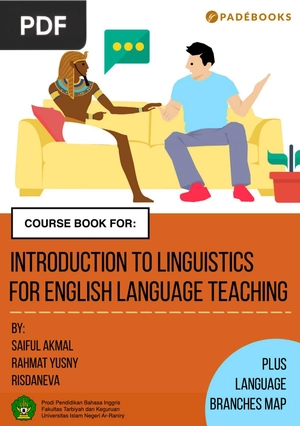
A course book that explains why English teachers need linguistics and walks through each branch of the field with practical tasks. Includes a glossary of key terms and a visual map of the branches of linguistics.
A guide to English grammar and language written for ESL teachers. It explains how English really works, from sounds and words to clauses and discourse, and how to use that knowledge in the classroom.
A study module that defines applied linguistics and maps its main topics, from language teaching to translation and forensic linguistics. Each unit includes objectives, exercises and a self-test.
A complete guide to corpus linguistics, from research design and data extraction to statistical evaluation. Case studies on collocations, morphology, grammar and metaphor show the methods at work.
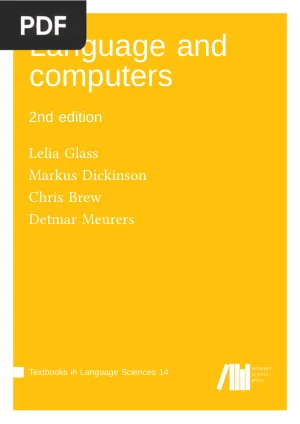
An introduction to computational linguistics with no programming required. It explains how spell checkers, search engines, machine translation and dialog systems work, and what linguistics has to do with them.
Lelia Glass, Markus Dickinson, Chris Brew and Detmar Meurers
Send this page to someone who’d love to read it. Everything is free, no sign-up needed.
Esc
Start typing to search...
Searching...
No results found
Try different search terms
Your book is downloading!
If InfoBooks helped you, you can support us in one click: add us as a preferred source on Google. You'll see more of our books when you search, and you'll help us keep sharing free reading with everyone.
Done! Your book is downloading
Know someone who’d enjoy reading it? Send them this page. It’s free, no sign-up needed, and you help us spread the love of reading.