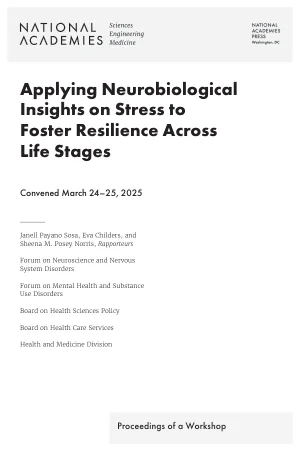
Applying Neurobiological Insights on Stress to Foster Resilience Across Life Stages
National Academies of Sciences, Engineering, and Medicine
Leading stress researchers explain how stress acts on the brain and body across life, from early adversity and allostatic load to sex differences, parenthood and the effects of trauma on the heart. A recent, readable summary of the neuroscience of stress and resilience.
Loading the book...
Keep reading
-
Next in this topic
Connecting the Brain to the Rest of the BodyExplains how the stress response links the brain with the immune, metabolic and cardiovascular systems, and why chronic stress early in life can shape health for decades.
Verified PDF · Secure download - Molecular Mechanisms in Stress and Trauma Related Disorders
Research on how stress and trauma act through glucocorticoid signaling, inflammation, epigenetics and circadian genes to raise the risk of PTSD and depression.
Verified PDF · Secure download - Effects of Early Life Stress on Neurodevelopment and Health
Human and animal studies on how early adversity changes the HPA axis, the amygdala and brain development, with lasting effects on mental and physical health.
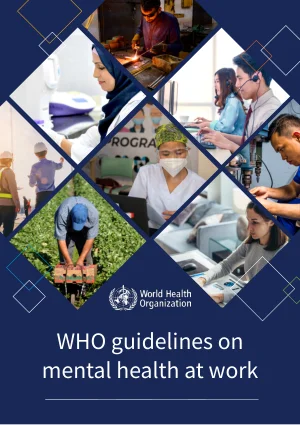
Verified PDF · Secure download - WHO Guidelines on Mental Health at Work
The World Health Organization recommendations for preventing work stress and protecting mental health at work, from organizational changes and manager training to individual stress management programs and returning to work.
Verified PDF · Secure download - Stress at Work
A British Academy policy report on work stress: its trends, its causes, such as job insecurity and work intensity, and its costs to health, employers and the economy. Valuable for managers, HR professionals and policymakers.
Verified PDF · Secure download

Explore more Psychology
- Body Language
- Manipulation Psychology
- NLP
- Clinical Psychology
- Child Psychology
- General Psychology
- Neuropsychology
- Criminal Psychology