11 Free Jean-Jacques Rousseau Books [PDF]
by InfoBooks
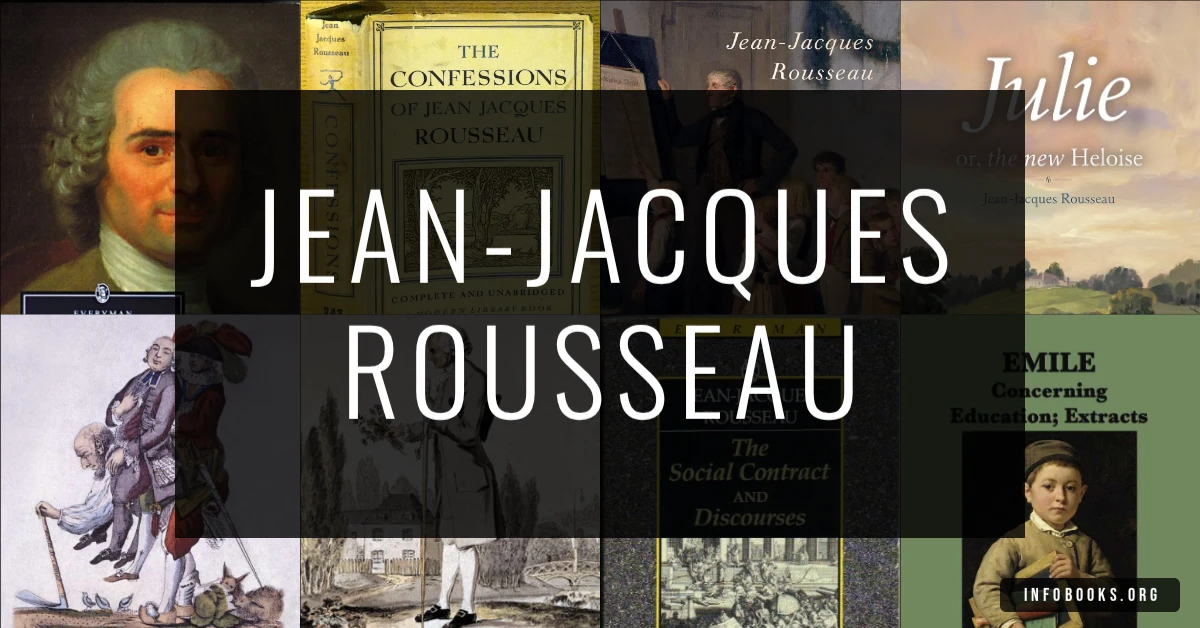
Looking for Jean-Jacques Rousseau books? Rousseau was the Enlightenment philosopher from Geneva who argued that people are born good and society corrupts them, ideas the French Revolution later carried into the streets.
His work runs from political philosophy to education, autobiography, and one of the best-selling novels of the 1700s. Here you will find 11 PDFs with The Social Contract, the Discourse on Inequality, Emile, the Confessions, and Julie, or the New Heloise.
Every book is free to read online or download as PDF. If you don't know where to start, the Discourse on Inequality is short and sharp, and the Confessions read like a novel.
Download every book on this page in one click
Sign in with Google and grab them all without going one by one.
We will redirect you to accounts.google.com to complete sign-in.
Email and name only · We never send spam
Download every book on this page in one click
Get them all together, without going one by one.
Direct download · One ZIP file
Download started. Check your downloads folder for the ZIP.
Rousseau's Political Philosophy
"Man is born free, and everywhere he is in chains" opens The Social Contract, the 1762 book where Jean-Jacques Rousseau defined the general will. Pair it with the Discourse on Inequality, his answer to Thomas Hobbes on how private property turned equals into masters and servants.
Rousseau on Education: Emile
Emile is half novel, half treatise, and it imagines a boy raised by nature instead of by rules. Paris burned this Rousseau book on education in 1762, mostly for the religious chapter you will also find here as a separate text.
The Confessions and Literary Works
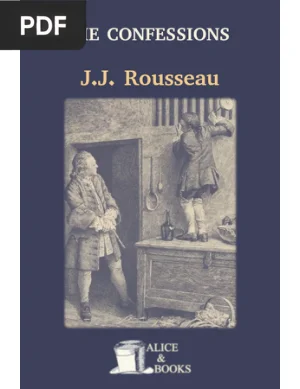
With the Confessions, Rousseau practically invented the modern autobiography, and the Reveries of the Solitary Walker closes his life with quiet notes from long walks. Julie, his novel in letters, helped open the door to Romanticism, and the Letters on Botany show Rousseau the plant lover.
Rousseau argued with Voltaire, broke with Diderot, and still ended up shaping the language of modern democracy. Reading him in his own words is the fastest way to see why he remains so debated.
If you want more thinkers from the same century, explore our collection of classic authors.
You Might Also Like
Voltaire Books
Voltaire, French Enlightenment, philosophical tales. Satire, philosophy, history, plays and biographies of a fearless writer.
Political Philosophy Books
Power, justice, governance. Philosophical reflections on politics and the state.
Immanuel Kant Books
German philosopher who reshaped how we think about knowledge, morality, and reason. The Critique of Pure Reason asked what the human mind can actually know. The answer changed philosophy forever.

French Revolution Books
Liberty, equality, upheaval. The revolution that changed France and the world.
Pedagogy Books
Teaching, learning, methods. The theory and practice of education.