These free political philosophy books take on the oldest questions about living together. Who should rule, what makes a law fair, and how much freedom can a state take away?
You'll find the classics that started the debate: Plato's Republic, Machiavelli's The Prince, Hobbes's Leviathan, Locke's Second Treatise, Rousseau's The Social Contract and Mill's On Liberty. Next to them are beginner guides and open access books on liberalism, anarchism and modern ideas of justice.
Pick a section and download any PDF for free, or read it online. No sign-up needed.
📚
Download every Political Philosophy book on this page
All the books on this page in one ZIP file, instead of downloading them one by one.
We will redirect you to accounts.google.com to complete sign-in.
Email and name only · We never send spam
Access unlocked
Download every Political Philosophy book on this page
All the books on this page in one ZIP file, instead of downloading them one by one.
Direct download · One ZIP file
Download started. Check your downloads folder for the ZIP.
Introductions
Introduction to Political Philosophy Books
New to political philosophy? These books explain power, authority, liberty and justice without assuming you have read Plato first.
A short, sharp essay on what political philosophy is for. Larmore asks whether it is just applied ethics or a field of its own, built around one question: when is it legitimate to use force?
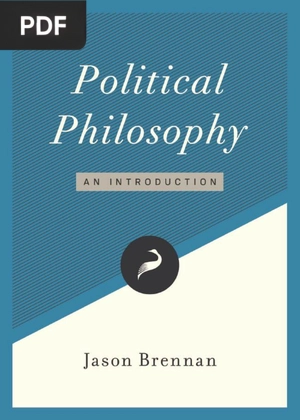
A friendly first book on the big questions: why have a state at all, what makes a society just and how much liberty people are owed. Brennan sets the main theories side by side in plain language.
An open textbook that walks through the ideologies behind today's politics, from liberalism, conservatism and socialism to anarchism, feminism and populism, with the core ideas of each explained clearly.
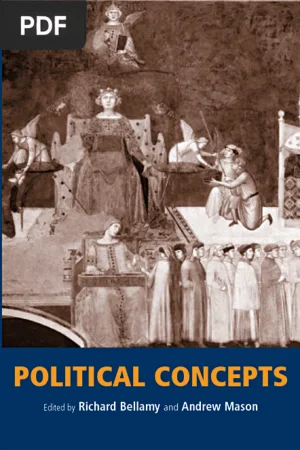
One chapter per key idea: freedom, rights, justice, equality, democracy, power, authority and more. Leading scholars explain each concept, its rival readings and why the debate still matters.
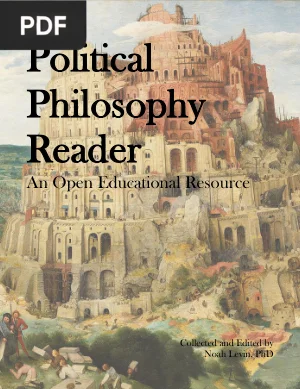
An open textbook that collects the essential readings in one volume, from Plato and Aristotle to Hobbes, Locke, Rousseau, Mill, Marx and beyond. A ready-made course in political philosophy.
From Plato's philosopher kings to Burke's warning about revolution, these are the political philosophy books every later thinker had to answer. Three of them, The Prince, Crito and What Is Enlightenment?, come in our own Project Aldus editions.
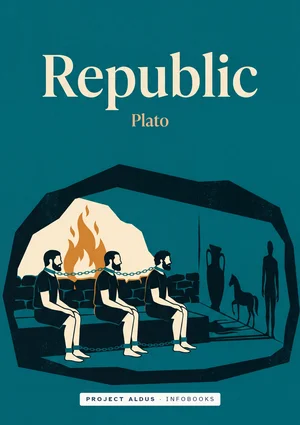
Plato asks what justice is and answers by building an ideal city ruled by philosopher kings. Jowett's translation, with his introduction and analysis, and the allegory of the cave inside.
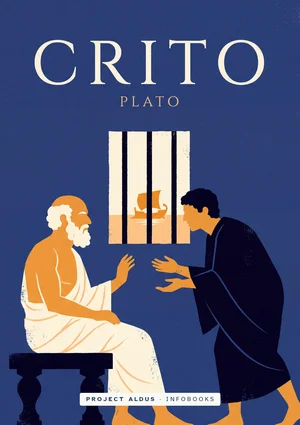
Socrates sits in prison with an escape plan ready, and argues that he must stay and obey the laws that condemned him. Our own Project Aldus edition of the first great dialogue on political obligation.
Aristotle calls man a political animal and studies the city as the place where a good life becomes possible. He compares constitutions, defines the citizen and explains why revolutions happen.
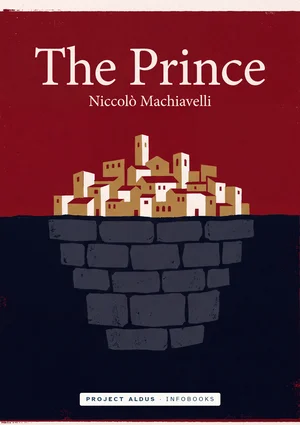
Machiavelli's handbook on how power is won and kept, written without illusions about how rulers really behave. Our own Project Aldus edition, with an introduction to his life in Renaissance Florence.
The republican Machiavelli. Reading the history of Rome, he explains why free states rise and fall and why conflict between people and nobles can keep a republic healthy.
An island with no private property, elected rulers and religious tolerance. More's imagined commonwealth is a sharp critique of the Europe of his day, and it gave the word utopia to every language.
Wollstonecraft answers the thinkers of the French Revolution: if rights come from reason, women have them too. She argues that what women lack is not ability but equal education.
Kant drafts a treaty to end war for good: republican governments, a league of free nations and a right of hospitality for every visitor. Mary Campbell Smith's translation, with her introduction.
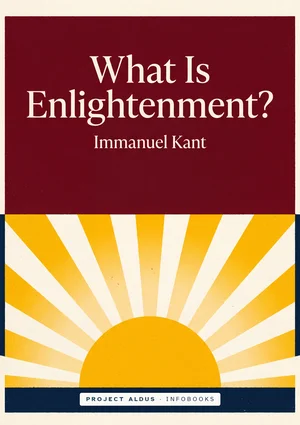
Kant's short answer gave an age its motto: dare to think for yourself. He defends the public use of reason as the freedom a ruler must never take away. Our own Project Aldus edition.
Why should anyone obey a government? Hobbes, Locke and Rousseau answered with the same idea, the social contract, and reached very different conclusions.
Without a common power, life is a war of all against all: solitary, poor, nasty, brutish and short. From that picture Hobbes builds the first great social contract and the case for an absolute sovereign.
Locke's social contract protects life, liberty and property, and a government that breaks it can be resisted. The book behind the Declaration of Independence.
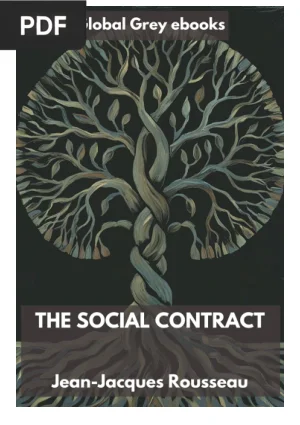
Man is born free, and everywhere he is in chains. Rousseau looks for a contract that keeps people free while bound by law, and finds it in popular sovereignty and the general will.
Rousseau's state of nature is peaceful, and inequality begins when someone fences off land and says this is mine. The essay that set up The Social Contract and challenged Hobbes head on.
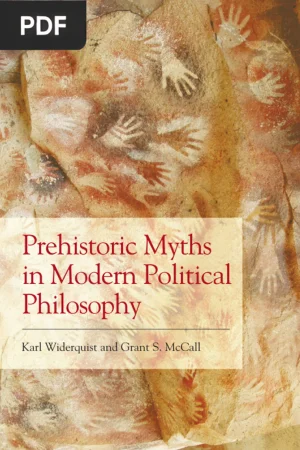
A philosopher and an anthropologist test the state of nature against what we know about real prehistoric societies. They show how Hobbes, Locke and their heirs built theories on claims the evidence does not support.
These books read the great political thinkers in context, from Aristotle's household to Machiavelli's Florence and Locke's England. For more original texts, see our collection of books by famous philosophers.
Swanson shows that Aristotle did not wall off private life from politics. Household, friendship and leisure are where citizens learn the virtues that the city depends on.
A clear guide to Machiavelli's thought, from The Prince and the Discourses to his writings on history and war, with a final part on how later thinkers read him.
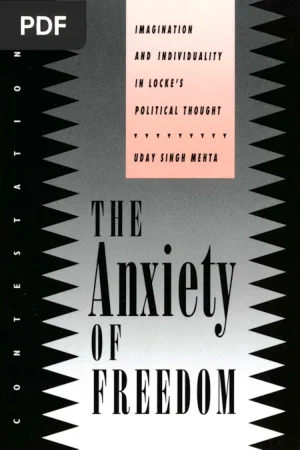
Mehta reads Locke as a thinker worried about the imagination, the force that makes people restless and unpredictable. He shows how liberal freedom was built to discipline it, and what that cost.
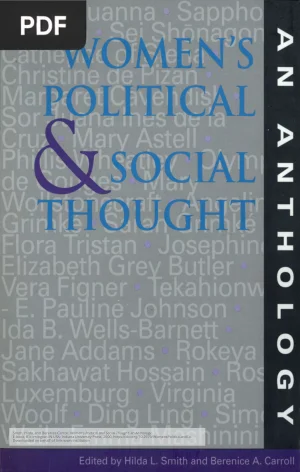
Four thousand years of political writing by women, from Enheduanna and Christine de Pizan to Wollstonecraft, Sojourner Truth, Rosa Luxemburg and Virginia Woolf. The voices most histories of political thought leave out.
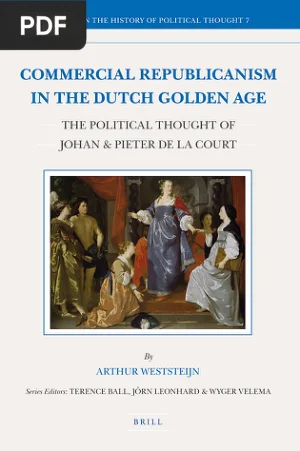
How the brothers De la Court defended a republic of merchants in 17th century Holland, arguing that trade, self-interest and freedom could hold a state together without kings.
Liberalism puts individual freedom first. Start with John Stuart Mill, then see how thinkers from Ludwig von Mises to today's theorists of toleration defended and questioned the idea.
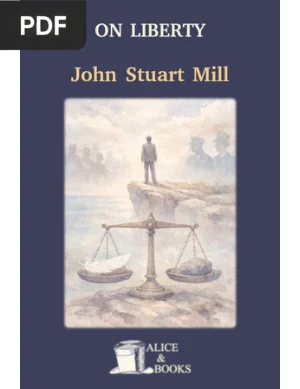
The classic case for free speech and individual freedom. Mill's harm principle says power may be used against anyone only to prevent harm to others. Introduction by W. L. Courtney.
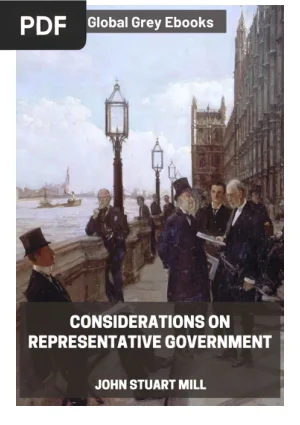
Mill argues that representative democracy is the best form of government because it makes citizens better, and proposes safeguards like proportional representation to protect minorities.
Mises states the case for classical liberalism in its purest form: private property, free markets, peace and limited government. A short, combative book first published in 1927.
Toleration is a core liberal virtue, but what does it ask of people in societies divided by faith and culture? Leading political theorists debate reasonable tolerance, its limits and its future.
Emma Goldman explains what anarchism stands for and takes on prisons, patriotism, marriage, the suffrage movement and the traffic in women. Fierce essays from 1910 that still read as fresh.
Kropotkin's blueprint for a society without bosses or state, where land, housing and food are shared and work is organized by free agreement. The classic statement of anarchist communism.
Against the idea that nature is a war of all against all, Kropotkin shows that cooperation helps species and human communities survive, from animal herds to medieval guilds.
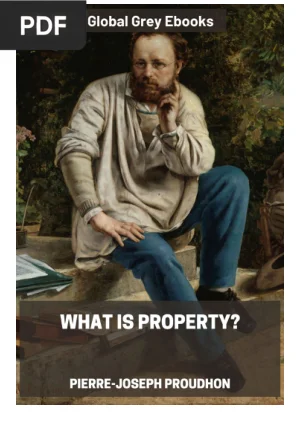
Property is theft. With that line Proudhon became the first thinker to call himself an anarchist, and here he explains why ownership without labor is robbery and what fair exchange should look like.
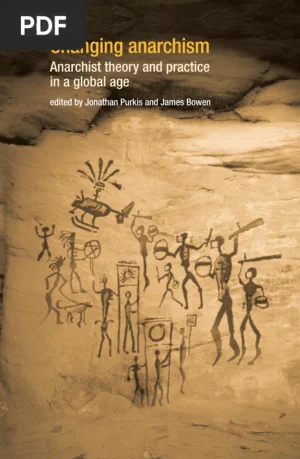
Why anarchism still matters: essays on anti-capitalism, ecology, technology, education and protest that bring anarchist ideas into the age of globalization.
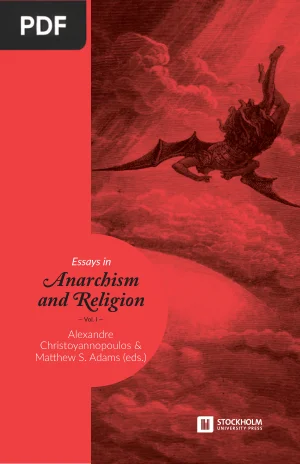
Anarchists and believers are not always enemies. These essays explore Tolstoy's Christian anarchism, Jewish and Buddhist anarchists and how religion and the rejection of the state have met.
Alexandre Christoyannopoulos and Matthew S. Adams (eds.)
John Rawls's A Theory of Justice is still under copyright, but these open access books carry the debate on justice and democracy into our time. They build on the ideas of Hannah Arendt, Jürgen Habermas and Isaiah Berlin.
How ten thinkers, from Thucydides and Augustine to Hobbes, Clausewitz, Lenin, Mao and Carl Schmitt, explain war, violence and revolution, and what their ideas tell us about politics between states today.
What philosophy can teach those who run the state. Ongaro links the great traditions of political thought to real questions of public governance, from the idea of the state to the ethics of officials.
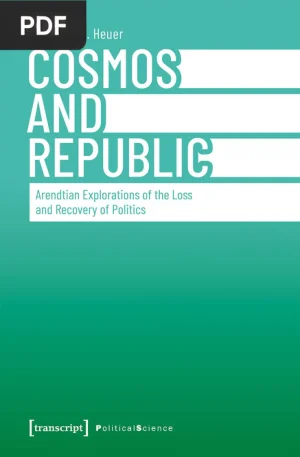
Essays that take Hannah Arendt's thought into the problems of our time, from the loss of a shared public world to the bond between politics and nature, and ask how political life can be recovered.
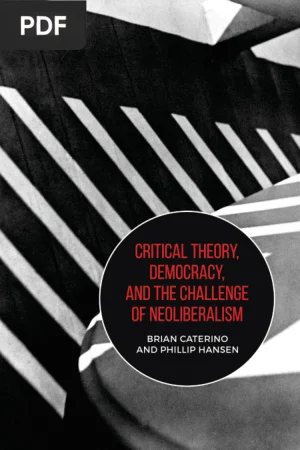
Drawing on Habermas and C. B. Macpherson, the authors ask what democracy needs to survive in a neo-liberal age, and how critical theory can renew democratic politics.
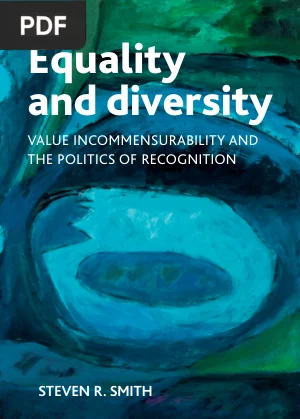
Can a society treat people as equals and still respect their differences? Smith builds on Isaiah Berlin's pluralism to rethink equality, recognition and social justice.
These political philosophy books cover more than two thousand years of debate, from Plato to today. Start with one classic and see where its questions lead you.
Send this page to someone who’d love to read it. Everything is free, no sign-up needed.
Esc
Start typing to search...
Searching...
No results found
Try different search terms
Your book is downloading!
If InfoBooks helped you, you can support us in one click: add us as a preferred source on Google. You'll see more of our books when you search, and you'll help us keep sharing free reading with everyone.
Done! Your book is downloading
Know someone who’d enjoy reading it? Send them this page. It’s free, no sign-up needed, and you help us spread the love of reading.