
Salammbo by Gustave Flaubert [PDF]
by InfoBooks
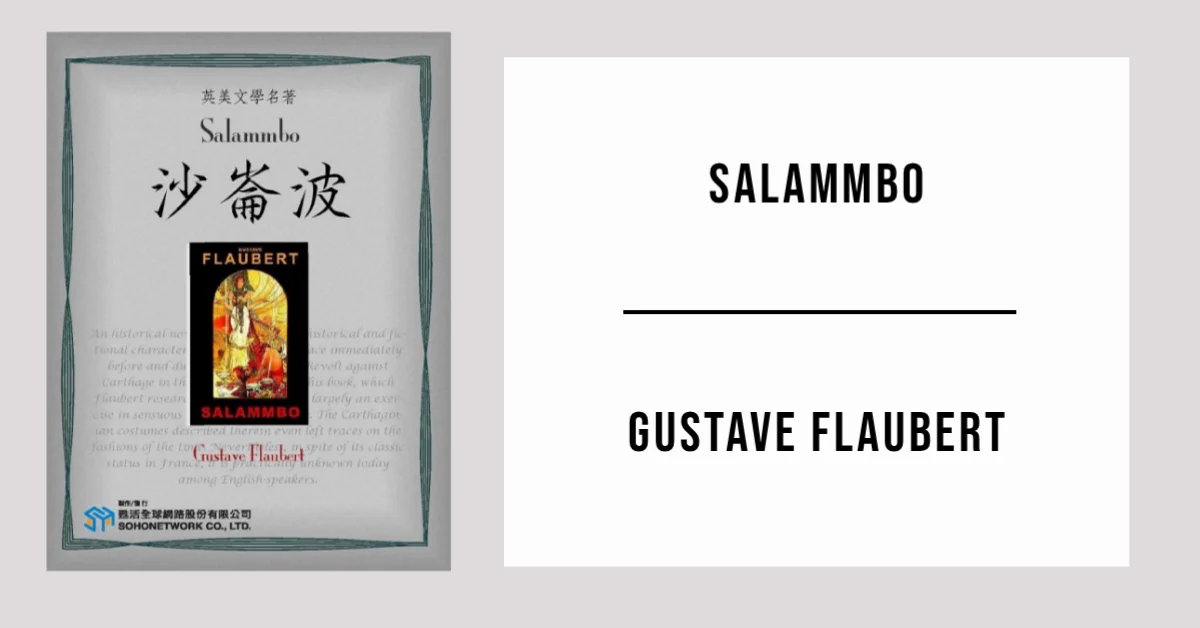
Gustave Flaubert published Salammbo in 1862, transporting readers to ancient Carthage during one of its bloodiest conflicts. The interesting thing about this author is that he applied the same obsessive research and precise prose style he used in Madame Bovary to an entirely different genre: the historical epic. The result is a novel that pulses with color, violence, and forbidden desire set against the backdrop of a civilization most readers know almost nothing about.
You can now download the free PDF of Salammbo and discover why this novel captivated readers for over 160 years. Surprisingly accessible despite its ancient setting, the story moves with the force of a war epic while weaving in a deeply human love story between enemies. Flaubert's prose brings Carthage to life so vividly that you can almost smell the incense and hear the clash of swords.
If you liked historical novels by authors such as Mary Renault or Umberto Eco, try Salammbo for a different and older tradition of the same genre. Flaubert's portrayal of ancient North Africa remains more relevant today than when it was written, offering perspectives on war, religion, and cultural clash that still resonate. Perfect if you need a novel that combines literary elegance with gripping historical drama.
Salammbo by Gustave Flaubert
*Please wait a few seconds for the document to load, the time may vary depending on your internet connection. If you prefer, you can download the file by clicking the link below.
Loading PDF...
Information: Salammbo
- Author: Gustave Flaubert
- Publication Date: 1862
- Main Characters:
- Salammbo: Daughter of Hamilcar Barca and priestess of the goddess Tanit, torn between religious devotion and her fascination with the mercenary leader Matho.
- Matho: A Libyan mercenary chief who leads the revolt against Carthage and becomes obsessed with Salammbo after stealing the sacred veil.
- Hamilcar Barca: Carthaginian general and Salammbo's father, a brilliant military strategist who returns to defend Carthage against the mercenaries.
- Spendius: A cunning former Greek slave who becomes Matho's advisor and manipulates events to serve his own interests.
- Narr'Havas: A Numidian prince who switches allegiances between the mercenaries and Carthage, and is promised Salammbo's hand in marriage.
- Brief Summary: Salammbo is set in Carthage around 240 BC, following the Mercenary War that erupted after the First Punic War. The novel centers on the conflict between Carthage and its unpaid mercenary armies, led by the Libyan warrior Matho. Salammbo, the daughter of Carthaginian general Hamilcar Barca and a priestess of the goddess Tanit, becomes entangled with Matho after he steals the sacred veil known as the Zaimph. The story traces their doomed connection against a backdrop of sieges, battles, and political intrigue. It culminates in a devastating conclusion where personal passion collides with the demands of war and religious duty.
- Thematic Analysis: The novel explores the destructive tension between desire and duty, embodied in the relationship between Salammbo and Matho, who are separated by culture, loyalty, and war. Flaubert also examines the nature of power, both political and religious, showing how institutions manipulate individuals for their own survival. The theme of civilization versus barbarism runs throughout the narrative, though Flaubert deliberately blurs the line between the two, suggesting that cruelty exists on all sides.
- Historical Context: Flaubert based Salammbo on the historical Mercenary War (241-237 BC), drawing primarily from the accounts of the Greek historian Polybius. He traveled to Tunisia in 1858 to visit the ruins of Carthage and research the landscape firsthand. Published in 1862, the novel caused a sensation in France, sparking debates among historians and critics about the accuracy of its depictions and the boundaries between history and fiction.
Books by Gustave Flaubert

A Simple Soul by Gustave Flaubert
Bouvard and Pecuchet by Gustave Flaubert

Herodias by Gustave Flaubert

Madame Bovary by Gustave Flaubert
Over Strand and Field by Gustave Flaubert

Sentimental Education by Gustave Flaubert

The George Sand by Gustave Flaubert
The Temptation os St Antony by Gustave Flaubert
Three Short Works by Gustave Flaubert