These free general philosophy books in PDF are the textbooks professors assign in intro courses. Start with OpenStax's Introduction to Philosophy or Bertrand Russell's classic The Problems of Philosophy.
Then trace the history of philosophy from Plato and Aristotle to Descartes, Hume and Kant. Other sections cover the big debates on God and faith, and on how science knows what it knows.
Every book is free to read and download, with no sign-up needed. Pick the one that matches your question and start reading today.
📚
Download every General Philosophy book on this page
All the books on this page in one ZIP file, instead of downloading them one by one.
We will redirect you to accounts.google.com to complete sign-in.
Email and name only · We never send spam
Access unlocked
Download every General Philosophy book on this page
All the books on this page in one ZIP file, instead of downloading them one by one.
Direct download · One ZIP file
Download started. Check your downloads folder for the ZIP.
Beginners
Introduction to Philosophy Books
Never read philosophy before? These intro philosophy textbooks walk you through logic, ethics, knowledge and the mind, one clear chapter at a time.
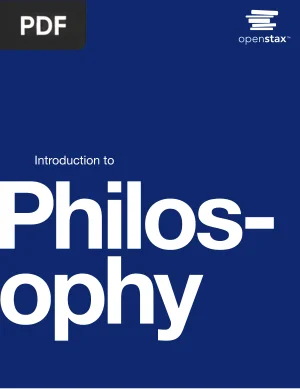
The full OpenStax intro course in one book. It covers logic, the history of philosophy, metaphysics, epistemology, ethics and political thought, with summaries and review questions in every chapter.
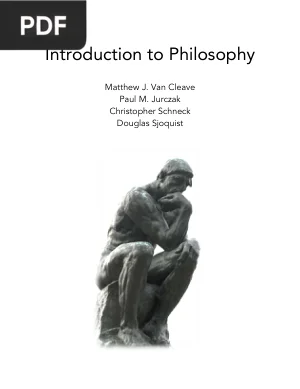
A complete intro course written by community college professors for first-time readers. It moves from critical thinking to knowledge, mind, free will, God and ethics, with plain explanations and examples.
Matthew J. Van Cleave, Paul M. Jurczak, Christopher Schneck, Douglas Sjoquist
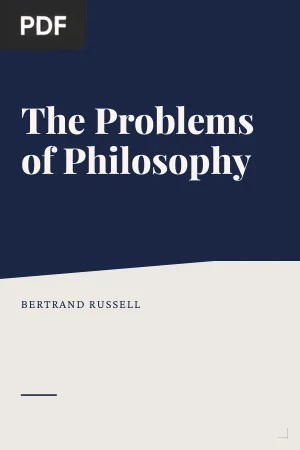
Bertrand Russell's classic short introduction, still assigned in intro courses a century later. It asks what we can know for certain, starting from a table in front of you and ending with the value of philosophy itself.
A friendly intro textbook that teaches you how to think like a philosopher before diving in. It covers critical thinking, ancient philosophy, rationalism, empiricism, science, mind and ethics.
A beginner-friendly guide to logic and good reasoning. It explains arguments, fallacies, deduction and induction, with short exercises to practice each idea.
Each chapter answers one big moral question, from whether right and wrong are just opinion to how to be a better person. A clear tour of relativism, virtue ethics, utilitarianism and Kant.
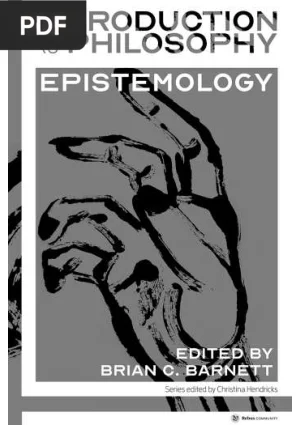
How do you know what you know? This open textbook introduces the theory of knowledge, from skepticism and justification to the limits of reason, with a glossary of key terms.
Philosophy as a practical guide for everyday life. It takes ideas from the great thinkers and turns them into advice on happiness, work, relationships and meaning.
Philosophy makes more sense when you see how each idea answered the last one. These history of philosophy books take you from Thales and Socrates to Descartes and Kant.
Read the great philosophers in their own words. This reader gathers original texts by Plato, Aristotle, Descartes, Hume, Kant, Mill and more, arranged by topic and in historical order.
A clear history of Greek thought from Thales to the Stoics and Neoplatonists. It explains how each school answered the one before it, with full chapters on Socrates, Plato and Aristotle.
A guided workbook through modern philosophy, from Descartes and Hobbes to Locke, Berkeley, Hume and Kant. Short introductions and study questions help you read the original texts with confidence.
Hegel's famous lectures, which treat the history of philosophy as one long argument. This first volume covers his introduction and Greek philosophy from Thales to the Sophists and Socrates.
A short open textbook on the big questions about God and faith. It weighs the main arguments for and against belief and looks beyond monotheism to other world religions.
Three friends argue over whether reason can prove that God exists. Hume's dialogues hold the classic critique of the design argument, and he kept them unpublished during his lifetime.
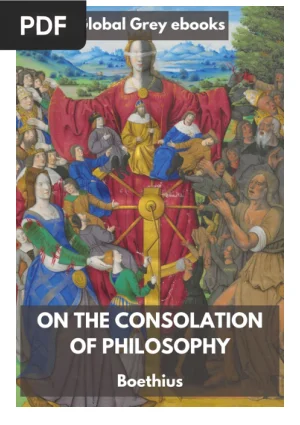
Written in prison while awaiting execution, this dialogue with Lady Philosophy asks how a good God can allow suffering. One of the most read books of the Middle Ages.
William James studies religion through the lived experience of believers, from conversion and mysticism to saintliness. A classic that bridges philosophy and psychology.
Francis Bacon's call for a new method of discovery based on observation and induction. It includes his famous four Idols of the mind, the biases that still get in the way of clear thinking.
Mill's landmark account of how science reasons from evidence to conclusions. It introduces his methods of experimental inquiry, still taught today as Mill's Methods.
The great mathematician asks how much of science is discovered and how much is convention. Poincaré examines geometry, space, force and physics in clear, readable prose.
Send this page to someone who’d love to read it. Everything is free, no sign-up needed.
Esc
Start typing to search...
Searching...
No results found
Try different search terms
Your book is downloading!
If InfoBooks helped you, you can support us in one click: add us as a preferred source on Google. You'll see more of our books when you search, and you'll help us keep sharing free reading with everyone.
Done! Your book is downloading
Know someone who’d enjoy reading it? Send them this page. It’s free, no sign-up needed, and you help us spread the love of reading.