Empiricism books start from one simple idea: knowledge comes from experience, not from ideas we are born with. John Locke, George Berkeley and David Hume built on it, picturing the newborn mind as a blank slate.
Here you'll find the original works of the British empiricists, plus studies on logical empiricism, radical empiricism and the philosophy of perception. For the other side of the debate, our rationalism books pick up right where these leave off.
Every title is a free PDF you can read online or download. Not sure where to begin? Try Hume's Enquiry, 84 pages that changed how we think about cause and effect.
📚
Download every Empiricism book on this page
All the books on this page in one ZIP file, instead of downloading them one by one.
We will redirect you to accounts.google.com to complete sign-in.
Email and name only · We never send spam
Access unlocked
Download every Empiricism book on this page
All the books on this page in one ZIP file, instead of downloading them one by one.
Direct download · One ZIP file
Download started. Check your downloads folder for the ZIP.
Overview
Empiricism Books
Start here if you want the big picture of empiricism. These books explain what it claims, where it comes from and why the problem of induction still has no easy answer.
A full doctoral thesis on what empiricism really claims and whether it can survive its strongest objections. Ideal if you want a rigorous, book-length map of the debate.
Makes the case for methodological empiricism, the habit of testing ideas against experience that runs from Bacon to modern science. A clear, book-length study for readers of philosophy of science.
A compact overview of empiricism in the philosophy of science, from Carnap and Quine to van Fraassen. It explains the two problems every empiricist has to solve: what counts as observable and why we should trust it.
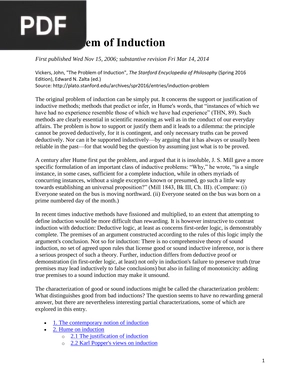
The classic problem behind every empiricist theory: how can past experience justify beliefs about the future? This encyclopedia entry walks through Hume's argument and the main answers given since.
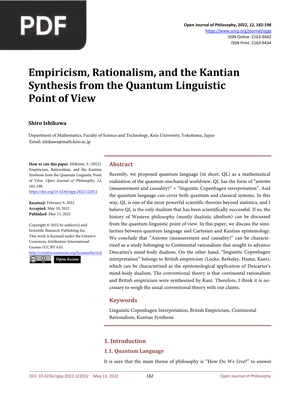
Revisits the old clash between empiricism and rationalism, and how Kant tried to settle it, from an original point of view rooted in quantum mechanics. A bold reading for those who like unexpected connections.
Are we born knowing something, or does everything come from experience? This lecture compares innatism and empiricism and adds a third path through mystical knowledge.
Is language learned from experience or built into the brain? A clear look at the nativism debate in linguistics, one of the most active battlegrounds between empiricists and their critics.
A short, accessible article on how sight, hearing and touch shape what we know. A good starting point for the empiricist idea that knowledge begins with the senses.
Bacon set the method, Locke built the theory, Berkeley pushed it to immaterialism and Hume to skepticism. These are the original empiricist texts, followed by the best studies on how they fit together.
Bacon's call for a new science built on observation and induction, the method that opened the way for British empiricism. It includes his famous Idols of the mind, the biases that still cloud our thinking.
Locke argues that the mind starts as a blank slate and that every idea comes from experience. The founding text of British empiricism, complete in four books.
Berkeley's boldest claim: to be is to be perceived, and there is no matter beyond our ideas. A short, brilliant book that pushed empiricism to its most surprising conclusion.
Berkeley defends his immaterialism as a lively conversation between a skeptic and a believer in matter. The most readable way into his ideas, based on the final 1734 edition.
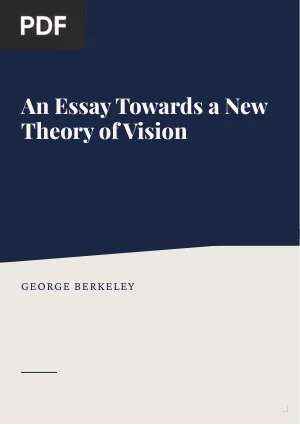
How do we see distance if the eye only receives flat images? Berkeley's answer, that we learn it through touch and experience, became a landmark of empiricist psychology.
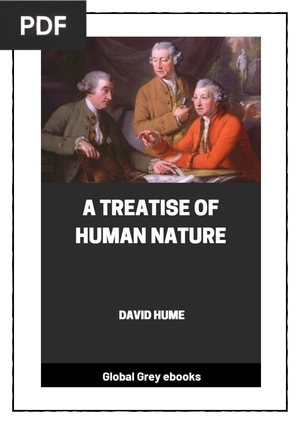
Hume's first and most ambitious work, written in his twenties, applies the method of experience to the mind itself. Causation, personal identity and the passions are all put to the test.
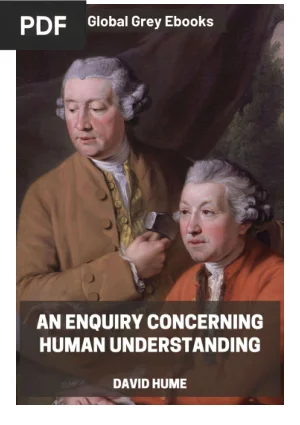
Hume's sharpest book asks how we know cause and effect, and why our habits of expectation are not proof. A short, readable way into empiricist skepticism.
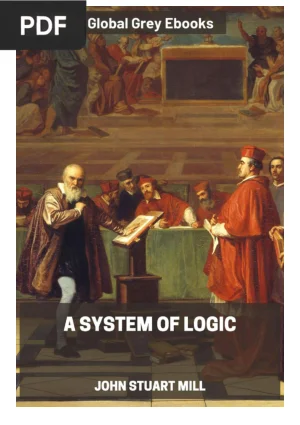
Mill takes empiricism all the way to logic and mathematics, arguing that even they rest on experience. It also introduces Mill's Methods, still taught as the basics of experimental reasoning.
What happens when you read Locke, Berkeley and Hume with computers? This thesis uses text analysis to reveal how the three British empiricists really shaped each other's ideas.
A brief survey of the three great British empiricists: Locke's blank slate, Berkeley's immaterialism and Hume's skepticism. Perfect as a first overview before the original texts.
Traces the rise of empiricism from Aristotle to Locke, Berkeley and Hume in a few clear pages. A quick, friendly introduction to the movement's history.
Shows how Berkeley's doctrine of notions finds a middle way between empiricism and innate ideas. A focused study for readers who already know the Principles.
How can general ideas come from particular experiences? This article examines Hume's answer to the problem of abstraction and what it means for empiricism.
In the 1920s, the Vienna Circle and the Berlin Group tried to rebuild philosophy on logic plus observation. Here are Carnap, Hempel and Feigl in their own words, along with studies on the movement's roots.
A founding member of the Vienna Circle looks back on twenty-five years of logical empiricism: what it got right, what it had to abandon and where it was heading.
Carnap, the leading figure of logical empiricism, explains how scientific terms like electron get their meaning from observation. A key text on the line between theory and experience.
If theories only connect observations, why do we need unobservable entities at all? Hempel's famous dilemma is one of the classic texts of logical empiricism.
A student and friend of Carnap explains what his empiricism really amounted to, with special attention to probability and how experience changes our beliefs.
Shows how the mind-body problem shaped logical empiricism from the start, through the influence of Fechner on Schlick, Carnap and Feigl. A rich chapter on the movement's roots.
Empiricism didn't end with Hume, and these books show how the idea keeps evolving. You'll find William James's radical empiricism, Bas van Fraassen's constructive empiricism and even artificial intelligence.
William James argues that relations between things are experienced as directly as the things themselves. The book that launched radical empiricism and shaped pragmatism.
A leading philosopher of science defends the everyday empiricism of working scientists against the skeptical constructive empiricism of van Fraassen. A complete, up-to-date book from 2026.
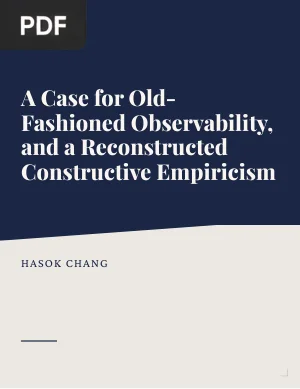
Chang proposes a quality-based idea of observability and uses it to rebuild van Fraassen's constructive empiricism. A short, original contribution to the realism debate.
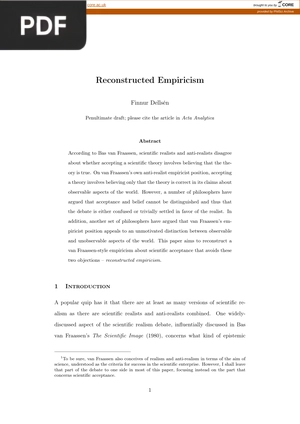
Proposes a reconstructed version of van Fraassen's constructive empiricism that keeps its spirit while fixing its weak points. Key reading for the realism debate.
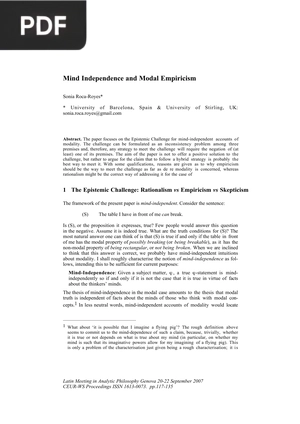
Can we know what is possible or necessary from experience alone? This paper defends modal empiricism against the challenge facing mind-independent accounts of modality.
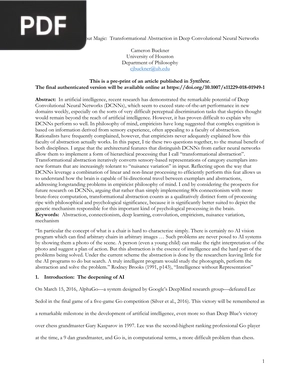
Argues that deep neural networks learn abstract categories much as Locke and Hume said the mind does. A fascinating bridge between classic empiricism and artificial intelligence.
A clear introduction to the scientific realism debate: does science describe unobservable reality, or only what we can observe? The empiricist side gets a fair and readable hearing.
Sellars' famous attack on the Myth of the Given, the idea that raw experience gives us knowledge without concepts. One of the most influential essays of twentieth-century philosophy.
A full doctoral thesis on what perceptual experience is and how it gives us contact with the world. Deep, rigorous reading for philosophy of perception.
Explains how introspection gives us concepts of our own conscious experiences, using an information-theoretic model. A detailed study on the link between experience and thought.
A careful look at how perception sets things before the mind, starting from everyday cases like hearing a voice across a room. A sharp essay on the nature of experience.
Asks whether knowledge can be analyzed and what role perception plays in it. A concise paper connecting empiricist ideas with contemporary epistemology.
Connects eighteenth-century empiricism, modern cognitive science and the rise of the novel. A surprising look at how fiction learned to show minds at work.
Modern psychology grew out of the empiricist idea that experience shapes the mind. These books trace that line from Locke and Hume to cognitive-behavioral therapy.
Traces how the ideas of Locke, Hume and the associationists laid the foundations of modern psychology. A clear history of where the science of the mind came from.
Shows how empiricism guides the daily practice of cognitive-behavioral therapy, from case formulation to testing what works. Useful for students and clinicians alike.
A critical essay on how a narrow cult of empiricism shaped psychology, and what the field lost along the way. Written by philosopher Stephen Toulmin with historian David E. Leary.
A complete unit lesson plan on sensation and perception for high school psychology. Includes activities and demonstrations that show how the senses build our picture of the world.
Sandra Alvarado, Bonnie Kanter-Braem, Kathleen Manz and others
Traces the empiricist program from its classic roots to today's cognitive science and AI. A thorough review of what experience can and cannot explain about the mind.
Those are our free empiricism books in PDF, from Bacon's method to today's debates on perception and AI. To dig deeper into how we know what we know, browse our epistemology books or our positivism books.
Looking for more big ideas? Explore our full collection of philosophy books.
Send this page to someone who’d love to read it. Everything is free, no sign-up needed.
Esc
Start typing to search...
Searching...
No results found
Try different search terms
Your book is downloading!
If InfoBooks helped you, you can support us in one click: add us as a preferred source on Google. You'll see more of our books when you search, and you'll help us keep sharing free reading with everyone.
Done! Your book is downloading
Know someone who’d enjoy reading it? Send them this page. It’s free, no sign-up needed, and you help us spread the love of reading.