Looking for greek philosophy books? Here you'll find the thinkers of ancient Greece in order, from the first questions about nature to Socrates in Athens.
Plato's dialogues, Aristotle's ethics and the fragments of Heraclitus and Parmenides still shape how we think about justice and the good life. Next to them sit the Epicureans, the Stoics and the classic histories that tie it all together.
Each title is a primary text or a trusted guide, so you read the source instead of a summary. Every book is free to read online or download as PDF.
📚
Download every book on this page in one click
Sign in with Google and grab them all without going one by one.
We will redirect you to accounts.google.com to complete sign-in.
Email and name only · We never send spam
Access unlocked
Download every book on this page in one click
Get them all together, without going one by one.
Direct download · One ZIP file
Download started. Check your downloads folder for the ZIP.
Presocratics
Early Greek Philosophy Books
Before Socrates, a handful of thinkers asked what the world is made of and whether change is real. These early greek philosophy books collect their surviving fragments, from Thales and Parmenides to Heraclitus and Pythagoras.
The standard guide to the Presocratics, from Thales and the Milesians to Heraclitus, Parmenides, Empedocles and the Atomists. Burnet translates the surviving fragments and explains each thinker's ideas in clear prose.
Every surviving fragment of the Presocratic philosophers from Thales to Anaxagoras, in Greek with an English translation. Each thinker also comes with what Plato, Aristotle and later ancient writers reported about his ideas.
The 130 surviving fragments of Heraclitus, the philosopher of fire and constant change, translated with the Greek text alongside. G. T. W. Patrick's introduction explains the riddles and what later thinkers made of them.
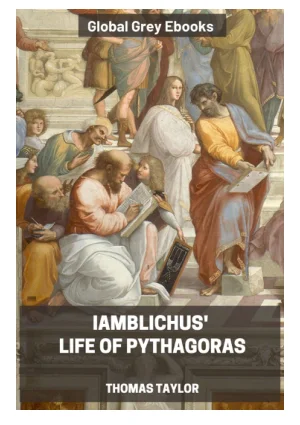
The ancient biography of Pythagoras by the Neoplatonist Iamblichus, covering his travels, his school and its strict way of life. Thomas Taylor's translation also adds fragments from the ethical writings of early Pythagoreans.
This is the core of the canon: Socrates on trial, Plato's theory of Forms and Aristotle's search for happiness. Start with the Apology, the shortest and clearest of these ancient greek philosophy books.
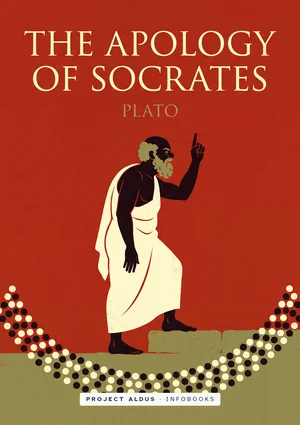
Socrates defends himself before the jury of Athens and refuses to give up the examined life. The shortest way into Greek philosophy, in our own Project Aldus edition.
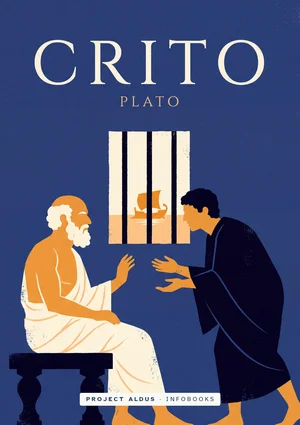
A friend visits Socrates in prison with an escape plan ready, and Socrates argues that he must stay and obey the laws. Our own Project Aldus edition of a short dialogue on justice and duty.
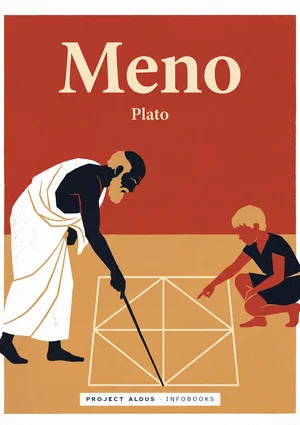
Can virtue be taught? Socrates walks a young slave through a geometry proof to argue that learning is really remembering. One of Plato's most accessible dialogues, in our own Project Aldus edition.
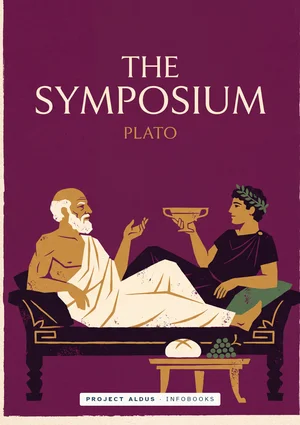
Seven guests at a dinner party each give a speech about love, from Aristophanes' split humans to Diotima's ladder of beauty. Plato at his most entertaining, in our own Project Aldus edition.
Socrates spends his last hours arguing that the soul is immortal, then drinks the hemlock. Plato's fullest early statement of the theory of Forms, in Jowett's translation.
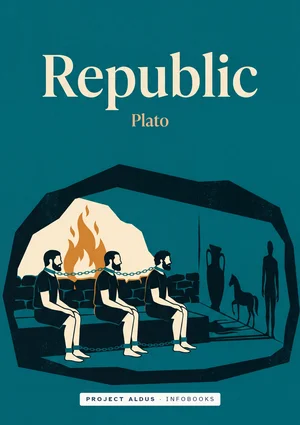
Plato builds an ideal city to find out what justice is, and gives us the allegory of the cave and the philosopher kings. Our own Project Aldus edition of the most influential book in Greek philosophy.
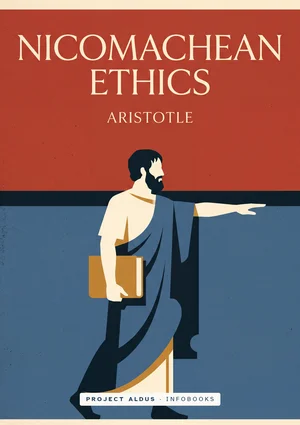
Aristotle asks what makes a human life go well and answers with virtue, the mean between extremes, friendship and practical wisdom. Our own Project Aldus edition, complete in ten books.
After Alexander, philosophy turned practical and asked how to live calmly in an unstable world. These hellenistic philosophy books give the answers of Epicurus, the Stoics, the Sceptics and Plotinus.
Everything that survives from Epicurus: the three letters, the Principal Doctrines, the Vatican Sayings and the fragments, with the Greek text and an English translation. Cyril Bailey's edition is still the standard source for the philosophy of pleasure and calm.
A long poem that sets out the physics and ethics of Epicurus: atoms, the void, a mortal soul and no reason to fear death. William Ellery Leonard's verse translation, complete in six books.
Epictetus, a former slave, boils Stoic ethics down to one rule: know what is in your control and what is not. A short handbook you can read in an evening, in our own Project Aldus edition.
An introduction to Pyrrhonian scepticism through its main ancient source, Sextus Empiricus, from his life to the ten modes of doubt. Includes a translation of the first book of his Outlines.
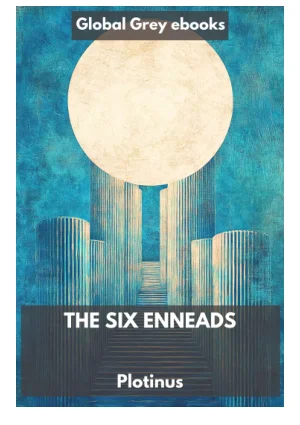
Plotinus' treatises on the One, the Intellect and the Soul, the founding texts of Neoplatonism. The complete translation by Stephen MacKenna and B. S. Page, arranged in the six groups of nine set by his student Porphyry.
Want to see how all these schools connect? These histories follow Greek thought from Thales to the Neoplatonists, starting with Diogenes Laertius and his ancient lives of the philosophers.
A compact history of Greek thought from Thales to the Stoics, built on the original texts rather than later summaries. Written for students and general readers, with long passages from the philosophers themselves.
A clear history of Greek thought from Thales to the Stoics and Neoplatonists. Stace shows how each school answered the one before it, with full chapters on Socrates, Plato and Aristotle.
Burnet's history of Greek philosophy from the Milesians to Plato, with Socrates and the Sophists at its center. Written by the editor of Plato's works, it reads as one connected story rather than a list of schools.
The oldest surviving history of Greek philosophy, with the lives, sayings and doctrines of more than eighty thinkers from Thales to Epicurus. Full of anecdotes and gossip, and our main source for Epicurus' own letters.
A complete overview of Greek philosophy from the Presocratics to the Neoplatonists by its great nineteenth-century historian. Zeller condensed his multivolume work into this single handbook for students.
Send this page to someone who’d love to read it. Everything is free, no sign-up needed.
Esc
Start typing to search...
Searching...
We couldn't find anything
Your book is downloading!
If InfoBooks helped you, you can support us in one click: add us as a preferred source on Google. You'll see more of our books when you search, and you'll help us keep sharing free reading with everyone.
Done! Your book is downloading
Know someone who’d enjoy reading it? Send them this page. It’s free, no sign-up needed, and you help us spread the love of reading.