Looking for meteorology books that explain how the atmosphere really works? This collection covers weather and climate from every angle: atmospheric science, climatology, climate change, forecasting and the meteorology pilots and farmers rely on.
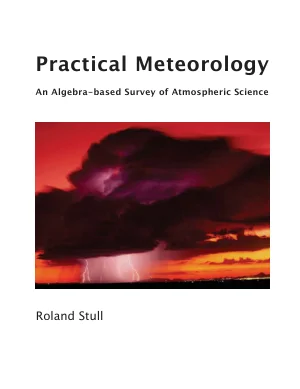
You'll find the textbooks universities assign, like Roland Stull's Practical Meteorology, next to guides from NOAA, the FAA and the World Meteorological Organization. Fronts, jet streams, cloud physics and climate models, all explained by people who study them for a living.
Every book is free to read online or download as PDF. Start with a general textbook, then follow the section that matches your question.
📚
Download every book on this page in one click
Sign in with Google and grab them all without going one by one.
We will redirect you to accounts.google.com to complete sign-in.
Email and name only · We never send spam
Access unlocked
Download every book on this page in one click
Get them all together, without going one by one.
Direct download · One ZIP file
Download started. Check your downloads folder for the ZIP.
Essentials
Meteorology Books
New to the field? These meteorology textbooks walk you from air pressure and clouds to fronts and storms, plus the book by Aristotle that gave the science its name.
A complete university course on the atmosphere, from radiation, clouds and precipitation to fronts, thunderstorms, hurricanes and weather forecasting. It explains every concept with algebra instead of calculus and includes hundreds of solved examples.
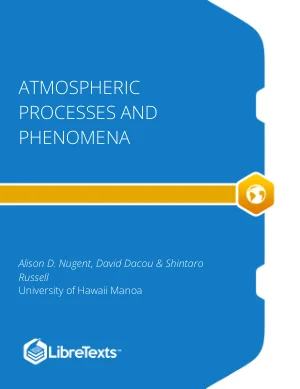
An introductory meteorology textbook that moves from radiation, humidity and clouds to weather maps, wind, fronts and thunderstorms. Written for a first college course, with clear diagrams and no heavy math.
Alison D. Nugent, David DaCosta and Shintaro Russell
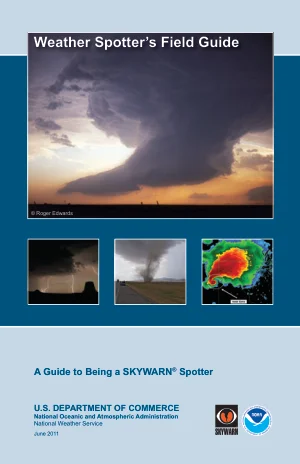
A field guide to reading the sky during severe weather, with photos of shelf clouds, wall clouds, funnels and hail cores. It teaches what to look for, what to report and how to stay safe as a storm spotter.
The first book ever written on meteorology, covering weather, winds, rain, comets, rivers and earthquakes. Aristotle's explanations shaped how people understood the sky for almost two thousand years.
Climate change is the question everyone is asking about the atmosphere right now. These books and official reports explain the evidence, the role of greenhouse gases and what can still be done.
Twenty short questions and answers on how we know the climate is warming, why humans are the cause and what to expect next. Written by leading scientists for readers with no technical background.
The Royal Society and the US National Academy of Sciences
The IPCC's summary of the latest climate science: observed warming, its impacts and risks, and the options for mitigation and adaptation. The most cited reference on where the world stands on climate change.
A detailed scientific assessment of climate change covering temperature, precipitation, extreme events, sea level rise and ocean acidification. Each chapter states its key findings with a clear level of confidence.
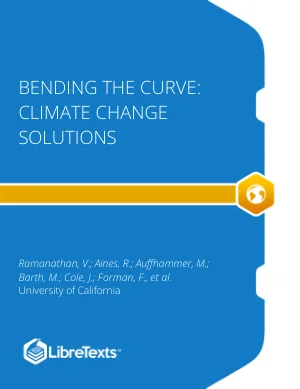
A university course on climate change solutions, from clean energy and transportation to carbon sinks, policy, economics and climate justice. It pairs the science with ten concrete pathways to cut emissions.
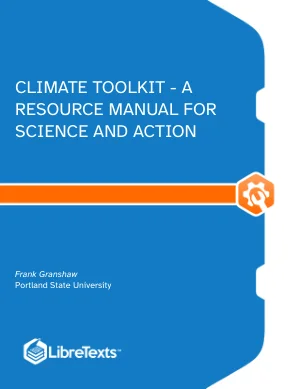
A hands-on manual with investigations that use real data to explore weather versus climate, the carbon cycle, sea level rise and recent warming. Ideal for classrooms and self-learners who want to work with the evidence directly.
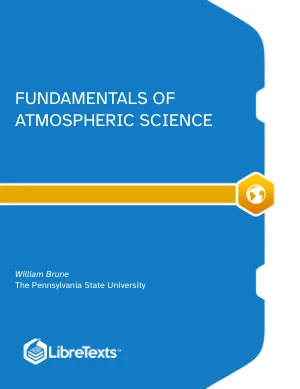
A university textbook on the physics and chemistry of the atmosphere, covering composition, thermodynamics, radiation, cloud physics and dynamics. Includes the equations and worked problems you need to go beyond the basics.
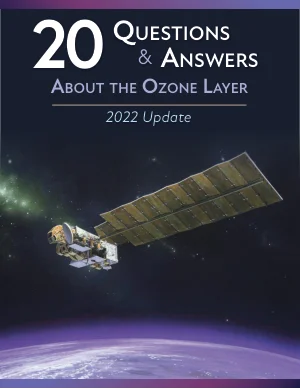
Clear answers on how the ozone layer forms, what depletes it and how the Montreal Protocol is helping it recover. Richly illustrated and written by the scientists behind the official ozone assessments.
World Meteorological Organization and UN Environment Programme
A NASA report that shows how studying Venus, Mars and other planets helps explain Earth's atmosphere, climate and ozone layer. A short, thought-provoking read on why planetary science matters for our own world.
Weather is what happens today, and climate is the pattern over decades. These climatology books teach you how climates are classified, measured and reconstructed from the deep past.
An accessible introduction to the science of climate, explaining the climate system, the greenhouse effect, past climate change and future projections. Clear figures connect physical processes to global impacts.
The official reference on how climate data are observed, stored, quality controlled and analyzed, from climate normals to statistical methods and climate products. Essential for anyone working with climate records.
The founding textbook of general climatology, explaining how temperature, humidity, rainfall and wind combine to define the climates of the world. Translated into English by Robert DeCourcy Ward.
A classic survey of how climates are classified and how they affect health, settlement and daily life in the tropics, the temperate zones and the polar regions.
A pioneering study of how Earth's climate has changed over geological time, from ice ages to the warm periods in between, and what causes those shifts. One of the first books on paleoclimatology.
Forecasting turns observations into tomorrow's weather. These books cover synoptic analysis, Skew-T diagrams and numerical weather prediction, starting with the work of Lewis Fry Richardson.
The classic manual for reading a Skew-T, Log P diagram to analyze soundings, stability, clouds, icing and thunderstorm potential. Still the standard reference for forecasters learning upper-air analysis.
A forecasting course for weather specialists covering vorticity, upper air and surface systems, severe weather and sea surface conditions. It explains step by step how a forecaster builds a prediction from the charts.
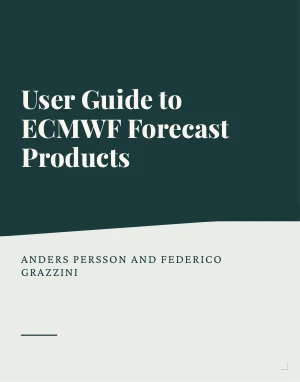
How the European Centre's global model, data assimilation and ensemble system work, and how to read and use their forecast products. Includes a frank chapter on why forecasts go wrong.
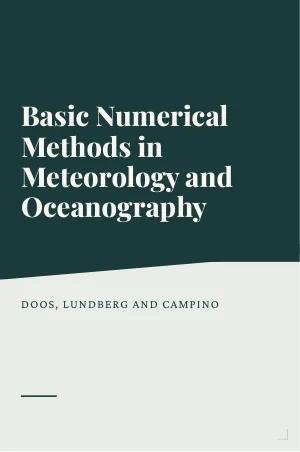
An introduction to the numerical modeling of the ocean and atmosphere, presenting partial differential equations, finite-difference schemes and stability analysis used in climate and weather models.
Kristofer Doos, Peter Lundberg and Aitor Aldama Campino
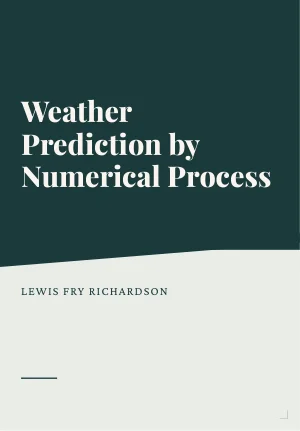
The 1922 book that first proposed forecasting the weather by solving the equations of the atmosphere, complete with Richardson's famous hand-calculated test forecast. The origin of modern numerical weather prediction.
Meteorology is a working tool for pilots, sailors and farmers. These handbooks from the FAA and the WMO show how weather affects flight, navigation at sea and crops.
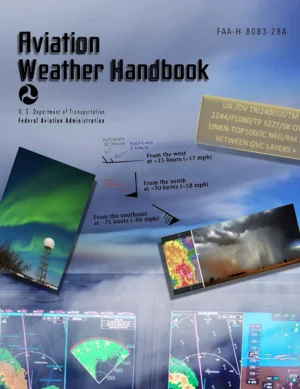
The complete guide to weather for pilots, from atmospheric basics to icing, turbulence and thunderstorms, plus how to read METARs, TAFs and weather charts. The current official reference for flight training.
An advisory circular that explains the weather theory every pilot needs: air masses, fronts, wind, clouds, icing and thunderstorms, with clear illustrations. A focused companion to formal flight training.
A peer-reviewed textbook on how weather and climate shape farming, covering radiation, soil temperature, evapotranspiration, crop models and agrometeorological hazards. Useful for students in agronomy, meteorology and environmental science.
Branislava Lalic, Josef Eitzinger, Anna Dalla Marta, Simone Orlandini, Ana Firanj Sremac and Bernhard Pacher
A comprehensive guide to agrometeorology, covering field observations, data management, forecasts for farmers, crop and drought monitoring, and climate risk in agriculture.
How weather services support shipping and life at sea, from high seas forecasts and coastal warnings to sea ice, search and rescue and marine climate data.
Weather and climate shape every day of your life, and these books show you why. Pick one, open it and look at the sky a little differently.
Meteorology is physics applied to the air around you. Browse our full collection of free physics books to go deeper into thermodynamics, fluids and radiation.
Send this page to someone who’d love to read it. Everything is free, no sign-up needed.
Esc
Start typing to search...
Searching...
We couldn't find anything
Your book is downloading!
If InfoBooks helped you, you can support us in one click: add us as a preferred source on Google. You'll see more of our books when you search, and you'll help us keep sharing free reading with everyone.
Done! Your book is downloading
Know someone who’d enjoy reading it? Send them this page. It’s free, no sign-up needed, and you help us spread the love of reading.