Free anthropology books in PDF, from first-year textbooks to the classics that founded the field. You'll find cultural and biological anthropology, ethnography and theory, ready to read online or download.
Many of these are open access textbooks that universities actually assign. They include Michael Wesch's The Art of Being Human and two open textbooks from the American Anthropological Association.
Pick a section, open a PDF and start reading today. If you're new to anthropology, begin with a textbook, then move on to classics by Boas and Malinowski.
📚
Download every Anthropology book on this page
All the books on this page in one ZIP file, instead of downloading them one by one.
We will redirect you to accounts.google.com to complete sign-in.
Email and name only · We never send spam
Access unlocked
Download every Anthropology book on this page
All the books on this page in one ZIP file, instead of downloading them one by one.
Direct download · One ZIP file
Download started. Check your downloads folder for the ZIP.
Cultural
Cultural Anthropology Books
These cultural anthropology textbooks explain culture, kinship, religion and language through real fieldwork. Several cover all four fields of the discipline, including archaeology, so they are the best place to start.
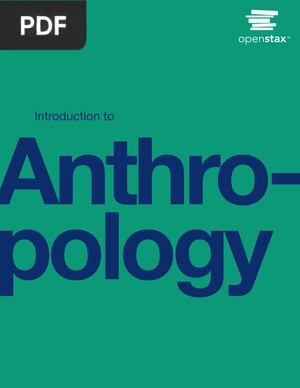
A complete first-year textbook covering all four fields of anthropology: culture, biology and human evolution, archaeology and language. Each chapter pairs clear explanations with real case studies, making it the easiest place to start.
Jennifer Hasty, David G. Lewis and Marjorie M. Snipes
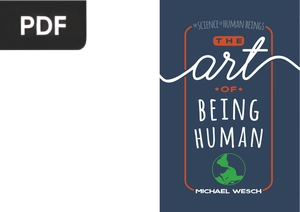
Michael Wesch's award-winning cultural anthropology textbook, built around fieldwork challenges that push you to see your own life through other cultures. Engaging, personal and full of stories.
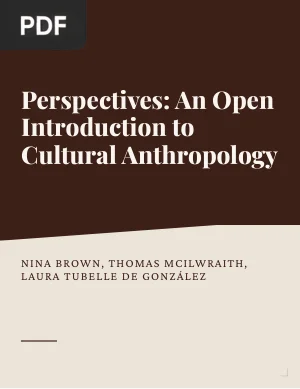
The American Anthropological Association's open textbook, second edition, with chapters on culture, fieldwork, language, kinship, religion, gender and globalization. Written by more than 40 anthropologists, each on their own specialty.
Nina Brown, Thomas McIlwraith and Laura Tubelle de González
An anthropological introduction to the Native peoples of the United States and Canada, covering kinship, economy, power, spirituality and art. Each chapter opens with a story from the oral tradition.
A concise study guide that defines anthropology, explains culture, society, family and kinship, and closes with a detailed look at tribal communities in India and Kerala.
The American Anthropological Association's complete biological anthropology textbook, second edition: genetics, primates, fossils, human variation, bioarchaeology and forensics. Richly illustrated with photos, diagrams and maps.
Beth Shook, Katie Nelson, Kelsie Aguilera and Lara Braff (eds.)
A species-by-species tour of human evolution, from Sahelanthropus and the australopiths to Neanderthals, Denisovans and Homo sapiens. Includes illustrations of the key fossils and where they were found.
How did diet shape the evolution of our large brains? Leading researchers combine primate studies, hunter-gatherer foraging, bone chemistry and Neanderthal archaeology to answer that question.
Essays by leading scientists on what genes, primate behavior, climate and culture reveal about how humans became human, from chimpanzee language studies to the genetics of our ancestors.
How do anthropologists think, write and do ethnography in the field? These books on anthropological theory, from Bruno Latour to David Graeber, are ideal once you know the basics.
Eleven essays that explain the core concepts of the discipline, from caste, kingship and the fetish to ritual, mourning and play. A rigorous guide to the ideas anthropologists still argue about.
A sharp critique of how academic anthropology works and why it so often fails to help the people it studies. Rob Borofsky makes the case for a public anthropology that tackles real problems.
David Graeber's short, provocative essay on what anthropology can teach us about societies without the state, from gift economies to direct democracy. One of the most read anthropology texts of this century.
Bruno Latour's distinguished lecture to the American Anthropological Association, arguing that the ecological crisis turns anthropology into the key discipline of our time.
A practical guide to the ethical questions of fieldwork: consent, privacy, vulnerability, harm and online research. Useful for anyone planning an ethnographic project.
A clear history of the tense relationship between anthropologists and development work, from colonial advisers to today's aid agencies, and the positions anthropologists take toward it.
An overview of how anthropologists came to study cities, the methods they use and why urban fieldwork matters now that most of humanity lives in towns and cities.
These classic anthropology books founded the discipline, with works by Tylor, Morgan, Boas and Malinowski. Written more than a century ago, they are still cited in every introductory course.
The 1871 work that gave anthropology its classic definition of culture. Tylor traces myth, language, numbers and early religious belief, and introduces his famous theory of animism.
Morgan's 1877 study of how family, property and government developed across human history, based on his research among the Iroquois. It shaped the early debates of anthropology and inspired Engels.
Widely regarded as the first anthropology textbook in English, published in 1881. Tylor covers human races, language, tools, arts, society and religion, with dozens of illustrations.
The 1899 ethnography of the Arrernte and neighboring peoples that Durkheim and Freud built on: totems, initiation ceremonies, sacred objects and myths of the ancestors.
Franz Boas's 1911 lectures dismantling the racial theories of his day, arguing that differences between peoples come from culture and history, not biology. A founding text of modern anthropology.
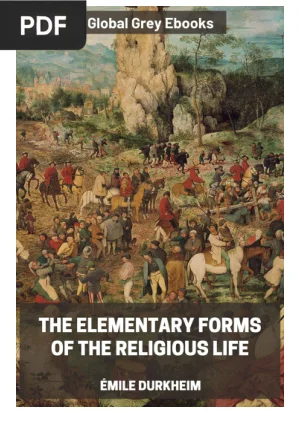
Durkheim's classic study of totemism among Aboriginal Australians, and his argument that religion is at root the way a society worships itself. Essential for the anthropology of religion.
Malinowski's 1922 account of the kula ring, the ceremonial exchange of shell valuables across the islands of Papua New Guinea. The book that defined modern fieldwork and participant observation.
Send this page to someone who’d love to read it. Everything is free, no sign-up needed.
Esc
Start typing to search...
Searching...
No results found
Try different search terms
Your book is downloading!
If InfoBooks helped you, you can support us in one click: add us as a preferred source on Google. You'll see more of our books when you search, and you'll help us keep sharing free reading with everyone.
Done! Your book is downloading
Know someone who’d enjoy reading it? Send them this page. It’s free, no sign-up needed, and you help us spread the love of reading.