
The Variation of Animals and Plants Under Domestication Vol 1 by Charles Darwin [PDF]
by InfoBooks
Darwin spent over twenty years gathering the evidence packed into this volume. Every chapter is a catalog of real observations, from the skull shapes of different rabbit breeds to the petal counts of cultivated flowers. The result reads less like theory and more like a field notebook that covers the entire living world under human influence.
Volume 1 focuses on animals and plants that humans have shaped through centuries of selective breeding. You can download the free PDF and follow Darwin as he traces dozens of domestic breeds back to their wild ancestors. His pigeon chapters alone contain enough detail to convince any skeptic that small, accumulated changes can produce dramatic results.
This is not a light overview. It is a book for readers who want primary evidence, organized by one of history's most careful observers. If you have read On the Origin of Species and want to see the data behind the conclusions, this volume delivers exactly that.
The Variation of Animals and Plants Under Domestication Vol 1 by Charles Darwin
*Please wait a few seconds for the document to load, the time may vary depending on your internet connection. If you prefer, you can download the file by clicking the link below.
Loading PDF...
Information: The Variation of Animals and Plants Under Domestication Vol 1
- Author: Charles Darwin
- Publication Date: 1868-01-30
- Main Characters:
- Charles Darwin: The author and naturalist who spent decades collecting evidence on variation in domesticated species to support his theory of evolution by natural selection.
- Artificial Selection: The process by which humans breed animals and plants for desired traits, a central mechanism Darwin uses to explain how species change over time.
- Pangenesis: Darwin's provisional hypothesis of heredity, proposing that cells shed tiny particles called gemmules that collect in the reproductive organs and pass traits to offspring.
- Domestic Pigeons: The species Darwin studied most thoroughly in this volume, tracing dozens of fancy breeds back to the wild rock pigeon to demonstrate the power of selective breeding.
- Reversion (Atavism): The tendency of domesticated organisms to revert to ancestral characteristics when selection pressure is relaxed, a key piece of evidence for common descent.
- Brief Summary: The Variation of Animals and Plants Under Domestication Vol 1 (1868) is Darwin's systematic survey of how domesticated species differ from their wild ancestors. Covering dogs, cats, horses, pigs, cattle, poultry, pigeons, rabbits, and numerous cultivated plants, the book documents the range of variation produced by artificial selection. Darwin uses this mass of evidence to support the evolutionary framework he introduced in On the Origin of Species, arguing that the same forces shaping barnyard breeds also operate in nature.
- Thematic Analysis: The central theme is that variation under domestication provides a visible, testable model for understanding natural selection. Darwin examines several forces that produce variation: direct environmental effects (climate, food), the inherited consequences of use and disuse, correlated growth (where changing one trait pulls others along), and reversion to ancestral types. He also introduces his provisional hypothesis of pangenesis to explain heredity. Throughout, he emphasizes that no single cause accounts for all variation. Instead, multiple factors interact, and breeders exploit whatever differences arise. The book argues that domestication is not a special case but an accelerated version of what happens in the wild.
- Historical Context: Published on January 30, 1868, this work appeared nine years after On the Origin of Species (1859) had upended biology. Darwin originally planned the material as the first two chapters of a larger book, but the evidence kept growing until it filled two volumes on its own. By 1868, the scientific community was still debating the mechanisms of heredity. Gregor Mendel's work on pea plants (1866) had been published but was virtually unknown. Darwin's pangenesis hypothesis was his attempt to fill that gap. The book was also shaped by decades of correspondence with breeders, horticulturists, and naturalists worldwide, making it one of the most data-rich works of nineteenth-century biology.
Books by Charles Darwin
Coral Reefs by Charles Darwin
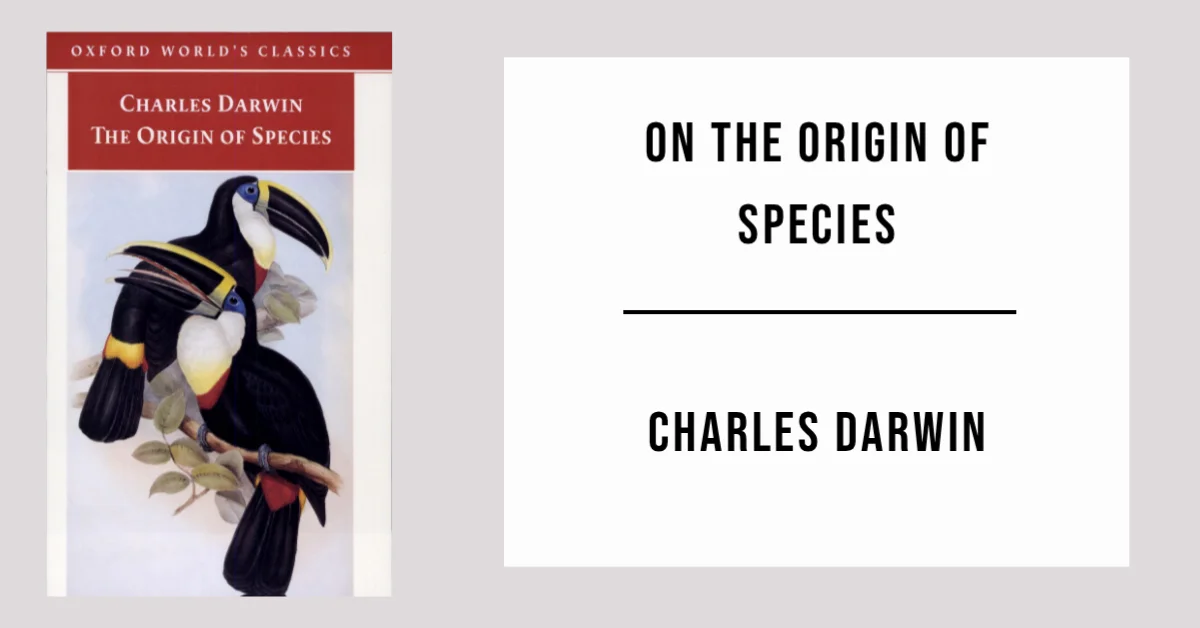
On the Origin of Species by Charles Darwin
The Autobiography of Charles Darwin by Charles Darwin
The Descent of Man by Charles Darwin
The Different Forms of Flowers on Plants of the Same Species by Charles Darwin
The Expression of the Emotions in Man and Animals by Charles Darwin
The Formation of Vegetable Mould through the action of worms with observations of their habits by Charles Darwin
The Movements and Habits of Climbing Plants by Charles Darwin
The Voyage of the Beagle by Charles Darwin

Volcanic Islands by Charles Darwin