Visual arts books help you understand everything made to be seen: painting, drawing, sculpture, printmaking and design. This collection gathers free art books in PDF, from open college textbooks to classics written by artists themselves.
Several are open textbooks used in college art appreciation courses. Next to them you'll find Tolstoy and Kandinsky on what art is for, plus the elements and principles every artist uses.
Pick a section, read the book in your browser or download the PDF. Every book here is free, with no sign-up.
📚
Download every Visual Arts book on this page
All the books on this page in one ZIP file, instead of downloading them one by one.
We will redirect you to accounts.google.com to complete sign-in.
Email and name only · We never send spam
Access unlocked
Download every Visual Arts book on this page
All the books on this page in one ZIP file, instead of downloading them one by one.
Direct download · One ZIP file
Download started. Check your downloads folder for the ZIP.
Appreciation
Art Appreciation Books
Start here if you're new to visual arts. These open college textbooks teach you how to look at a painting, a sculpture or a building and understand what it's saying.
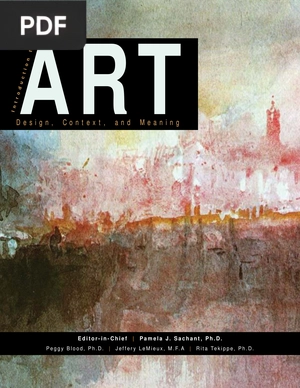
An open college textbook that teaches you to read a work of art through its design, its historical context and its meaning. It covers the elements and principles, materials and methods, and the big themes art has explored across cultures.
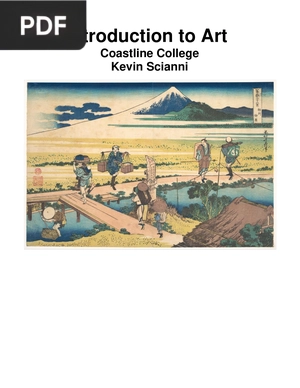
A complete art appreciation course from Coastline College. It explains what art is, how to analyze its visual elements, the main media and techniques, and how art has changed across world history, illustrated with works from major museum collections.
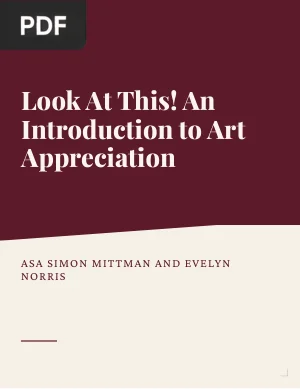
A lively, image-rich introduction to art appreciation. It starts with visual analysis, the elements of art and the principles of composition, then explores art through themes like nature, power, religion, pleasure, identity and death.
A college art appreciation textbook that covers what art is, how to talk about it, the visual elements and principles, the main media from drawing to architecture, and art history from prehistory to today.
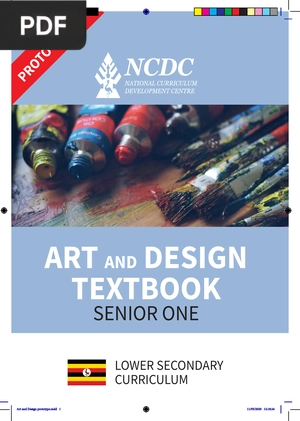
A secondary school art and design textbook with hands-on chapters on appreciating art, drawing, painting, crafts and design. A practical starting point for younger students and teachers.
Line, shape, color, balance and rhythm are the building blocks of every artwork. These art books show you how they work together, from Arthur Wesley Dow's Composition to Walter Crane's Line and Form.
An open textbook for foundation design courses. It works through each element of art, from line and shape to value, texture and color, and the principles of composition, with student examples and exercises.
A visual lesson on the building blocks of art: line, shape, form, space, color, value and texture, and the principles that organize them. Each idea is shown with famous artworks from around the world.
The classic that shaped how art and design are taught. Dow teaches composition through line, notan (the balance of light and dark) and color, with graded exercises inspired by Japanese prints.
A foundational design course that explains rhythm, balance and harmony step by step, with hundreds of diagrams and exercises. Written by an Arts and Crafts teacher, it remains one of the clearest guides to design fundamentals.
The illustrator Walter Crane explains how line and form work as the language of every artist, from outline and silhouette to proportion and ornament. Illustrated with more than 150 of his own drawings.
What makes something art? These essays by Tolstoy, Kandinsky, Clive Bell and Roger Fry are the ideas on aesthetics that artists and critics still argue about today.
Tolstoy's famous essay asks what art is and what it is for. His answer, that true art transmits feeling from one person to another, is still one of the most debated ideas in aesthetics.
Kandinsky's manifesto on abstraction and the inner life of art. He explains how color and form speak directly to the soul, in the book that opened the door to abstract painting.
The essay that introduced the idea of significant form: what moves us in a painting is the arrangement of lines and colors, not the story it tells. A key text of modern art criticism.
Essays by the critic who introduced Cézanne and the Post-Impressionists to the English-speaking world. Fry writes on aesthetics, art history and non-Western art, with 40 illustrations.
Essays on how artists, performers and teachers use writing to create, reflect and critique their work. Useful for anyone writing art criticism, artist statements or academic papers on the visual and performing arts.
Woodcuts, etchings, lithographs and engravings each have their own tricks. These printmaking manuals explain each technique step by step, from a museum guide to the book by the inventor of lithography.
A step-by-step illustrated guide to intaglio printmaking without toxic acids and solvents. Covers etching plates, grounds, aquatint, inking and printing with safer modern materials.
A museum guide to printmaking with a glossary of techniques, a brief history of the print, and close looks at works by Rembrandt, Hokusai and modern printmakers, each with a hands-on lesson plan.
A practical treatise by an American etcher on how to make etchings, drypoints, mezzotints, aquatints, lithographs and woodcuts, from preparing the plate to pulling the print.
A complete manual of the woodcut and color woodblock print in the Japanese method, covering tools, cutting, paper, pigments and printing, with illustrations by the author.
The inventor of lithography tells how he discovered printing from stone and explains every step of the process. Part memoir and part technical manual, it is the founding text of the lithographic print.
Ruskin's Oxford lectures on the art of engraving, from Dürer and Holbein to Botticelli. He explains what makes a woodcut or a metal engraving great and how the craft shapes the image.
Send this page to someone who’d love to read it. Everything is free, no sign-up needed.
Esc
Start typing to search...
Searching...
No results found
Try different search terms
Your book is downloading!
If InfoBooks helped you, you can support us in one click: add us as a preferred source on Google. You'll see more of our books when you search, and you'll help us keep sharing free reading with everyone.
Done! Your book is downloading
Know someone who’d enjoy reading it? Send them this page. It’s free, no sign-up needed, and you help us spread the love of reading.