11 Charles Darwin Books for Free! [PDF]
by InfoBooks
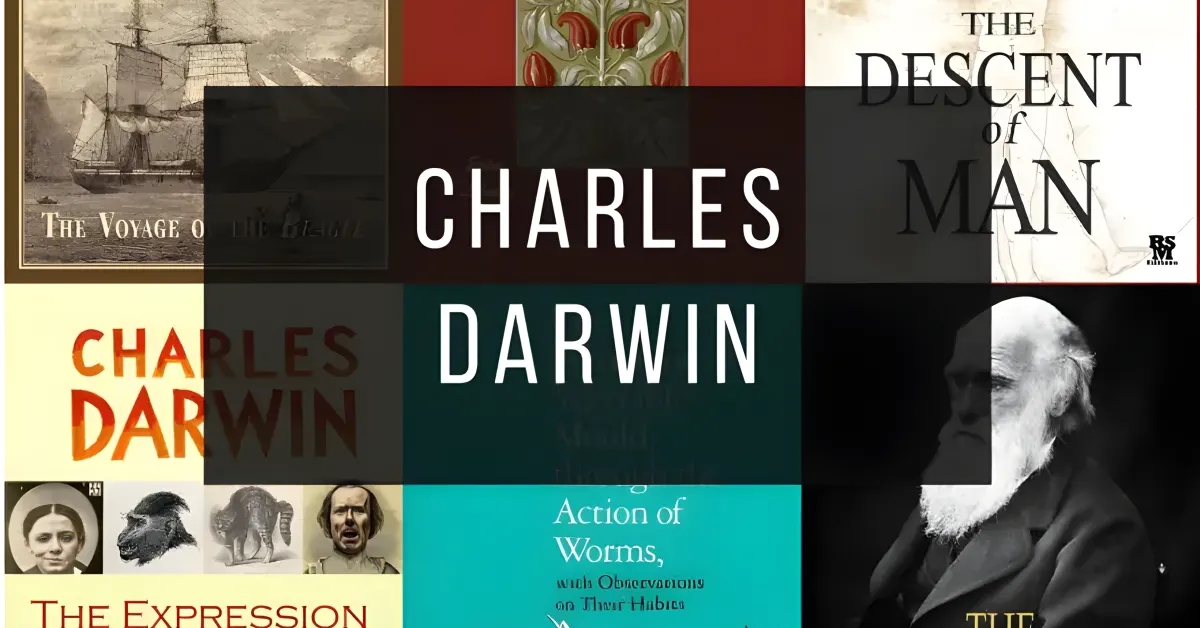
Explore the groundbreaking works of Charles Darwin with our free collection of Charles Darwin books in PDF format.
Charles Darwin, the father of evolutionary biology, revolutionized science and our understanding of the natural world. His theories continue to shape modern thought and spark curiosity in readers worldwide.
From the iconic On the Origin of Species to insightful works like The Descent of Man, Charles Darwin’s writing combines meticulous observation with profound scientific insights, making his works essential for anyone fascinated by nature and evolution.
Whether you’re a student, scientist, or simply curious about the origins of life, this collection offers a deep dive into the ideas that forever changed humanity’s place in the world.
Download these Charles Darwin books in PDF now and embark on a journey through the mind of one of history’s most influential scientists.
Coral Reefs
PDF
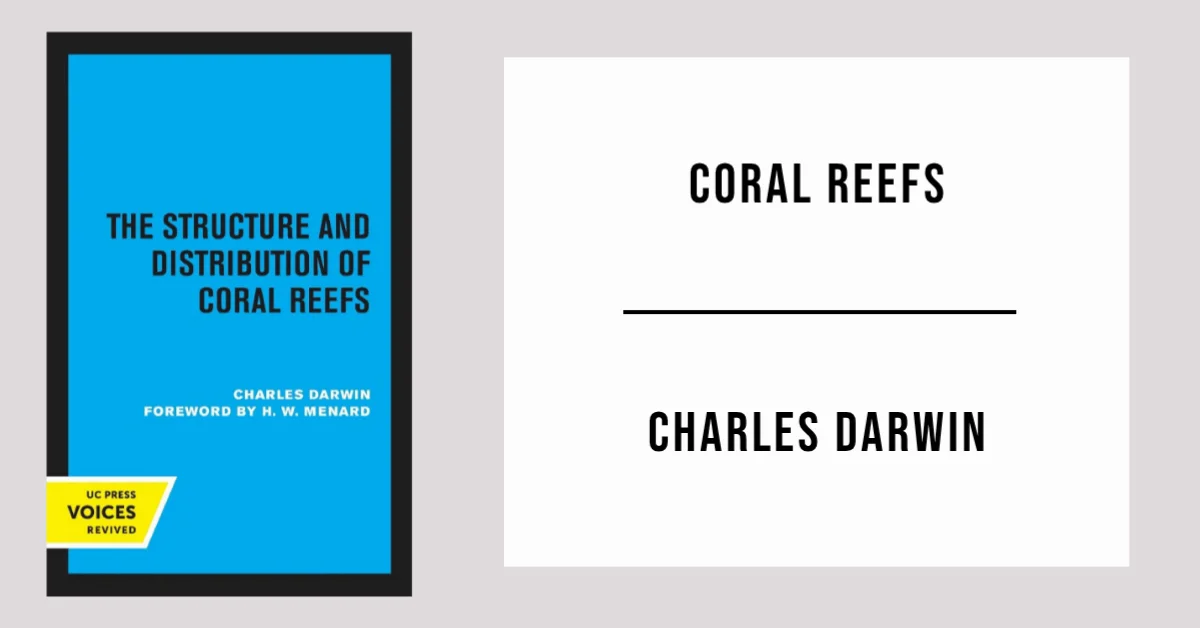
Coral Reefs is Charles Darwin's first major scientific publication after his voyage on HMS Beagle. Written in 1842, it presents his theory on how coral atolls, barrier reefs, and fringing reefs form through the gradual subsidence of ocean floors.
Darwin proposed that as volcanic islands slowly sink, the coral growing around their edges continues to build upward, eventually creating the ring-shaped atolls we see across the Pacific and Indian Oceans. He developed this idea before ever stepping foot on a coral island, then confirmed it through careful observation during the Beagle's Pacific crossing.
The book stands as one of the earliest and most influential works of marine geology. Darwin's subsidence theory held up remarkably well over the following century, and modern drilling has largely confirmed his core insight. It's a fascinating window into how one of history's sharpest scientific minds worked through a geological puzzle.
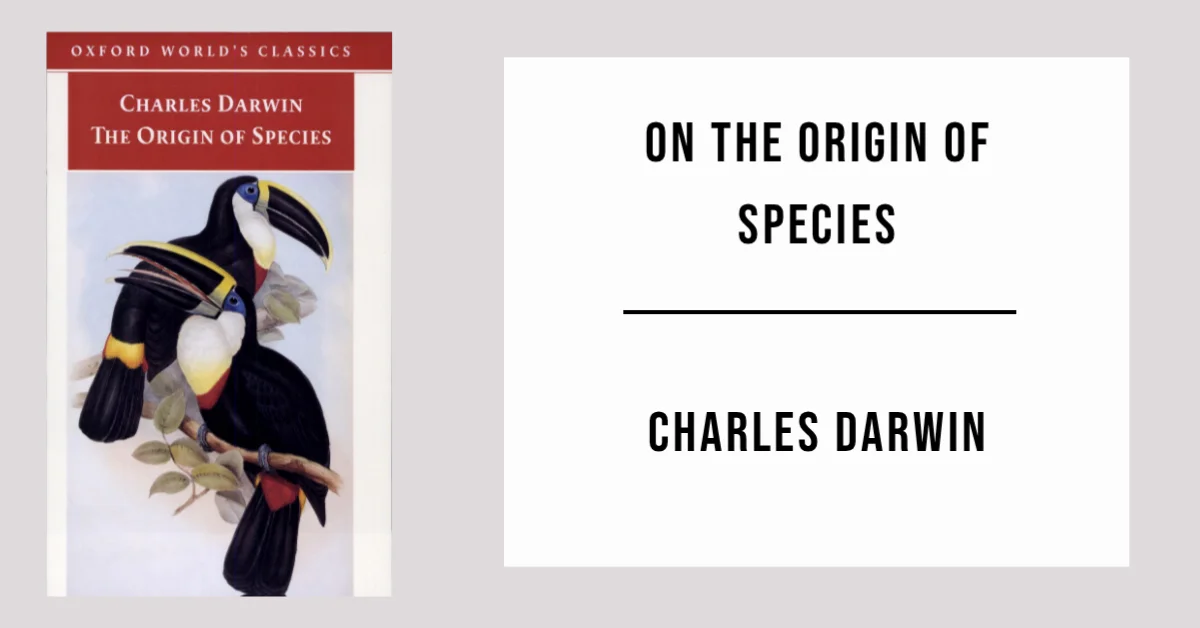
On the Origin of Species
PDF
On the Origin of Species is the book that rewrote biology. Published in 1859, Charles Darwin laid out the theory of natural selection and changed how we understand life on Earth. It wasn't just a scientific paper. It was a paradigm shift.
Darwin spent over twenty years gathering evidence before putting his ideas into print. The result is a work built on careful observation of fossils, breeding, and biogeography. Every chapter builds on the last, stacking evidence until the conclusion feels unavoidable.
More than 160 years later, this book remains the foundation of evolutionary biology. Whether you're a student, a science enthusiast, or just curious about where we come from, Darwin's arguments are still sharp, still relevant, and still worth reading.
The Autobiography of Charles Darwin
PDF
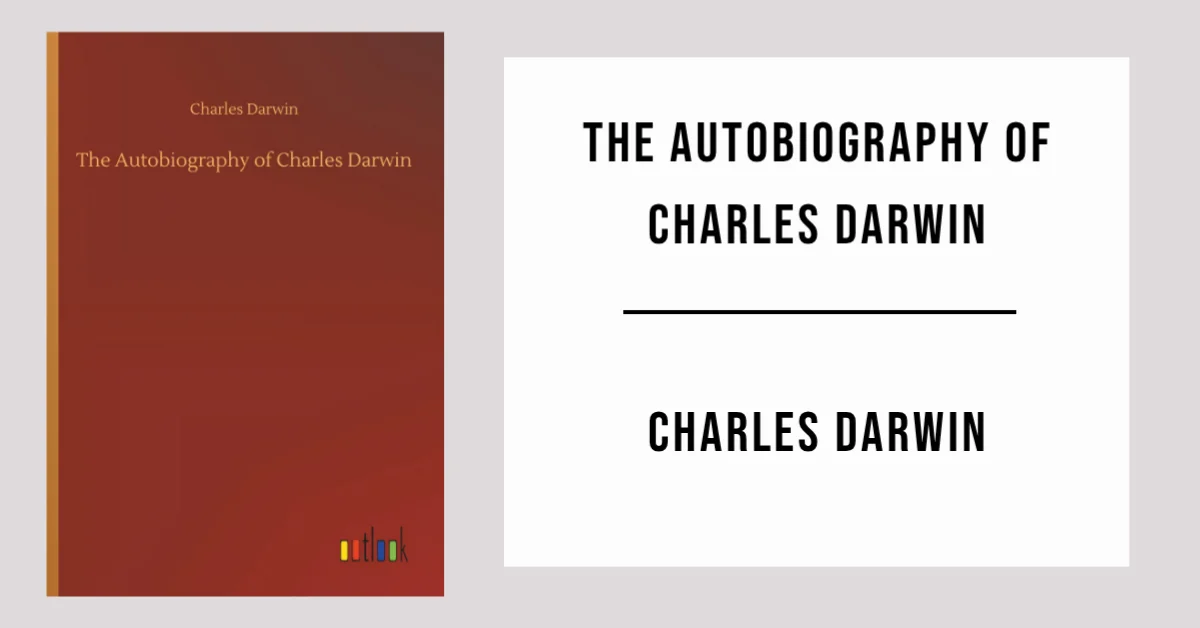
First published in 1887, The Autobiography of Charles Darwin was originally written for his family, not the public. Darwin began drafting it in 1876, at age 67, as a private record of his life and intellectual development. What he produced is one of the most honest self-portraits any scientist has ever left behind.
Darwin traces his path from an aimless young man who collected beetles to the naturalist who changed how we understand life on Earth. He writes candidly about his years aboard the HMS Beagle, his slow development of the theory of natural selection, and the personal doubts that followed him through decades of work. His tone is modest, almost self-deprecating, which makes the scale of his achievements even more striking.
The book was censored by his family for decades; passages on religion and personal opinions were removed until the full version appeared in 1958. Today it reads as both a window into Victorian science and a surprisingly accessible account of how one quiet, persistent mind reshaped biology forever.
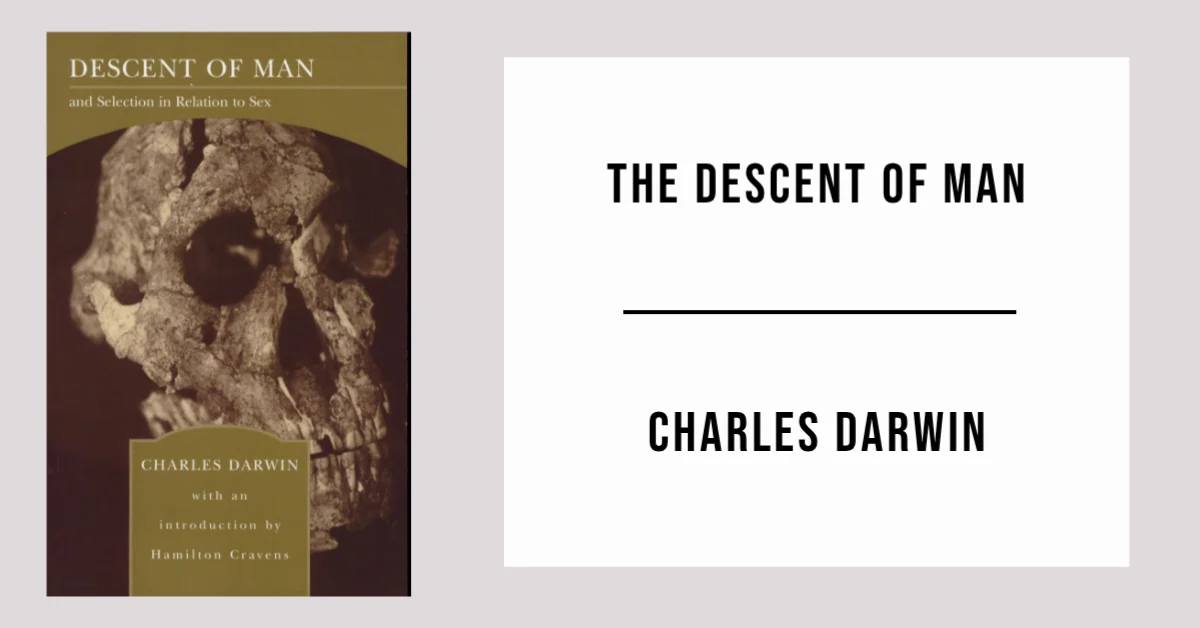
The Descent of Man
PDF
The Descent of Man is Charles Darwin's bold follow-up to On the Origin of Species, where he directly tackles the question everyone was waiting for: how does evolution apply to humans? Published in 1871, it was the first major scientific work to argue that human beings descended from earlier animal forms.
Darwin lays out evidence from anatomy, embryology, and behavior to show that humans share a common ancestor with the great apes. He also introduces his theory of sexual selection, explaining how mate choice and competition shaped not only animal traits but also human diversity, culture, and even morality.
The book remains a foundational text in evolutionary biology and anthropology. Whether you agree with every conclusion or not, Darwin's ability to connect observations across species and civilizations is genuinely compelling. It's a book that changed how we understand ourselves.
The Different Forms of Flowers on Plants of the Same Species
PDF
The Different Forms of Flowers on Plants of the Same Species is Charles Darwin's 1877 study of heterostyly, the phenomenon where plants of the same species produce structurally different flowers. Darwin spent over fifteen years investigating why some plants have long-styled and short-styled forms, and this book brings together his careful experiments and observations on the subject.
The work focuses on species like primroses, flax, and purple loosestrife, showing how their different flower forms promote cross-pollination. Darwin demonstrates through meticulous crossing experiments that "legitimate" pollinations between different forms produce far more seeds than "illegitimate" same-form crosses. The data is thorough and the conclusions are direct.
This is one of Darwin's most focused botanical works and a key piece in his broader argument for the power of natural selection. It shows evolution working at a level most people overlook: the shape and arrangement of stamens and pistils inside a single flower.
The Expression of the Emotions in Man and Animals
PDF
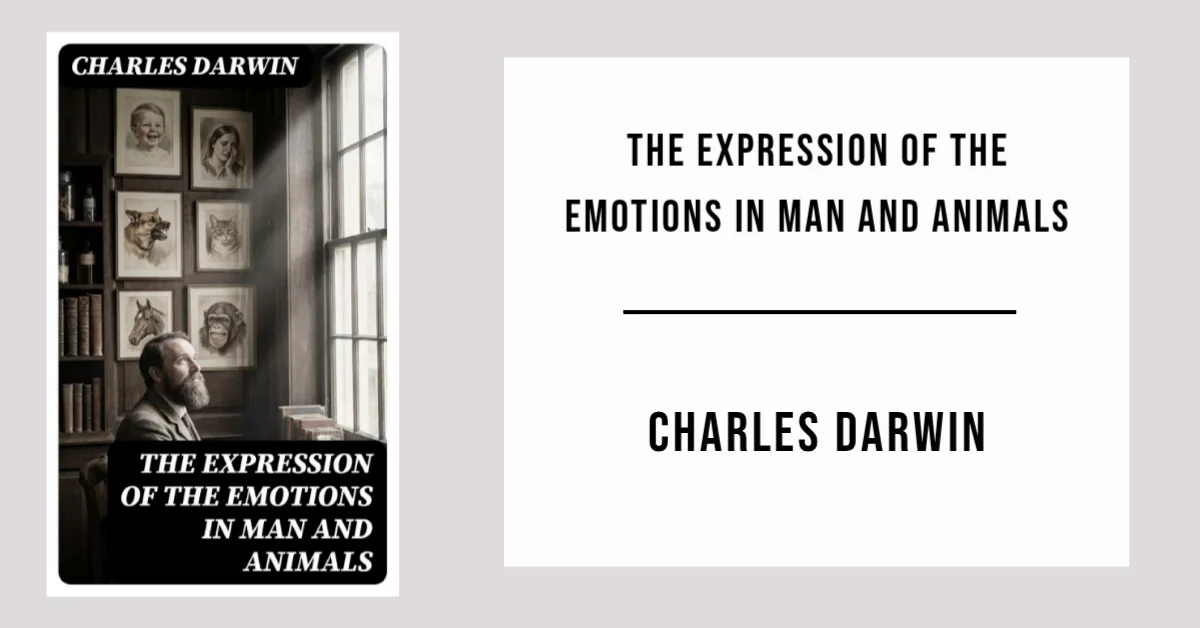
The Expression of the Emotions in Man and Animals is Charles Darwin's groundbreaking study of why humans and animals make the faces they do. Published in 1872, it was the first scientific attempt to explain emotional expressions through biology and evolution rather than divine design.
Darwin builds his case with evidence from an extraordinary range of sources: observations of his own children, correspondence with missionaries across the globe, photographs of psychiatric patients, and careful comparisons with animal behavior. He proposes three principles that explain how expressions like blushing, frowning, and baring teeth developed over time.
The book challenged the idea that human emotions were somehow separate from the animal kingdom. More than 150 years later, modern psychology still treats it as a foundational text. If you're curious about why we smile, cry, or clench our fists when angry, this is where the science started.
The Formation of Vegetable Mould through the action of worms with observations of their habits
PDF
Published in 1881, The Formation of Vegetable Mould was Charles Darwin's last scientific book. It presents over 40 years of observations on how earthworms quietly reshape the ground beneath our feet. What sounds like a narrow topic turns out to be a fascinating look at how small, steady forces can transform entire landscapes.
Darwin shows that earthworms are far more important than most people realize. They break down organic matter, aerate the soil, and slowly bury ancient structures under layers of fresh earth. He even conducted experiments to test their intelligence, observing how worms drag leaves into their burrows by the most efficient angle.
This book is a masterclass in patient scientific observation. Darwin connects the tiny, daily work of worms to large-scale geological processes, proving that what seems insignificant can have enormous consequences over time. It sold faster than On the Origin of Species in its first year.
The Movements and Habits of Climbing Plants
PDF
The Movements and Habits of Climbing Plants is one of Darwin's lesser-known but fascinating works on plant biology. Originally published as an essay in 1865 and later expanded into book form in 1875, it examines how different species of plants have evolved the ability to climb. Darwin studied over a hundred species and classified them into five distinct groups based on their climbing strategies.
The book explores twining plants, leaf climbers, tendril bearers, root climbers, and hook climbers. Darwin's careful experiments revealed that a basic rotational movement called circumnutation lies at the heart of how plants seek and attach to supports. His observations showed that climbing is not random but a finely tuned adaptation shaped by natural selection.
This work connects directly to Darwin's broader theory of evolution by demonstrating that even seemingly simple plant behaviors follow complex developmental patterns. It laid the groundwork for modern plant physiology and biomechanics. A surprisingly engaging read for anyone curious about how nature solves the problem of reaching sunlight.
The Variation of Animals and Plants Under Domestication Vol 1
PDF
The Variation of Animals and Plants Under Domestication Vol 1 is Darwin's deep dive into the raw material of evolution: variation itself. Published in 1868, this first volume catalogs how dogs, pigeons, cattle, horses, and dozens of cultivated plants have changed under human care. It is the detailed evidence file that On the Origin of Species only summarized.
Darwin walks through breed after breed, showing how selective breeding reshapes anatomy, behavior, and reproduction. His treatment of domestic pigeons is especially thorough. He traces every fancy breed back to the wild rock pigeon, building a case so tight it still holds up today.
The book also tackles the conditions that trigger variation: climate, diet, use and disuse of body parts, and the curious tendency of domesticated species to revert to ancestral forms. If you want to see Darwin working not as a theorist but as a tireless collector of facts, this is where to look.
The Voyage of the Beagle
PDF
The Voyage of the Beagle is the diary of a 22-year-old naturalist who stepped onto a British survey ship and came back five years later with ideas that would reshape biology forever. Published in 1839, Charles Darwin's account of the HMS Beagle expedition covers everything from fossils in Patagonia to volcanic islands in the Atlantic, with a sharp eye for detail that makes you feel like you're right there beside him.
What sets this book apart from typical travel writing is Darwin's ability to connect the dots between what he sees. Giant tortoises on the Galapagos, mockingbirds with slightly different beaks on neighboring islands, geological strata that tell stories spanning millions of years. These observations feel casual on the page, but they were quietly building toward one of the biggest scientific breakthroughs in history.
Beyond the science, this is a vivid portrait of the 19th-century world. Darwin writes about slavery in Brazil with genuine outrage, describes encounters with indigenous peoples in Tierra del Fuego, and captures landscapes that still draw travelers today. It reads as both a personal adventure and a record of a mind at work, piecing together the puzzle of life on Earth.
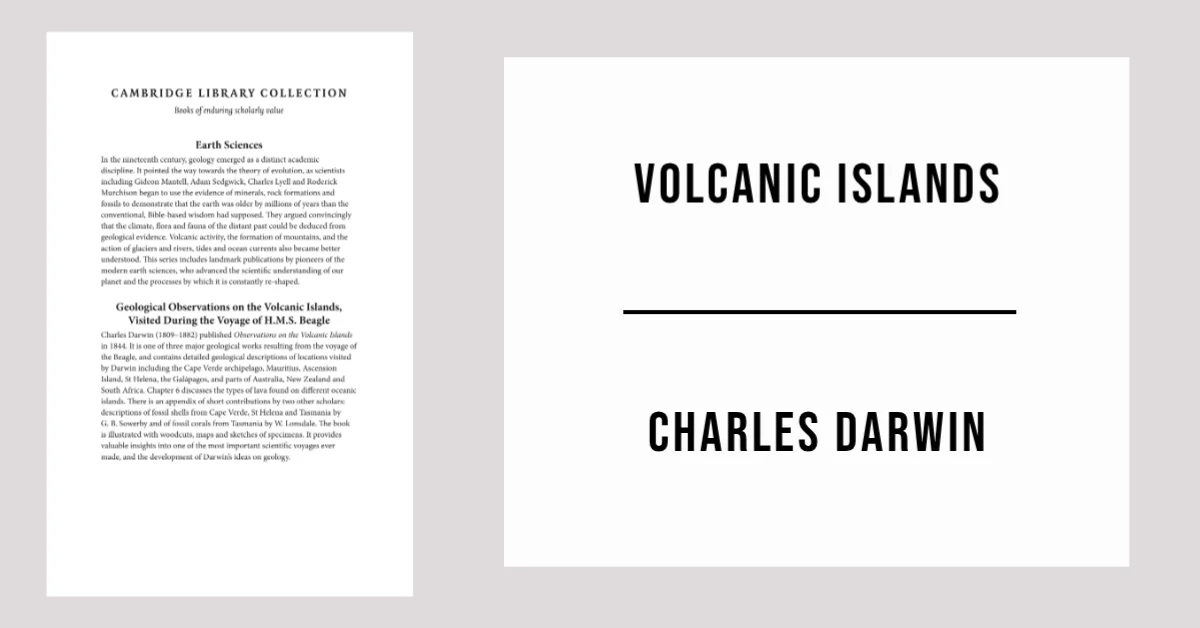
Volcanic Islands
PDF
Volcanic Islands is Charles Darwin's geological record of the volcanic islands he visited during the HMS Beagle voyage (1832-1836). Published in 1844, it was the second of three geology volumes Darwin produced from the expedition, sitting between Coral Reefs and South America.
The book covers Darwin's observations across St. Jago (Cape Verde), Fernando Noronha, Ascension Island, St. Helena, and the Galapagos Archipelago. He examines basaltic lava flows, trachyte formations, crater structures, and the processes of elevation and subsidence that shape volcanic landscapes. His analysis of crystallization in Galapagos lava flows was the first proposal of what later became the fractional crystallization hypothesis.
Darwin wrote this work at his home in Down, Kent, between 1842 and 1844. It stands as a foundational text in volcanology and island geology, showing how careful fieldwork could reveal the deep history written in rock. The book is available as a free PDF for anyone interested in geology, natural history, or Darwin's scientific thinking beyond evolution.