
Coral Reefs by Charles Darwin [PDF]
by InfoBooks
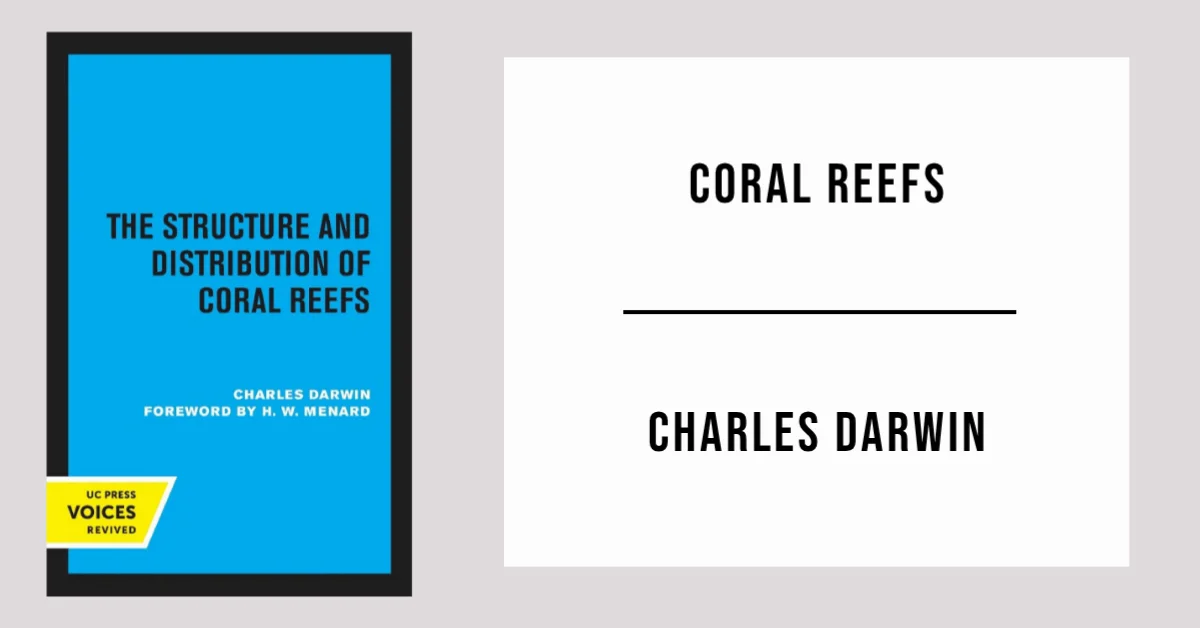
Published in 1842, this was the first book Darwin released after returning from his famous Beagle voyage. It tackles a question that puzzled geologists for decades: how do coral atolls form in the middle of deep oceans? Darwin's answer was elegant and, as it turned out, largely correct.
Darwin argues that coral reefs develop in stages as the seafloor beneath them gradually sinks. You can download this free PDF and follow his original reasoning, complete with detailed maps and cross-sections of reef structures from around the world. His writing is surprisingly clear for a 19th-century scientific text.
This book laid the groundwork for our modern understanding of reef formation. If you're interested in geology, marine biology, or simply want to see how Darwin built a scientific argument from direct observation, this is a rewarding read that holds up well nearly two centuries later.
Coral Reefs by Charles Darwin
*Please wait a few seconds for the document to load, the time may vary depending on your internet connection. If you prefer, you can download the file by clicking the link below.
Loading PDF...
Information: Coral Reefs
- Author: Charles Darwin
- Publication Date: 1842
- Main Characters:
- Subsidence Theory: Darwin's central proposal that coral atolls form as the ocean floor gradually sinks, causing coral to grow upward and eventually create ring-shaped islands.
- Fringing Reefs: The first stage of reef development in Darwin's model. These reefs grow directly along the shoreline of a volcanic island.
- Barrier Reefs: The second stage, where continued subsidence creates a lagoon between the reef and the island, separating them by a channel of deeper water.
- Atolls: The final stage. Once the central island sinks entirely below the surface, only the ring of coral reef remains, encircling a shallow lagoon.
- Coral Growth Limits: Darwin examines the biological constraints on reef-building corals, including maximum depth, water temperature, and exposure to open ocean waves.
- Volcanic Island Subsidence: The geological mechanism driving reef formation. Darwin argues that vast regions of the Pacific floor are slowly sinking, taking islands down with them.
- Brief Summary: Coral Reefs presents Darwin's theory that the three main types of coral formations (fringing reefs, barrier reefs, and atolls) represent successive stages of development caused by the gradual subsidence of the ocean floor. As volcanic islands slowly sink, the coral continues growing upward, eventually forming ring-shaped atolls. Darwin supports this theory with extensive observations from the Beagle voyage, including detailed descriptions of reef structures in the Pacific and Indian Oceans, measurements of coral growth, and geological evidence of land subsidence.
- Thematic Analysis: The central theme is the relationship between geological processes and biological growth. Darwin demonstrates how slow, large-scale earth movements (subsidence) interact with the steady biological activity of coral organisms to produce the reef formations observed worldwide. The book also explores the limits of coral growth, examining factors like water temperature, depth, and wave exposure. A secondary theme is scientific methodology itself. Darwin builds his case systematically, presenting competing theories, evaluating evidence, and showing why his subsidence model explains observations that other theories cannot.
- Historical Context: Darwin wrote Coral Reefs during 1835-1842, making it part of the geological trilogy he produced from his Beagle voyage observations (alongside Volcanic Islands and Geological Observations on South America). The book entered a lively scientific debate. Charles Lyell had proposed that atolls formed on the rims of submerged volcanic craters, while others suggested they grew on submarine banks. Darwin's subsidence theory was well received and largely replaced earlier explanations. The second edition (1874) addressed new research by James Dwight Dana and Joseph Jukes. Deep drilling at Enewetak Atoll in 1952 confirmed Darwin's core prediction: coral deposits extend hundreds of meters deep atop volcanic rock, exactly as his subsidence model predicted.
Books by Charles Darwin
On the Origin of Species by Charles Darwin
The Autobiography of Charles Darwin by Charles Darwin
The Descent of Man by Charles Darwin
The Different Forms of Flowers on Plants of the Same Species by Charles Darwin
The Expression of the Emotions in Man and Animals by Charles Darwin
The Formation of Vegetable Mould through the action of worms with observations of their habits by Charles Darwin
The Movements and Habits of Climbing Plants by Charles Darwin
The Variation of Animals and Plants Under Domestication Vol 1 by Charles Darwin
The Voyage of the Beagle by Charles Darwin
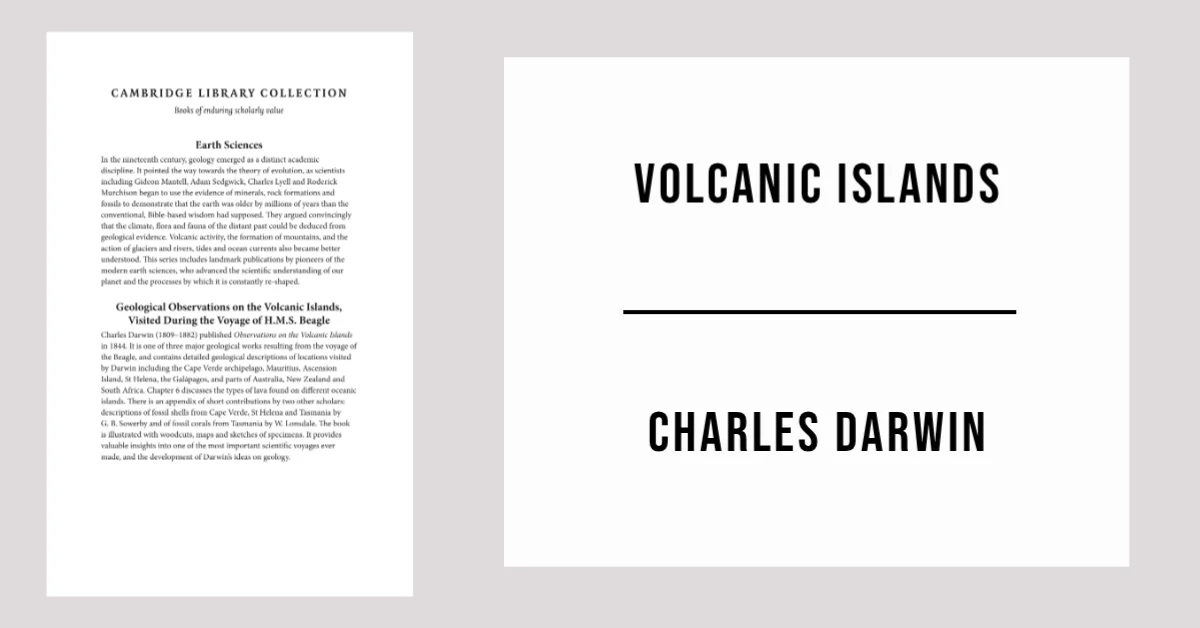
Volcanic Islands by Charles Darwin