
On the Origin of Species by Charles Darwin [PDF]
by InfoBooks
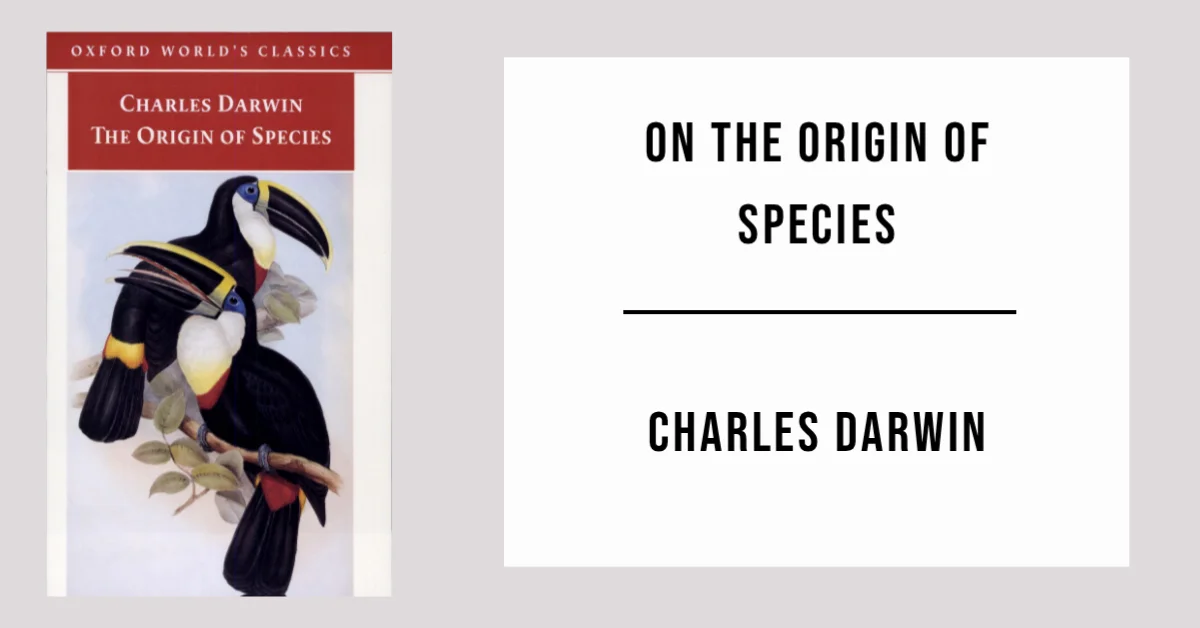
Published in 1859, *On the Origin of Species* introduced the world to natural selection and permanently changed our understanding of life. Darwin's core argument is straightforward: species evolve over time through the survival of traits best suited to their environment. The book draws on decades of research, from the Galapagos finches to pigeon breeding, to build a case that was as controversial then as it is foundational now.
This is one of the most important scientific works ever written, and it's surprisingly readable for a 19th-century text. You can download the free PDF and discover how Darwin constructed his theory step by step, using evidence that still holds up today. His writing is patient and methodical, but there's an underlying excitement in how he connects observation after observation.
If you've ever wondered why evolution works the way it does, this is the primary source. No secondhand summaries, no simplified versions. Just Darwin, making his case directly to you.
On the Origin of Species by Charles Darwin
*Please wait a few seconds for the document to load, the time may vary depending on your internet connection. If you prefer, you can download the file by clicking the link below.
Loading PDF...
Information: On the Origin of Species
- Author: Charles Darwin
- Publication Date: 1859
- Main Characters:
- Charles Darwin: English naturalist and author who developed the theory of natural selection after years of observation and research, particularly during his voyage on the HMS Beagle.
- Natural Selection: The central mechanism proposed in the book. Organisms with traits better suited to their environment are more likely to survive and pass those traits to offspring.
- Alfred Russel Wallace: British naturalist who independently conceived a theory of evolution by natural selection, prompting Darwin to finally publish his work.
- Thomas Huxley: Known as 'Darwin's Bulldog,' he was the most prominent public defender of evolutionary theory in the years following publication.
- Descent with Modification: Darwin's concept that all species share common ancestors and diverge over time through accumulated variations.
- Struggle for Existence: The competition among organisms for limited resources, which Darwin identified as a key driver of natural selection.
- Brief Summary: On the Origin of Species presents Charles Darwin's theory that all species of life descend from common ancestors through the process of natural selection. Darwin argues that organisms with favorable variations are more likely to survive and reproduce, gradually shaping the characteristics of populations over time. The book covers evidence from domestic breeding, the fossil record, geographical distribution of species, and anatomical similarities between organisms. Darwin addresses potential objections to his theory directly, including gaps in the fossil record and the complexity of certain organs. The work concludes that the "war of nature" produces the endless forms of life we see today, all connected by descent with modification.
- Thematic Analysis: The central theme is natural selection as the driving mechanism of evolution. Darwin develops this through several supporting themes: the struggle for existence (competition for resources shapes which individuals survive), variation under domestication (how human-selected breeding reveals the plasticity of species), and descent with modification (all life shares common ancestry). The book also explores the tension between design and randomness. Where natural theology saw purpose in every adaptation, Darwin offered a mechanistic explanation. Another key theme is the deep time required for evolution to produce the diversity of life. Darwin repeatedly emphasizes that these changes are imperceptibly slow, playing out over millions of years. The relationship between extinction and the emergence of new species is also central, with Darwin framing life as a continually branching tree rather than a ladder of progress.
- Historical Context: Darwin wrote On the Origin of Species during the Victorian era, a period of rapid scientific progress and intense religious influence on public thought. The idea that species were fixed and created by God was dominant. Darwin had developed his theory by the late 1830s after his voyage on the HMS Beagle (1831-1836), but delayed publication for over twenty years, aware of the controversy it would cause. He was finally pushed to publish in 1858 when Alfred Russel Wallace independently arrived at a similar theory. The first edition of 1,250 copies sold out on the first day. The book ignited fierce debates between scientists, clergy, and the public. Thomas Huxley became Darwin's most vocal defender, while figures like Bishop Samuel Wilberforce opposed the theory. Despite the controversy, within two decades the scientific community largely accepted evolution, though the specific mechanism of natural selection took longer to gain full acceptance, not being widely embraced until the Modern Synthesis of the 1930s-1940s.
Books by Charles Darwin
Coral Reefs by Charles Darwin
The Autobiography of Charles Darwin by Charles Darwin
The Descent of Man by Charles Darwin
The Different Forms of Flowers on Plants of the Same Species by Charles Darwin
The Expression of the Emotions in Man and Animals by Charles Darwin
The Formation of Vegetable Mould through the action of worms with observations of their habits by Charles Darwin
The Movements and Habits of Climbing Plants by Charles Darwin
The Variation of Animals and Plants Under Domestication Vol 1 by Charles Darwin
The Voyage of the Beagle by Charles Darwin
Volcanic Islands by Charles Darwin