
The Expression of the Emotions in Man and Animals by Charles Darwin [PDF]
by InfoBooks
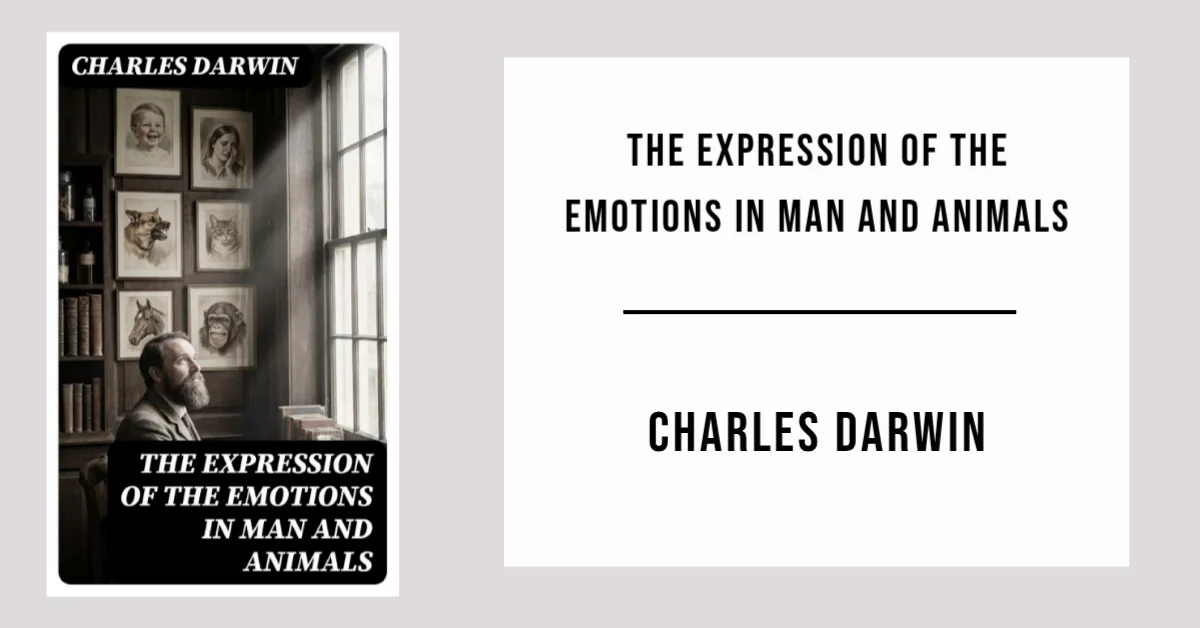
Why do we blush when embarrassed? Why does a dog wag its tail or bare its teeth? Charles Darwin tackled these questions head-on in 1872, producing the first scientific study of emotional expressions in humans and animals. His answer was simple but radical: our expressions are not random or divinely assigned. They evolved, just like everything else about us.
Darwin gathered evidence from around the world, sending questionnaires to missionaries, doctors, and travelers in remote regions. He observed infants, studied photographs of psychiatric patients, and compared human behavior with that of dozens of animal species. You can now explore this pioneering work in its entirety as a free PDF, and see for yourself how Darwin connected a baby's cry to a monkey's grimace. The range of his research remains impressive by any modern standard.
This book is often called Darwin's "forgotten masterpiece," overshadowed by On the Origin of Species and The Descent of Man. That's a shame, because it laid the groundwork for entire fields of study, from behavioral psychology to the science of nonverbal communication. Paul Ekman, one of the most influential psychologists of the 20th century, credited this book as the foundation of his own research on facial expressions.
The Expression of the Emotions in Man and Animals by Charles Darwin
*Please wait a few seconds for the document to load, the time may vary depending on your internet connection. If you prefer, you can download the file by clicking the link below.
Loading PDF...
Information: The Expression of the Emotions in Man and Animals
- Author: Charles Darwin
- Publication Date: 1872
- Main Characters:
- Charles Darwin: The author, who applies his evolutionary framework to explain why humans and animals express emotions physically.
- Sir Charles Bell: Anatomist whose theory that facial muscles were divinely designed for expression Darwin directly challenges in this book.
- Serviceable Associated Habits: Darwin's first principle: actions that once served a practical purpose become habitual and are triggered automatically by associated emotional states.
- Principle of Antithesis: Darwin's second principle: when an opposite emotional state is felt, the body tends to perform the opposite movement, even if it serves no practical function.
- Direct Action of the Nervous System: Darwin's third principle: some expressions result from excess nervous energy being discharged through the body, independent of habit or will.
- Paul Ekman: 20th-century psychologist who revived interest in Darwin's work and built modern facial expression research on the foundations laid in this book.
- Guillaume-Benjamin-Amand Duchenne: French neurologist whose photographic studies of facial muscles using electrical stimulation provided key evidence that Darwin used throughout the book.
- Brief Summary: The Expression of the Emotions in Man and Animals examines why humans and animals display specific physical reactions to emotions. Darwin argues that expressions like smiling, crying, blushing, and snarling are not arbitrary. They are inherited behaviors shaped by evolution. He organizes his argument around three core principles: serviceable associated habits (actions that were once useful become habitual), antithesis (opposite emotions produce opposite movements), and the direct action of the nervous system (some expressions result purely from nervous energy). Drawing on global observations, infant studies, and cross-species comparisons, Darwin demonstrates that emotional expressions are universal across human cultures and share deep roots with animal behavior.
- Thematic Analysis: The central theme is continuity between humans and animals. Darwin dismantles the barrier between "human emotion" and "animal instinct," showing that a dog's submissive crouch and a person's shrug of helplessness follow the same evolutionary logic. A second major theme is universality: Darwin argues that basic emotional expressions are the same across all human populations, challenging the racist theories of his era that claimed different races had fundamentally different emotional capacities. The book also explores the tension between voluntary and involuntary expression. Blushing, for example, cannot be faked or suppressed, which Darwin found particularly fascinating as evidence that some expressions bypass conscious control entirely. Finally, the work is an early exercise in empirical psychology, using questionnaires, photographs, and cross-cultural data long before these methods became standard in the social sciences.
- Historical Context: Published on November 26, 1872, this book appeared just one year after The Descent of Man and was originally planned as a chapter in that earlier work. It grew far beyond its intended scope. Darwin wrote it partly as a rebuttal to Sir Charles Bell, who had argued that human facial muscles were specially designed by God for the purpose of expression. The book was a commercial success, selling over 5,000 copies on its first day. It was also one of the first scientific books to use photographs as evidence, with heliotype plates showing facial expressions. The work fell out of mainstream scientific discussion for much of the 20th century but was revived in the 1960s and 1970s by psychologist Paul Ekman, whose research on universal facial expressions built directly on Darwin's framework. Today it is recognized as a founding text in affective science and evolutionary psychology.
Books by Charles Darwin
Coral Reefs by Charles Darwin
On the Origin of Species by Charles Darwin
The Autobiography of Charles Darwin by Charles Darwin
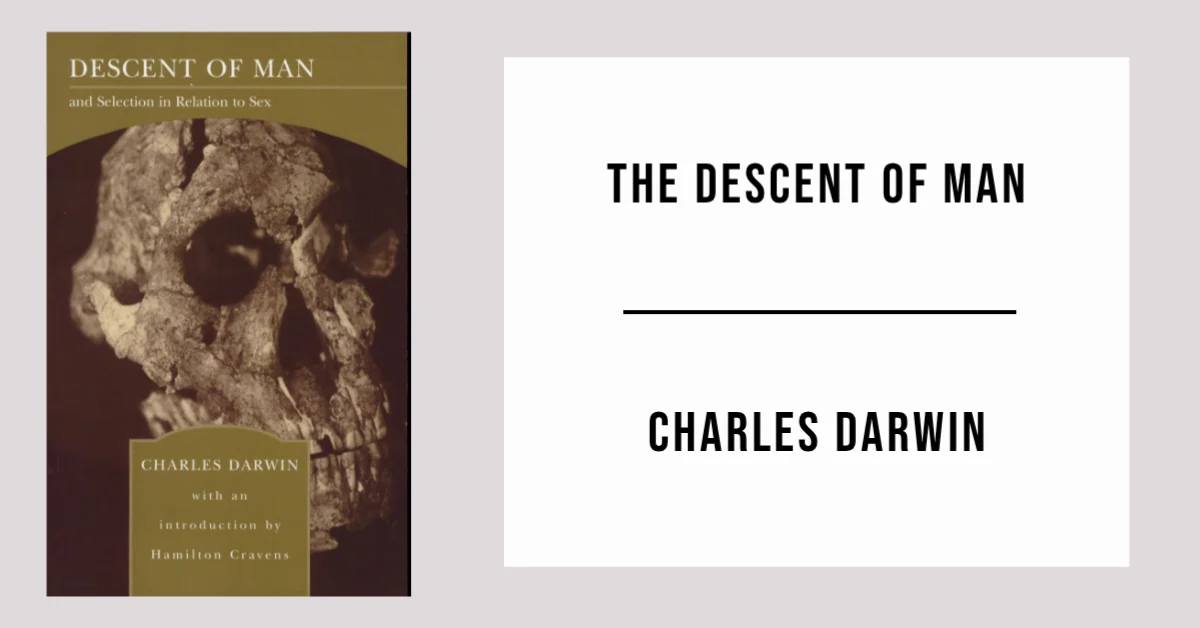
The Descent of Man by Charles Darwin
The Different Forms of Flowers on Plants of the Same Species by Charles Darwin

The Formation of Vegetable Mould through the action of worms with observations of their habits by Charles Darwin
The Movements and Habits of Climbing Plants by Charles Darwin

The Variation of Animals and Plants Under Domestication Vol 1 by Charles Darwin
The Voyage of the Beagle by Charles Darwin

Volcanic Islands by Charles Darwin