Ecology books explain how living things share the planet, from a single population of deer to an entire forest. This collection gathers free ecology textbooks on populations, forests, freshwater and conservation.
Most of these books come from universities and research institutions, and several are used in real ecology courses. You'll learn how ecosystems respond to pressures like climate change.
Start with a general textbook if ecology is new to you, or jump straight to the section you're studying. Every book is free to read online or download in PDF.
📚
Download the complete collection of ecology books and textbooks
All the books on this page in one ZIP file, instead of downloading them one by one.
We will redirect you to accounts.google.com to complete sign-in.
Email and name only · We never send spam
Access unlocked
Download the complete collection of ecology books and textbooks
All the books on this page in one ZIP file, instead of downloading them one by one.
Direct download · One ZIP file
Download started. Check your downloads folder for the ZIP.
Textbooks
Ecology Textbooks
These ecology textbooks cover the basics in order, from energy flow and food chains to biomes and nutrient cycles. They come from universities in Nigeria, India and Denmark, plus an open college text built for beginners.
A college ecology textbook that moves from the basics of life science to populations, communities, ecosystems and biogeochemical cycles. Built from open resources like OpenStax, with key terms and a glossary for easy study.
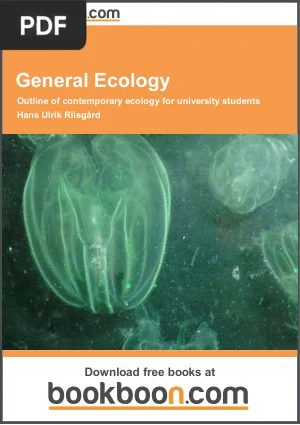
A peer-reviewed university outline of ecology covering energy flow, food chains, population growth, competition and the major ecosystems on land and in water. Clear diagrams and real cases, like the comb jelly that invaded the Black Sea, make each concept concrete.
A complete university course on ecosystems, productivity, nutrient cycles and succession, followed by population dynamics, communities and the major biomes. Every unit includes objectives, self-assessment exercises and a summary.
University course material that links ecology with society, from core ideas like niche and ecosystem to forests, dams, development and environmental movements. Useful for seeing how ecological concepts shape real environmental debates.
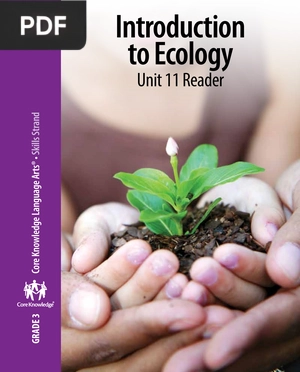
An illustrated reader for young learners that introduces habitats, food chains, ecosystems and the naturalists who studied them. Short chapters and full-color pictures make it a gentle first step into ecology.
Why do some populations explode while others crash? These ecology books answer with models, from Stephen Ellner's Cornell lectures to Charles Elton's 1927 classic on food chains and niches.
A university textbook that builds population and community ecology from simple models, covering exponential and logistic growth, competition, predation and mutualism. Each model comes with computer code so you can run the math yourself.
Graduate lecture notes from Cornell University on foraging theory, single-species population dynamics, interacting populations and matrix models. A solid bridge between field ecology and the mathematical models behind it.
A university course on how animal populations grow, compete and cycle, with units on age structure, population regulation and predator-prey systems. It closes with behavioral ecology case studies of African mammals such as bats.
Oxford lecture notes that model single species, interacting populations and harvesting with differential and difference equations. Ideal if you already know calculus and want to see how ecologists predict insect outbreaks and population cycles.
Charles Elton's 1927 classic that laid the foundations of animal community ecology, introducing food chains, the ecological niche and the pyramid of numbers. Still a clear, readable account of how animal populations are organized and regulated.
Forests hold most of the land's biodiversity, and these forest ecology books show how they grow, cycle nutrients and recover from disturbance. Sources include Mendel University, the World Resources Institute and the FAO.
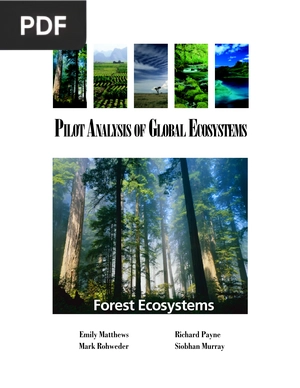
A World Resources Institute assessment of the planet's forests, measuring their extent, timber and fuelwood output, biodiversity, carbon storage and role in protecting watersheds. Packed with maps and data tables.
A university textbook on how forests work, from stand structure and primary production to water cycles, nutrient cycling, biodiversity and ecological stability. Written by forest ecologists at Mendel University in Brno.
The FAO and UNEP flagship report on forest biodiversity, covering deforestation trends, forest ecosystems and species, and the policies that protect them. Case studies show how conservation and sustainable use can work together.
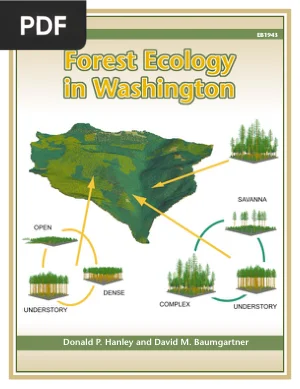
An extension guide to how forests grow, compete and change after disturbance, with clear illustrations of stand development, succession and the forest types of Washington State.
A practical guide that explains forest ecology basics and the services forests provide, from water regulation to biodiversity, and how forest managers can plan around them.
Lakes, rivers and wetlands work by their own rules. These guides and manuals, including the Millennium Ecosystem Assessment and an EPA field manual, show how freshwater ecosystems function and how to protect them.
A GWP and INBO handbook on how rivers, lakes and wetlands function and how to bring them into basin management plans. It covers pollution sources, restoration methods and real case studies from basin organizations.
Christophe Brachet, Julie Magnier, Daniel Valensuela
The Millennium Ecosystem Assessment synthesis on wetlands, rivers and lakes, explaining the services they provide, how fast they are being lost and what can reverse the trend. Clear figures summarize the global state of freshwater ecosystems.
An illustrated guide to what wetlands are, how they filter water and shelter wildlife, and how landowners can protect them. Friendly drawings make it a great introduction to wetland ecology.
The EPA manual for studying streams in the field, from watershed surveys to sampling macroinvertebrates and measuring water quality. A practical toolkit for students and volunteers who want to assess stream health.
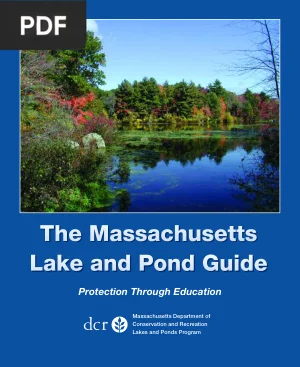
A citizen's guide to lake ecology, covering watersheds, food webs, aquatic plants and the common threats to lakes and ponds. Full-color photos and practical tips for protecting a local lake.
Massachusetts Department of Conservation and Recreation
This is ecology applied to the problems that matter now, from biodiversity loss to invasive species. E. O. Wilson's landmark volume sits next to free textbooks on conservation biology and climate change.
A conservation biology textbook written by leading scientists and released free for readers everywhere. It covers biodiversity, habitat loss, overharvesting, invasive species, climate change and conservation planning.
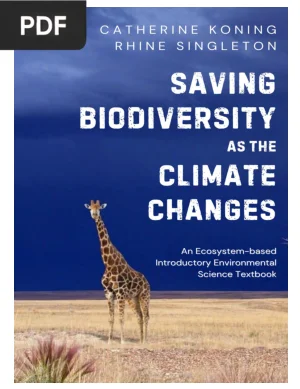
An ecosystem-based environmental science textbook that explains why biodiversity is declining and how climate change, habitat loss and pollution drive that loss. Each chapter connects ecological principles to real conservation solutions.
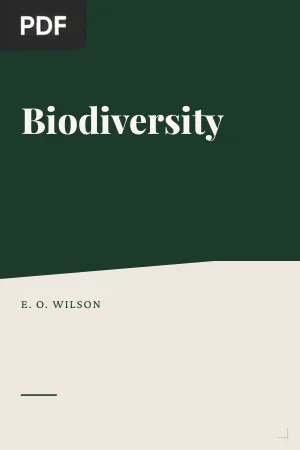
The landmark 1988 volume edited by E. O. Wilson that helped launch the modern study of biodiversity. Dozens of experts examine species loss, tropical forests, ecological restoration and the value of living diversity.
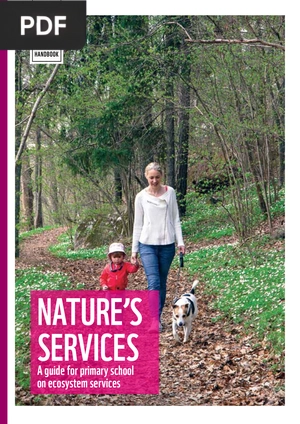
A WWF handbook on ecosystem services, the free benefits nature provides like pollination, clean water and food, taught through outdoor activities for young learners.
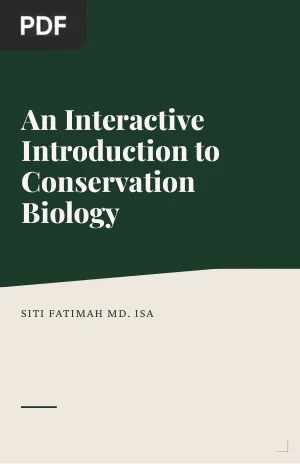
A short open textbook on the basics of conservation biology, from how much biodiversity exists to habitat loss, invasions, restoration and protected areas. Includes quizzes and a glossary to check your understanding.
Send this page to someone who’d love to read it. Everything is free, no sign-up needed.
Esc
Start typing to search...
Searching...
No results found
Try different search terms
Your book is downloading!
If InfoBooks helped you, you can support us in one click: add us as a preferred source on Google. You'll see more of our books when you search, and you'll help us keep sharing free reading with everyone.
Done! Your book is downloading
Know someone who’d enjoy reading it? Send them this page. It’s free, no sign-up needed, and you help us spread the love of reading.