Looking for anarchist books that explain what anarchism really stands for? Here you'll find beginner primers, the classics, anarcho-communism, Christian anarchism and anarchist feminism.
Anarchism is a political philosophy that rejects the state and any authority that can't justify itself. Its classics come from Pierre-Joseph Proudhon, Mikhail Bakunin, Peter Kropotkin, Errico Malatesta and Emma Goldman, and they are far more readable than their reputation.
Every book is free to read online or download as PDF. Start with a short primer or go straight to The Conquest of Bread.
📚
Download every book on this page in one click
Sign in with Google and grab them all without going one by one.
We will redirect you to accounts.google.com to complete sign-in.
Email and name only · We never send spam
Access unlocked
Download every book on this page in one click
Get them all together, without going one by one.
Direct download · One ZIP file
Download started. Check your downloads folder for the ZIP.
Beginners
Anarchist Books for Beginners
Never read anything on anarchism before? These short primers explain what anarchists want and how a society without rulers would actually work.
Malatesta explains in plain words what anarchy means, why government isn't a necessity, and how people could organize their lives without rulers. One of the clearest short introductions ever written.
A short lecture in which Kropotkin answers the charge that anarchism means chaos and lays out the ideal of a free society built on cooperation. A quick, sharp first read.
Written as a conversation with the reader, Berkman's ABC of anarchism walks through capitalism, the state, revolution and what a free society would look like. Many still call it the best beginner's book on the subject.
Graeber draws on anthropology to show that societies without states have existed all along, and asks what anarchism can learn from them. A lively, modern essay that opens new ways of thinking about power.
These are the anarchist writings that started it all, published between 1793 and 1910. Proudhon's treatise on property gave mutualism its most famous line, and Bakunin's God and the State still reads as a sharp attack on authority.
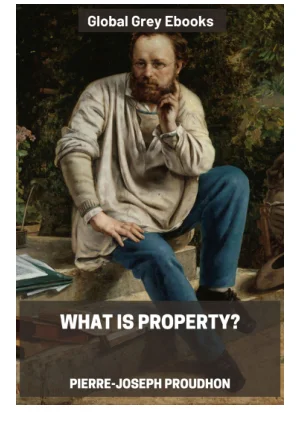
The 1840 treatise where Proudhon declared that property is theft and became the first thinker to call himself an anarchist. The founding text of mutualism.
Bakunin's famous attack on religious and political authority, arguing that belief in God and obedience to the state rest on the same principle. Short, fiery and still widely quoted.
Published in 1793, Godwin's treatise argues that government corrupts human reason and that a just society can rest on free individual judgment. The first full philosophical case for anarchism.
Stirner's radical defense of the individual against the state, morality and every idea that claims power over the self. The cornerstone of individualist anarchism.
Goldman's 1910 collection opens with Anarchism: What It Really Stands For and moves on to prisons, patriotism, women's emancipation and the drama. Passionate, direct and easy to read.
A careful comparison of Godwin, Proudhon, Stirner, Bakunin, Kropotkin, Tucker and Tolstoy on law, the state and property. A classic map of where the great anarchist thinkers agree and differ.
Anarcho-communism imagines a society without money, wages or bosses, where goods are shared by need. Kropotkin's The Conquest of Bread is the place to start, and Mutual Aid shows why he saw cooperation as the engine of evolution.
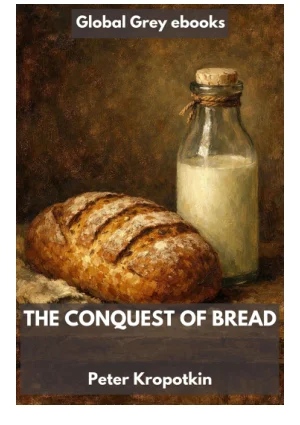
Kropotkin's blueprint for a society without wages or money, where homes, food and goods are shared according to need. The essential book of anarcho-communism.
From animal colonies to medieval guilds, Kropotkin shows that cooperation, not just competition, drives evolution and human progress. The scientific backbone of his anarchist thought.
Kropotkin's case for small, decentralized communities that combine farming, industry, and manual and mental work. A practical look at how an anarcho-communist economy could feed itself.
A short essay in which Kropotkin explains why communism and anarchy belong together, and why freedom requires sharing the means of life. A compact entry point to his ideas.
Leo Tolstoy, one of the most radical anarchists, was also a devout Christian. The Kingdom of God Is Within You and My Religion argue that the Sermon on the Mount rules out the state, and the essays here carry that idea into the present.
Tolstoy reads the Sermon on the Mount literally and concludes that a true Christian can't support the state, war or violence. The foundational text of Christian anarchism.
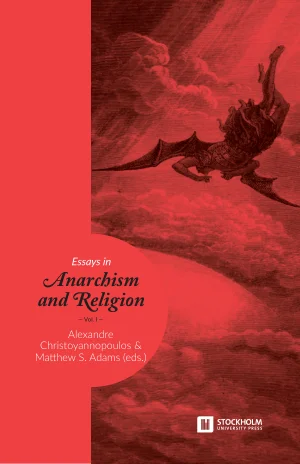
Scholarly essays on how anarchism and religion meet, with chapters on Tolstoy, Gandhi, Buddhism and Christian anarchist thought. A solid academic starting point.
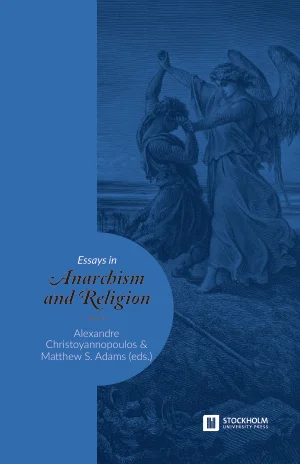
The second volume explores Yiddish radicalism, Byzantine theology, the First Epistle of Peter, William Blake and Christian anarchist views on violence. Rigorous, wide-ranging research.
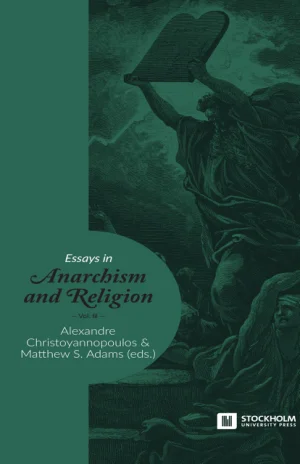
Essays on Tolstoy, Martin Buber, Herbert Read and others, plus studies of mysticism and spiritual anarchism. Closes the series with a look at faith as a source of resistance.
Tolstoy explains how a literal reading of the Gospels, above all the command not to resist evil with violence, led him to reject the church, the courts and the state. The personal confession behind his Christian anarchism.
Anarchist feminism ties the fight against the state to the fight against patriarchy. Emma Goldman and Voltairine de Cleyre wrote about marriage, sex and work over a century ago, and their essays still feel current.
Poems, stories and essays by one of the boldest voices of American anarchism, on marriage, freedom, religion and direct action. Edited by Alexander Berkman with a biography by Hippolyte Havel.
Goldman argues that marriage and love have nothing in common and that marriage is an economic arrangement that traps women. A short, provocative essay that still sparks debate.
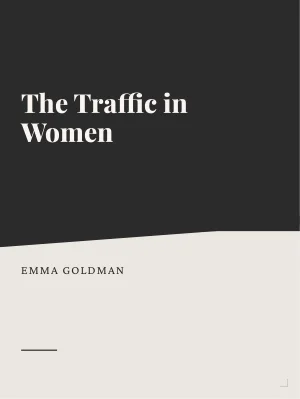
Goldman traces prostitution back to low wages and economic dependence, not individual vice, and exposes the hypocrisy of moral crusades. A pioneering anarchist feminist essay.
Send this page to someone who’d love to read it. Everything is free, no sign-up needed.
Esc
Start typing to search...
Searching...
We couldn't find anything
Your book is downloading!
If InfoBooks helped you, you can support us in one click: add us as a preferred source on Google. You'll see more of our books when you search, and you'll help us keep sharing free reading with everyone.
Done! Your book is downloading
Know someone who’d enjoy reading it? Send them this page. It’s free, no sign-up needed, and you help us spread the love of reading.