
5+ Phenomenology Books for Free! [PDF]
by InfoBooks

For those who are looking to expand their knowledge in the field of philosophy, we have created a selection of free books on phenomenology.
The definition of phenomenology refers to the philosophy, science, and method of phenomena, occurring throughout the world.
It is also defined as the study of all things directed to the consciousness, to understand them and to externalize them; in other words, it converts reality into a phenomenon as soon as it appears in the consciousness.
This philosophical theory describes every experience and clarifies the meaning of what surrounds us in our existence, what it means to be human, and the experience of what we are.
Each one of the exciting concepts, history, and origins of this philosophical aspect, you can consult them in our collection of more than 30 materials between books and free phenomenology articles in PDF format.
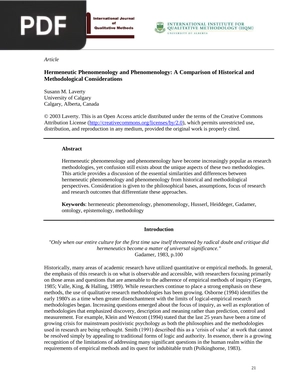
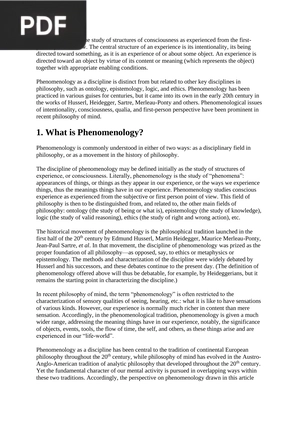
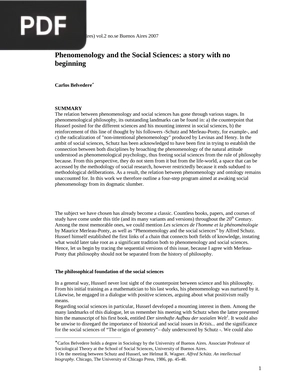
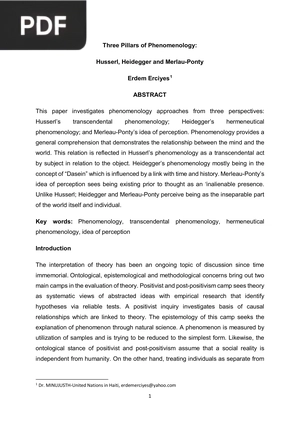
Phenomenology Books


Articles on Phenomenological Reduction
Phenomenological reduction is a fundamental concept within phenomenological philosophy, introduced by Edmund Husserl in the 20th century. It refers to a methodology that seeks to suspend prejudices and prior assumptions to explore the pure and direct experience of reality.
In the context of research and knowledge, phenomenological reduction allows for a more objective and deeper approach to the objects of study.
It is a valuable tool for exploring human experience in its purest and most authentic form. Learn more with the following free articles on phenomenological reduction in PDF format.

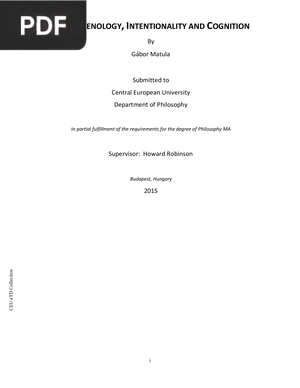
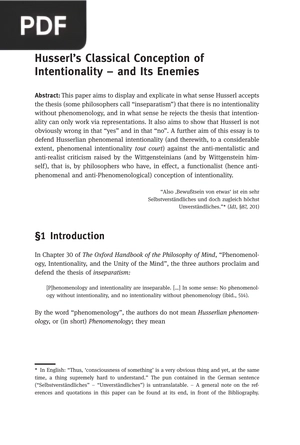
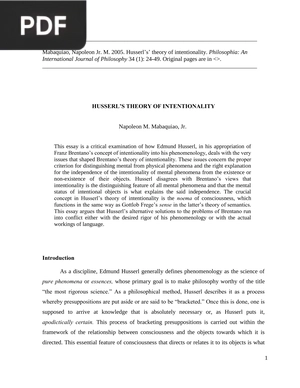
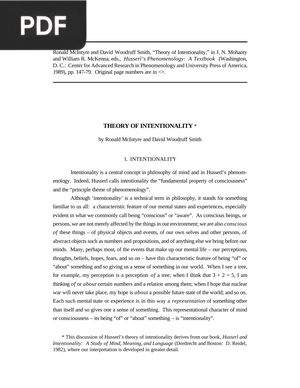
Articles on Intentionality in Phenomenology
Intentionality is a central concept in phenomenology. It refers to the capacity of consciousness to be intentionally directed toward objects or phenomena. In other words, it is the quality of consciousness to be always oriented towards something beyond itself.
In the framework of phenomenology, intentionality implies that all conscious experience has an object that is experienced or perceived.
The importance of intentionality lies in the fact that it provides us with a basis for understanding how meaning is constructed and how the link between consciousness and the world is established. Enjoy the following free articles about intentionality in phenomenology.

Articles on Temporality in Phenomenology
Temporality is a central concept in phenomenology, developed by philosophers such as Edmund Husserl and Martin Heidegger. It refers to the way we experience and perceive time in our daily lives.
In phenomenology, temporality is understood as a fundamental structure of consciousness. Our experiences are always situated in a temporal context, and our perceptions, emotions, and actions unfold in relation to the flow of time.
Phenomenology invites us to explore the richness of temporality in our existence, recognizing that our experiences are always rooted in the flow of time. Learn more with the following articles about temporality in phenomenology.

Articles on Corporeality and Perception in Phenomenology
Corporeality and perception are two fundamental aspects of phenomenology, we invite you to learn a little more with the following free articles in PDF format.
Corporeality refers to the fact that our experience of the world is always mediated by our body. Perception, on the other hand, is the process by which we interpret and make sense of the sensory stimuli we receive from the environment.
Exploring corporeality and perception from a phenomenological perspective allows us to delve deeper into our relationship with the world, our way of being in it, and how we construct meaning through bodily and perceptual experiences.

Ethics Books
The relationship between ethics and phenomenology is deep and significant. Ethics is concerned with the study of the moral principles and values that guide our actions and decisions, while phenomenology focuses on conscious experience and the way we perceive the world.
Both fields are intertwined in their interest in understanding human experience and the subjective basis of morality. Through phenomenology, we can explore how ethics manifests itself in our conscious experience and how it influences our decisions and actions.
If you wish to deepen your knowledge of ethics, we invite you to visit our complete collection of free books on ethics in PDF format.
Books on Hermeneutics
The relationship between phenomenology and hermeneutics is close and enriching. Phenomenology focuses on the description and analysis of conscious experience, whereas hermeneutics is concerned with the interpretation and understanding of meaning in various contexts.
Phenomenology provides a foundation for hermeneutics by highlighting the importance of subjective experience in interpreting the world.
It invites us to explore how our experiences and perceptions influence the way we interpret texts, works of art, and other cultural phenomena. Enjoy our complete collection of free hermeneutics books.
Here ends our selection of free Phenomenology books in PDF format. We hope you liked it and already have your next book!
If you found this list useful, do not forget to share it on your social networks. Remember that "Sharing is Caring".
Do you want books on Philosophy in PDF format?
You Might Also Like

Existentialism Books
Freedom, meaning, authenticity. The philosophy of individual existence and choice.

Hermeneutics Books
Interpretation, texts, meaning. The art and science of understanding and interpretation.

Epistemology Books
Knowledge, belief, justification. The study of what knowledge is and how we acquire it.

General Philosophy Books
Ideas, thought, inquiry. A broad introduction to philosophical thinking.