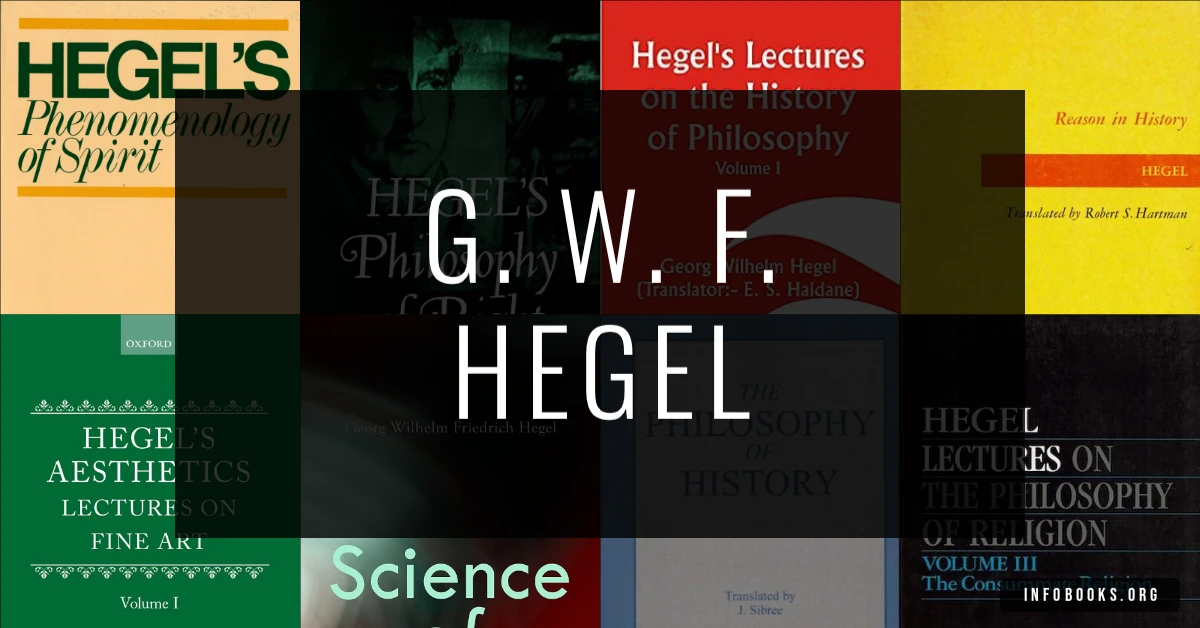
Looking for Hegel books? Georg Wilhelm Friedrich Hegel (1770-1831) was the German philosopher who turned reason, freedom and history into one system.
He studied at Tübingen with Hölderlin and Schelling, then finished the Phenomenology of Spirit in Jena as Napoleon took the city. His works are the peak of German idealism, the path that runs from Kant and Fichte to his Absolute Spirit.
Here you'll find 21 free PDFs, from the Science of Logic and the Philosophy of Right to his Berlin lectures and classic guides. If you're new to Hegel, the Philosophy of History is the friendliest place to start.
📚
Download every book on this page in one click
Sign in with Google and grab them all without going one by one.
We will redirect you to accounts.google.com to complete sign-in.
Email and name only · We never send spam
Access unlocked
Download every book on this page in one click
Get them all together, without going one by one.
Direct download · One ZIP file
Download started. Check your downloads folder for the ZIP.
Core System
Hegel's Phenomenology and Logic Books
The Phenomenology of Spirit follows consciousness on its long climb toward absolute knowing, with the famous master and slave dialectic. The Science of Logic and the Encyclopedia of the Philosophical Sciences then build Hegel's system, starting from being and nothing.
Hegel follows consciousness from plain sense certainty all the way to absolute knowing, with the famous master and slave dialectic along the way. J. B. Baillie's classic translation of his first great book.
The Logic from Hegel's Encyclopaedia, often called the Shorter Logic, in William Wallace's revised 1892 translation. The most approachable way into his dialectic of being, essence and concept.
The first volume of Hegel's Greater Logic in the 1929 Johnston and Struthers translation. It opens with the famous move from being and nothing to becoming, then works through quality, quantity and measure.
The second volume of the Science of Logic covers the doctrine of essence and the doctrine of the concept, ending with the absolute idea. Johnston and Struthers' 1929 version was the first complete English translation.
The third part of Hegel's Encyclopaedia, on subjective, objective and absolute mind, from the soul and consciousness to art, religion and philosophy. William Wallace's 1894 translation with his five introductory essays.
Here Hegel brings his system down to the family, civil society and the state, in one of the most debated books of political philosophy. His lectures on the philosophy of history read the past as the progress of freedom, and many readers find them the easiest way in.
Hegel's theory of law, morality and ethical life, from property and the family to civil society and the state. S. W. Dyde's 1896 translation of a book that readers on the left and the right still fight over.
Hegel reads world history as the progress of freedom, from China and India through Greece and Rome to the Germanic world. J. Sibree's translation, and for many readers the friendliest way into his thought.
George Sylvester Morris, the teacher of John Dewey, explains Hegel's ideas on the state and on history in plain prose. An 1887 guide written for English readers meeting Hegel for the first time.
In Berlin, Hegel lectured on art, religion and philosophy as the three forms of Absolute Spirit, and his students turned the notes into these books. You can follow beauty from Egyptian pyramids to Romantic poetry, and philosophy from the Greeks to Kant.
The first volume of Hegel's Berlin lectures on the history of philosophy, translated by E. S. Haldane. His long introduction leads into the Greeks, from Thales to Socrates and his schools.
Volume two moves from Plato and Aristotle to the Stoics, Epicureans, Sceptics and Neoplatonists. Hegel reads each school as a necessary step in the growth of thought.
The opening volume of Hegel's Aesthetics in F. P. B. Osmaston's 1920 translation, with his full introduction and his theory of beauty in art. The best place to start with his ideas on art.
The first of three volumes of Hegel's Berlin lectures on religion, translated by E. B. Speirs and J. Burdon Sanderson. It sets out what religion is and begins his survey of the religions of nature.
Hegel is famous for being hard to read, so these guides explain his key ideas before you open the originals. Edward Caird, William Wallace and J. M. E. McTaggart made Hegel readable for English speakers, and Croce asks what still holds up.
Edward Caird's short introduction to Hegel's life and system, from his student years in Tubingen to his Berlin lectures. Written in 1883 for the Philosophical Classics series and still one of the clearest first books on him.
William Wallace's companion to Hegel's Logic, revised in 1894 alongside his translation. It explains the method and the main ideas before you face the text itself.
Benedetto Croce keeps what still works in Hegel, the dialectic of opposites, and drops what he thinks failed. A sharp, readable critique in Douglas Ainslie's 1915 translation.
Robert Stern explains what Hegel meant by idealism and why it is not the claim that the world exists only in the mind. A clear essay from the Cambridge Companion, in its author's version.
A doctoral dissertation that reads Hegel's political philosophy through his Logic, showing how freedom and the state rest on his idea of actuality. For readers ready to go deep.
Hegelianism did not end with Hegel. Marx turned his dialectic into materialism, Kierkegaard wrote against him, and philosophers still argue over what he meant.
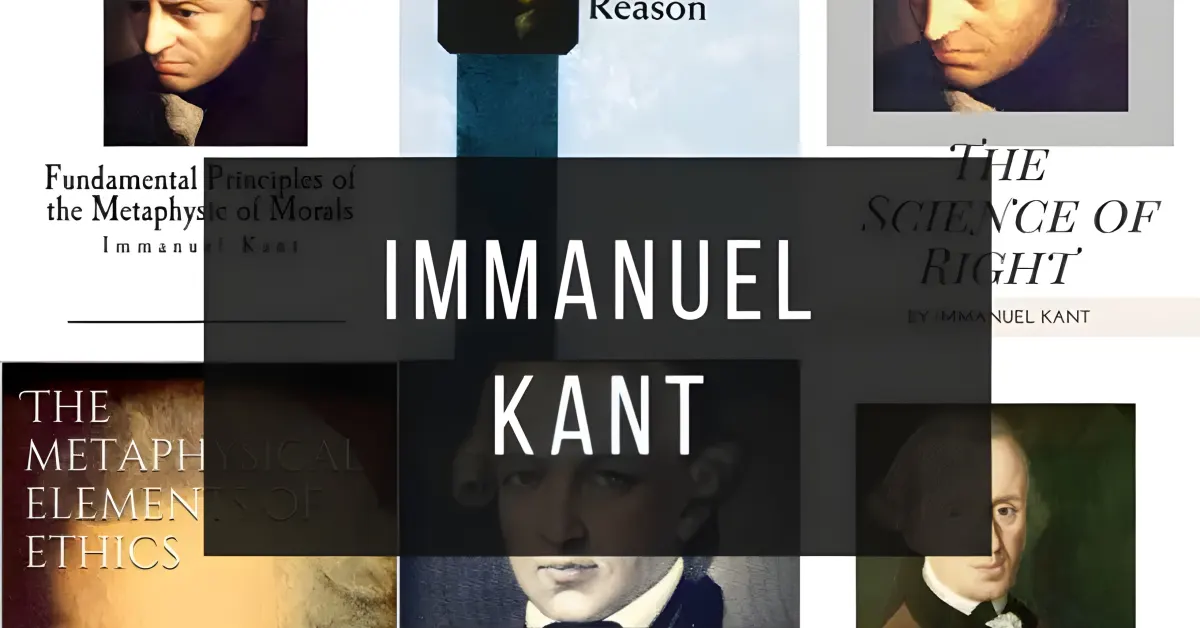
Want to meet the thinkers who came before and after him? Browse our collection of classic authors, including Immanuel Kant and Karl Marx.
Send this page to someone who’d love to read it. Everything is free, no sign-up needed.
Esc
Start typing to search...
Searching...
No results found
Try different search terms
Your book is downloading!
If InfoBooks helped you, you can support us in one click: add us as a preferred source on Google. You'll see more of our books when you search, and you'll help us keep sharing free reading with everyone.
Done! Your book is downloading
Know someone who’d enjoy reading it? Send them this page. It’s free, no sign-up needed, and you help us spread the love of reading.