Idealism books explore a bold claim: reality is shaped by the mind, not by matter alone. These free PDFs take you from Plato's world of Forms to Berkeley, Kant and Hegel.
You'll read the great idealists in their own words. Kant's Critique of Pure Reason and Schopenhauer's The World as Will and Idea sit next to clear guides on idealism versus realism and materialism.
Not sure where to start? Begin with Berkeley's short dialogues, then move on to Kant.
📚
Download every Idealism book on this page
All the books on this page in one ZIP file, instead of downloading them one by one.
We will redirect you to accounts.google.com to complete sign-in.
Email and name only · We never send spam
Access unlocked
Download every Idealism book on this page
All the books on this page in one ZIP file, instead of downloading them one by one.
Direct download · One ZIP file
Download started. Check your downloads folder for the ZIP.
Overview
Idealism Books
Start here for the big picture. These idealism books ask whether reality is truly mental, and include G. E. Moore's famous attack on the idea.
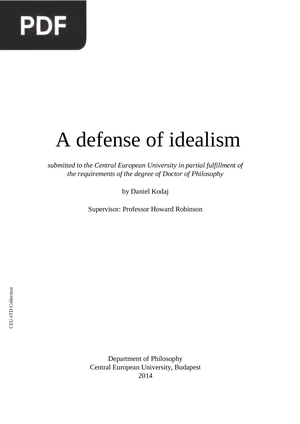
A doctoral thesis that argues idealism is a serious option in metaphysics today. It answers the classic objections and shows why mind may come before matter.
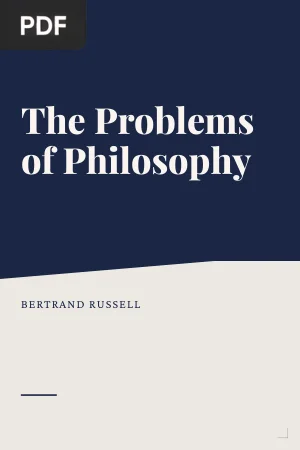
Russell's classic short introduction to philosophy, with a full chapter on idealism. A clear first look at appearance, reality and how we know the world.
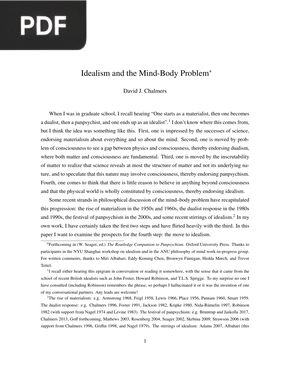
David Chalmers weighs idealism as an answer to the mind-body problem. He compares it with materialism, dualism and panpsychism in a clear, direct essay.
G. E. Moore's famous 1903 attack on idealism, the essay that helped launch analytic philosophy. Read it to see the strongest case against the idea that reality is mental.
Idealism begins with Plato and his world of Forms, the perfect ideas behind the things we see. Read the Republic and the allegory of the cave, then compare Plato with Aristotle's realism.
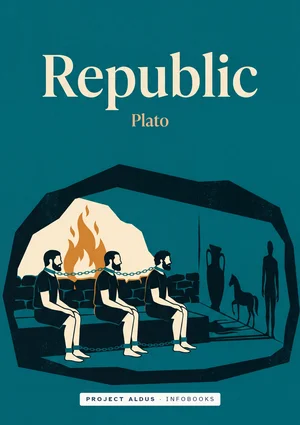
Plato's masterpiece on justice, the soul and the ideal city, home of the allegory of the cave and the Form of the Good. This Project Aldus edition is cleanly typeset and easy to read.
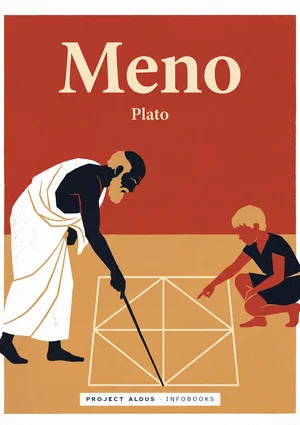
A short dialogue on virtue and learning, where Socrates argues that to know is to remember truths the soul already holds. A gentle way into Platonic idealism, in a Project Aldus edition.
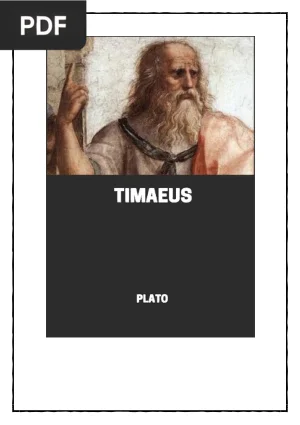
Plato's account of how a divine craftsman shaped the cosmos after eternal Forms. It is the dialogue that most shaped later Platonist thought about nature.
A study of how readers since Aristotle have understood the Forms and the Form of the Good. It shows how differently Plato can be read, published in the Plato Journal.
Compares Plato's idea with Aristotle's ousia to test the old label of idealist versus realist. A short article that sharpens the contrast between teacher and student.
George Berkeley defended immaterialism, the view that to be is to be perceived. His Three Dialogues is short, witty and the best first step into idealism.
The book where Berkeley first argued that matter does not exist apart from minds. Its attack on abstract ideas and material substance still provokes debate.
Clear lecture notes that walk through Berkeley's main arguments, from perceptual relativity to God as the perceiver. Ideal to read alongside the Three Dialogues.
An 1865 book that weighs Berkeley's idealism against common sense and the real world. A period voice in the long debate between idealists and realists.
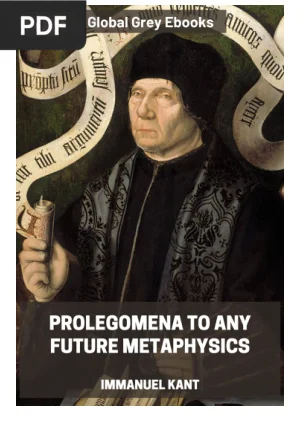
Kant argued that we know things only as they appear to us, never as they are in themselves. The Critique of Pure Reason sets out transcendental idealism, and the studies here make it easier to follow.
The book where Kant sets out transcendental idealism: we know things only as they appear to us, never as they are in themselves. The foundation of modern philosophy.
A PhD thesis arguing that Kant's idealism is, at bottom, a realism about the world of experience. A detailed guide to one of the hardest ideas in the first Critique.
Follows how Husserl turned phenomenology into a transcendental idealism and how he tried to escape solipsism. A bridge from Kant to the twentieth century.
After Kant, Fichte, Schelling, Schiller and Schopenhauer each pushed his ideas in a new direction. These German idealism books follow that debate from 1781 to the age of Romanticism.
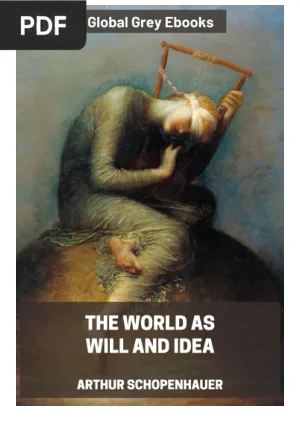
Schopenhauer's complete masterwork in three volumes: the world is my idea, and behind it lies a blind will. Idealism turned dark and deeply influential.
A clear introduction to Schelling, from his philosophy of nature to the System of Transcendental Idealism. Ideal if you are meeting him for the first time.
Hegel saw reality as spirit coming to know itself through history, and he called it the Absolute. Read the Phenomenology and the Logic, then the guides that unpack them.
Hegel's ideas crossed the sea and shaped Oxford and Harvard. F. H. Bradley, T. H. Green, Josiah Royce and Mary Whiton Calkins built their own idealism between 1870 and the 1940s.
Josiah Royce, the great American idealist, explains Kant, Fichte, Schelling and Hegel in lively lectures. A readable bridge between German and American idealism.
Idealism has shaped how we think about mind and reality for over two thousand years. For the other side of the debate, try our empiricism books or phenomenology books.
Send this page to someone who’d love to read it. Everything is free, no sign-up needed.
Esc
Start typing to search...
Searching...
We couldn't find anything
Your book is downloading!
If InfoBooks helped you, you can support us in one click: add us as a preferred source on Google. You'll see more of our books when you search, and you'll help us keep sharing free reading with everyone.
Done! Your book is downloading
Know someone who’d enjoy reading it? Send them this page. It’s free, no sign-up needed, and you help us spread the love of reading.