Political science books explain how power works: who holds it, how governments use it, and why political systems rise or fall. Here you'll find free textbooks and classics in PDF, ready to read online or download.
Every book is complete and free to download, written by university scholars or by the thinkers who founded the field. Together they cover political theory and ideologies, democracy, institutions, American government and international relations.
If you're new to the subject, start with an introduction or jump straight to the classics by Machiavelli and Hobbes. Pick a section below and start reading today.
📚
Download every Political Science book on this page
All the books on this page in one ZIP file, instead of downloading them one by one.
We will redirect you to accounts.google.com to complete sign-in.
Email and name only · We never send spam
Access unlocked
Download every Political Science book on this page
All the books on this page in one ZIP file, instead of downloading them one by one.
Direct download · One ZIP file
Download started. Check your downloads folder for the ZIP.
Introduction
Introduction to Political Science Books
New to political science? These textbooks explain power, the state and research methods, just like a first-year college course.
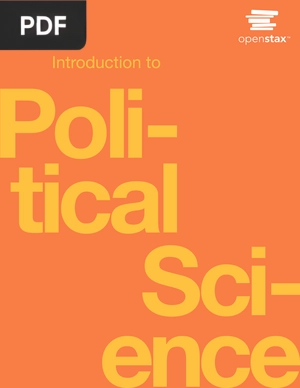
A complete first-year textbook on power, the state, political behavior, institutions and public policy. Each chapter opens with learning goals and closes with key terms and review questions.
Mark Carl Rom, Masaki Hidaka, Rachel Bzostek Walker
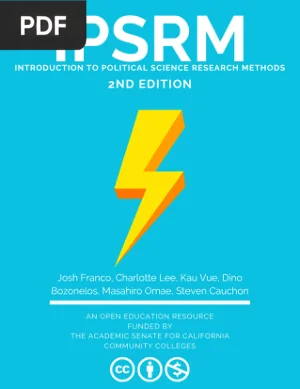
How political scientists ask questions and test their answers, from building a theory to surveys, experiments, case studies and data analysis. A clear first course in research methods, now in its second edition.
Josh Franco, Charlotte Lee, Kau Vue, Dino Bozonelos, Masahiro Omae, Steven Cauchon
A short, readable introduction to how politics works: power, ideologies, elections, parties, interest groups and the media. Written for students meeting political science for the first time.
A practical guide to political power: how it is gained, used and kept in parties, organizations and governments. It breaks power down into clear principles you can spot in everyday politics.
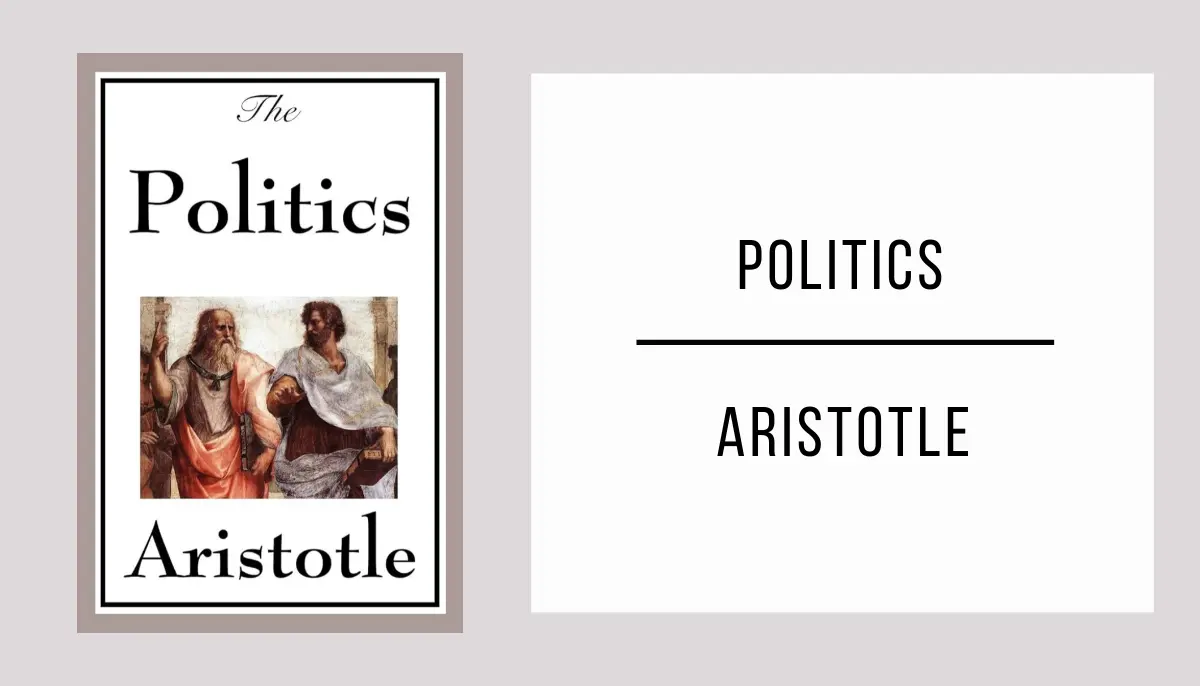
Machiavelli, Hobbes, Locke and Tocqueville asked the questions political science still studies today. These are the founding texts of the field, complete and free to read.
How to take power, keep it, and lose it, in the short treatise that founded modern political thought. Our own Project Aldus edition, with clean typesetting and a biographical introduction to Machiavelli.
Hobbes makes the case for a strong sovereign, starting from his famous picture of life without government as nasty, brutish and short. The complete text in a clean modern layout.
Locke argues that government rests on the consent of the governed and exists to protect life, liberty and property. The Second Treatise shaped the Declaration of Independence and modern liberal democracy.
Rousseau explains what makes government legitimate, introducing popular sovereignty and the general will. It opens with one of the most famous lines in political writing: man is born free, and everywhere he is in chains.
The 85 essays written to defend the U.S. Constitution, explaining federalism, the separation of powers and checks and balances. Still the best guide to how the framers thought about government.
Tocqueville studies American democracy in the 1830s: its institutions, its civic life and the danger he called the tyranny of the majority. One of the most quoted books in political science.
Mill defends representative democracy as the best form of government and proposes ways to make it work better, from proportional representation to protecting minorities. A classic on how elected government can serve the whole public.
Liberalism, socialism, democracy and justice sit behind every political debate. These political theory books explain the big ideas and ideologies in plain language.
A clear tour of the major political ideologies, from liberalism, conservatism and socialism to fascism, feminism, environmentalism and populism. Each chapter explains the core ideas and how they shape real political debates.
A short introduction to the big questions of political philosophy: what justifies the state, what makes a society just and how much freedom people should have. Brennan compares the main theories in plain language.
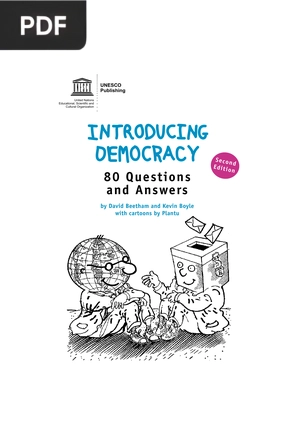
Eighty short answers to the essential questions about democracy, from free elections and accountable government to human rights and civil society. Published by UNESCO and illustrated with cartoons by Plantu.
A full university course in political theory covering the classical, liberal and Marxist traditions, along with liberty, equality, justice, rights and democracy. Organized in lessons with summaries and self-check questions.
Explores how society and politics shape each other: power, authority, elites, political culture, socialization and participation. Written as a postgraduate course with unit summaries and review questions.
Applies the tools of economics to politics, with clear introductions to game theory, social choice, voting rules and theories of justice. Rigorous but accessible for students with basic math.
A complete introductory textbook on comparative politics: states and regimes, democracy and authoritarianism, constitutions, elections, parties and political economy. Written by a team of college faculty with cases from every region.
A hands-on introduction to comparing political systems, with chapters on states, regimes, democratization, nationalism and political violence. Includes many figures, data tables and a guide to democracy indexes.
A compact introduction to the comparative method and the core concepts used to compare countries: the state, nations, regimes and political institutions. A quick, accessible place to start.
From the Constitution to Congress, the presidency and the courts, these are full college textbooks. They show how the U.S. government and its institutions really work.
The complete OpenStax textbook on American government, from the Constitution and federalism to Congress, the presidency, the courts, elections and public policy. Clear, well illustrated and used in hundreds of college courses.
An introduction to American government with a special focus on the media: how news coverage shapes Congress, the presidency, the courts, elections and public opinion. Each chapter includes case studies and review questions.
A critical introduction to U.S. government that asks how democratic the system really is, covering the Constitution, civil liberties, Congress, the presidency, the courts and elections.
How U.S. courts really work: judicial selection, the Supreme Court, judicial decision making and the role of courts in public policy. A thorough reader written by political scientists for undergraduate courses.
A guide to constitutional law focused on what government can and cannot do: judicial review, federalism, the separation of powers and the commerce clause, explained through landmark Supreme Court cases.
How state, county and city governments work, from state constitutions and legislatures to budgets, local elections and public services. Pays special attention to sustainability and policy choices close to home.
Christopher A. Simon, Brent S. Steel, Nicholas P. Lovrich
Realism, liberalism and everything in between. These open textbooks, many from E-International Relations, explain how states cooperate, compete and sometimes go to war.
A beginner guide that takes you from how the international system was formed to the global issues of today: security, trade, human rights, climate and more. Short chapters written for readers starting from zero.
A clear introduction to the theories of international relations, from realism and liberalism to constructivism, Marxism, feminism and postcolonialism. Each chapter applies a theory to a real world event.
Stephen McGlinchey, Rosie Walters, Christian Scheinpflug
A broad introduction to global politics: the state and sovereignty, global governance, power, development, human rights and the environment. Ideal for students preparing politics and international relations exams.
A survey of how states and empires dealt with each other across East Asia, the Muslim world, India, Africa and the Americas before European models spread worldwide. Each regional chapter covers political structures, trade and diplomacy.
How a problem becomes a policy: agenda setting, policy design, implementation and evaluation, with chapters on economic, social, health and environmental policy. A complete introductory textbook on public policy analysis.
Kimberly Martin, Keith E. Lee Jr, John Powell Hall
An introduction to public administration covering the public sector, management and organizational behavior, budgeting, human resources and ethics. A solid first look at how government agencies actually work.
Learn to test political and policy questions with data, from research design and probability to regression, with worked examples in R. A complete open textbook for political science and public administration students.
That's the full list of free political science books, from first textbooks to the founding classics. If one of them helped you, share this page with a classmate.
Send this page to someone who’d love to read it. Everything is free, no sign-up needed.
Esc
Start typing to search...
Searching...
No results found
Try different search terms
Your book is downloading!
If InfoBooks helped you, you can support us in one click: add us as a preferred source on Google. You'll see more of our books when you search, and you'll help us keep sharing free reading with everyone.
Done! Your book is downloading
Know someone who’d enjoy reading it? Send them this page. It’s free, no sign-up needed, and you help us spread the love of reading.